Results by title
18284 books match the query 'United States' and 397 start with n
Never Justice, Never Peace
Mother Jones and the Miner Rebellion at Paint and Cabin CreeksGinny Savage Ayers
West Virginia University Press, 2018
In 1986 Lon Savage published Thunder in the Mountains: The West Virginia Mine War, 1920–21, a popular history now considered a classic. Among those the book influenced are Denise Giardina, author of Storming Heaven, and John Sayles, writer and director of Matewan. When Savage passed away, he left behind an incomplete book manuscript about a lesser-known Mother Jones crusade in Kanawha County, West Virginia. His daughter Ginny Savage Ayers drew on his notes and files, as well as her own original research, to complete Never Justice, Never Peace—the first book-length account of the Paint Creek–Cabin Creek Strike of 1912–13.
Savage and Ayers offer a narrative history of the strike that weaves together threads about organizer Mother Jones, the United Mine Workers union, politicians, coal companies, and Baldwin-Felts Detective Agency guards with the experiences of everyday men and women. The result is a compelling and in-depth treatment that brings to light an unjustly neglected—and notably violent—chapter of labor history. Introduced by historian Lou Martin, Never Justice, Never Peace provides an accessible glimpse into the lives and personalities of many participants in this critical struggle.
Never Leaving Laramie
Travels in a Restless WorldJohn W. Haines
Oregon State University Press, 2020
In the years since, Haines has added writer to a resume that already included baker and banker. In Never Leaving Laramie, he pulls stories about traveling into an exploration of home: How a rural home fueled and sustained a worldview. How beauty and danger blend together with humility and ego. How itchy feet combine with the comfort of home in Laramie, a tough railroad town turned college town and a launchpad for wanderers. Throughout, Haines returns to ideas of rivers and movement. He ends with a chapter on a different kind of travel, reflecting on how his accident did and did not change him and the varied ways that people can move through the world.
Never One Nation
Freaks, Savages, and Whiteness in U.S. Popular Culture, 1850-1877Linda Frost
University of Minnesota Press, 2005
Never Seen the Moon
THE TRIALS OF EDITH MAXWELLSharon Hatfield
University of Illinois Press, 2004
Immediately granted celebrity status by the powerful Hearst press, Maxwell was also championed as a martyr by advocates of women's causes. National news magazines and even detective magazines picked up her story, Warner Brothers created a screen version, and Eleanor Roosevelt helped secure her early release from prison. Sharon Hatfield's brilliant telling of this true-crime story transforms a dusty piece of history into a vibrant thriller. Throughout the narrative, she discusses yellow journalism, the inequities of the jury system, class and gender tensions in a developing region, and a woman's right to defend herself from family violence.
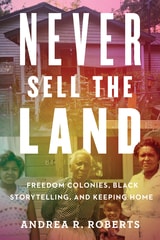
Never Sell the Land
Freedom Colonies, Black Storytelling, and Keeping HomeAndrea R. Roberts
University of Texas Press, 2027
Chronicling the stories and resilience of Texas freedom colonies facing erasure, and of the efforts of descendant community members to safeguard them.
Since Emancipation, Deep East Texas has been a place where Black Texans have experienced oppression yet also have created free Black communities. Well into the Jim Crow era, the area was home to communities where formerly enslaved people farmed their own land and ran their own affairs, now called freedom colonies. At one point, more than five hundred such communities existed in the state. Yet only a handful of these freedom colonies remain today, and they are in danger of disappearing from the record and from historical memory.
Never Sell the Land is a work about Black agency—specifically, how agency is secured through bottom-up planning and preservation in the face of unequal access. Andrea Roberts traces the efforts of descendant community members to safeguard the land and heritage of settlements in Jasper and Newton Counties, which abut the Louisiana border. She follows the descendants of these Black-built places as they deploy creative approaches to education and revitalization built on traditional community practices. Never Sell the Land tells the origin story of The Texas Freedom Colonies Atlas and Study and shows how preservation becomes self-determination—and how grassroots projects are exhuming the freedom colonies from history books, personal archives, and oral histories, and fighting to physically cement them within the landscape of Texas today.
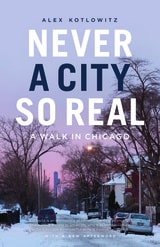
Never a City So Real
A Walk in ChicagoAlex Kotlowitz
University of Chicago Press, 2019
The book is a tour of the people of Chicago, those who have been Kotlowitz’s guide into this city’s – and by inference, this country’s – heart. Chicago, after all, is America’s city. Kotlowitz introduces us to the owner of a West Side soul food restaurant who believes in second chances, a steelworker turned history teacher, the “Diego Rivera of the projects,” and the lawyers and defendants who populate Chicago’s Criminal Courts Building. These empathic, intimate stories chronicle the city’s soul, its lifeblood.
This new edition features a new afterword from the author, which examines the state of the city today as seen from the double-paned windows of a pawnshop. Ultimately, Never a City So Real is a love letter to Chicago, a place that Kotlowitz describes as “a place that can tie me up in knots but a place that has been my muse, my friend, my joy.”
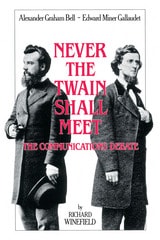
Never the Twain Shall Meet
Bell, Gallaudet, and the Communications DebateRichard Winefield
Gallaudet University Press, 1987

Never without a Song
The Years and Songs of Jennie Devlin, 1865-1952Katharine D. Newman
University of Illinois Press, 1995
New Advances in the Study of Civic Voluntarism
Resources, Engagement, and RecruitmentCasey Klofstad
Temple University Press, 2016
Individuals who are civically active have three things in common: they have the capacity to do so, they want to, and they have been asked to participate. New Advances in the Study of Civic Voluntarism is dedicated to examining the continued influence of these factors—resources, engagement, and recruitment—on civic participation in the twenty-first century.
The contributors to this volume examine recent social, political, technological, and intellectual changes to provide the newest research in the field. Topics range from race and religion to youth in the digital age, to illustrate the continued importance of understanding the role of the everyday citizen in a democratic society.
Contributors include:Molly Andolina, Allison P. Anoll, Leticia Bode, Henry E. Brady, Traci Burch, Barry C. Burden, Andrea Louise Campbell, David E. Campbell, Sara Chatfield, Stephanie Edgerly, Zoltán Fazekas, Lisa García Bedoll, Peter K. Hatemi, John Henderson, Krista Jenkins, Yanna Krupnikov, Adam Seth Levine, Melissa R. Michelson, S. Karthick Ramakrishnan, Dinorah Sánchez Loza, Kay Lehman Schlozman, Dhavan Shah, Sono Shah, Kjerstin Thorson, Sidney Verba, Logan Vidal, Emily Vraga, Chris Wells, JungHwan Yang, and the editor.
New American Studies
John Carlos Rowe
University of Minnesota Press, 2002
A clarion call for a more theoretically and politically informed approach to American Studies
John Carlos Rowe, a leading American Studies scholar, has examined his field of study and declared it not ready for the twenty-first century. In The New American Studies, Rowe demands a reinvention of the discipline that includes a commitment to making it more theoretically informed, and he draws on the work of cultural critics, postmodernist theorists, and scholars in ethnic, gender, gay, and media studies. Rowe asserts that with American Studies’s strong history of social criticism and practical pedagogy it is an easy leap to the type of progressive commitments characteristic of these areas of scholarship.
The New American Studies is a compelling combination of theory and application, synthesis and polemic. Rowe traces the evolution of American Studies over the last quarter century and looks to the future, placing the field in a postnationalist context that encompasses all of the Americas and the disparate cultural zones within. He then demonstrates the kind of literary and cultural interpretation he calls for, examining subjects ranging from Hawthorne’s and James’s responses to nineteenth-century sexual mores, to the ways television legitimated itself in its first few decades, to the Elián González custody case.
New Black Feminist Criticism, 1985-2000
Barbara Christian. Edited by Gloria Bowles, M. Giulia Fabi, and Arlene Keizer
University of Illinois Press, 2007
New Brunswick, New Jersey
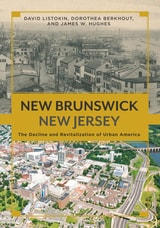
The Decline and Revitalization of Urban AmericaListokin, David
Rutgers University Press, 2016
New Constellations
Movie Stars of the 1960sWojcik, Pamela Robertson
Rutgers University Press, 2012
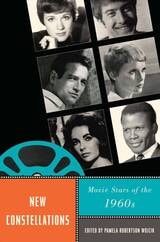
American culture changed radically over the course of the 1960s, and the culture of Hollywood was no exception. The film industry began the decade confidently churning out epic spectacles and lavish musicals, but became flummoxed as new aesthetics and modes of production emerged, and low-budget youth pictures like Easy Rider became commercial hits.
New Constellations: Movie Stars of the 1960s tells the story of the final glory days of the studio system and changing conceptions of stardom, considering such Hollywood icons as Elizabeth Taylor and Paul Newman alongside such hallmarks of youth culture as Mia Farrow and Dustin Hoffman. Others, like Sidney Poitier and Peter Sellers, took advantage of the developing independent and international film markets to craft truly groundbreaking screen personae. And some were simply “famous for being famous,” with celebrities like Zsa Zsa Gabor and Edie Sedgwick paving the way for today’s reality stars.
New Countries
Capitalism, Revolutions, and Nations in the Americas, 1750–1870John Tutino, editor
Duke University Press, 2016
Contributors. Alfredo Ávila, Roberto Breña, Sarah C. Chambers, Jordana Dym, Carolyn Fick, Erick Langer, Adam Rothman, David Sartorius, Kirsten Schultz, John Tutino
New Day Begun
African American Churches and Civic Culture in Post-Civil Rights AmericaR. Drew Smith, ed.
Duke University Press, 2003
This collection of essays analyzes the results of an unprecedented survey of nearly 2,000 African American churches across the country conducted by The Public Influences of African-American Churches Project, which is based at Morehouse College in Atlanta. These essays—by political scientists, theologians, ethicists, and others—draw on the survey findings to analyze the social, historical, and institutional contexts of black church activism and to consider the theological and moral imperatives that have shaped black church approaches to civic life—including black civil religion and womanist and afrocentric critiques. They also look at a host of faith-based initiatives addressing economic development and the provision of social services. New Day Begun presents necessary new interpretations of how black churches have changed—and been changed by—contemporary American political culture.
Contributors. Lewis Baldwin, Allison Calhoun-Brown, David D. Daniels III, Walter Earl Fluker, C.R.D. Halisi, David Howard-Pitney, Michael Leo Owens, Samuel Roberts, David Ryden, Corwin Smidt, R. Drew Smith
New Day in Babylon
The Black Power Movement and American Culture, 1965-1975William L. Van Deburg
University of Chicago Press, 1992
"New Day in Babylon is an extremely intelligent synthesis, a densely textured evocation of one of American history's most revolutionary transformations in ethnic group consciousness."—Bob Blauner, New York Times
Winner of the Gustavus Myers Center Outstanding Book Award, 1993
New Deal Archaeology in Tennessee
Intellectual, Methodological, and Theoretical ContributionsEdited by David H. Dye
University of Alabama Press, 2016
Exploring how New Deal innovation transformed archaeology in the American South.
New Deal Archaeology in Tennessee tells the engrossing story of Southeastern archaeology in the 1930s. The Tennessee Valley Authority Act of May 1933 initiated an ambitious program of flood control and power generation by way of a chain of hydroelectric dams on the Tennessee River. The construction of these dams flooded hundreds of thousands of square miles of river bottoms, campsites, villages, and towns that had been homes to Native Americans for centuries. This triggered an urgent need to undertake extensive archaeological fieldwork throughout the region. Those studies continue to influence contemporary archaeology.
The state of Tennessee and the Tennessee Valley were especially well suited research targets thanks to their mild climate and long field seasons. A third benefit in the 1930s was the abundance of labor supplied by Tennesseans unemployed during the Great Depression. Within months of the passage of the Tennessee Valley Authority Act, teams of archaeologists fanned out across the state and region under the farsighted direction of Smithsonian Institution curators Neil M. Judd, Frank H. H. Roberts, and Frank M. Setzler. The early months of 1934 would become the busiest period of archaeological fieldwork in US history.
The twelve insightful essays in New Deal Archaeology in Tennessee document and explore this unique peak in archaeological study. Chapters highlight then-new techniques such as mound “peeling” and stratigraphic excavation adapted from the University of Chicago; the four specific New Deal sites of Watts Bar Reservoir, Mound Bottom, Pack, and Chickamauga Basin; bioarchaeology in the New Deal; and the enduring impact of the New Deal on contemporary fieldwork.
The challenges of the 1930s in recruiting skilled labor, training unskilled ancillary labor, developing and improvising new field methods, and many aspects of archaeological policies, procedures, and best-practices laid much of the foundation of contemporary archaeological practice. New Deal Archaeology in Tennessee offers an invaluable record of that pivotal time for professional, student, and amateur archaeologists.
New Deal Art in Arizona
Betsy Fahlman
University of Arizona Press, 2009
Art is a powerful instrument of historical record and cultural construction, and many of the issues captured by the Farm Security Administration photographers remain significant issues today: migratory labor, the economic volatility of the mining industry, tourism, and water usage. Art tells important stories, too, including the work of Japanese American photographer Toyo Miyatake in Arizona’s internment camps, murals by Native American artist Gerald Nailor for the Navajo Nation Council Chamber in Window Rock, and African American themes at Fort Huachuca. Illustrated with 100 black-andwhite photographs and covering a wide range of both media and themes, this fascinating and accessible volume reclaims a richly textured story of Arizona history with potent lessons for today.
New Deal Modernism
American Literature and the Invention of the Welfare StateMichael Szalay
Duke University Press, 2000
Szalay situates his study within a liberal culture bent on security, a culture galvanized by its imagined need for private and public insurance.
Taking up prominent exponents of social and economic security—such as Franklin Delano Roosevelt, John Maynard Keynes, and John Dewey—Szalay demonstrates how the New Deal’s revision of free-market culture required rethinking the political function of aesthetics. Focusing in particular on the modernist fascination with the relation between form and audience, Szalay offers innovative accounts of Busby Berkeley, Jack London, James M. Cain, Robert Frost, Ayn Rand, Betty Smith, and Gertrude Stein, as well as extended analyses of the works of Ernest Hemingway, John Steinbeck, and Richard Wright.
New Deal Radio
The Educational Radio ProjectDavid Goodman
Rutgers University Press, 2022
Contextualizing the different series aired by the Educational Radio Project as part of a unified project about radio and citizenship is crucial to understanding them. New Deal Radio argues that this distinctive government commercial partnership amounted to a critical intervention in US broadcasting and an important chapter in the evolution of public radio in America.
New Destinations
Mexican Immigration in the United StatesVictor Zuniga
Russell Sage Foundation, 2005

New Directions for Library Service to Young Adults
American Library Association, 2002
New Directions in Telecommunications
Volume 2, Information Policy and Economic PolicyPaula R. Newberg, ed.
Duke University Press, 1989
New England Metropolis
Boston and the Industrialization of New England, 1807–1850Richard Garver
University of Massachusetts Press, 2026
At the outset of the nineteenth century, Boston was at its zenith as a maritime city even as New England was in decline. Many struggling farmers abandoned the area for more promising opportunities to the west. Yet by 1850, New England had been transformed into one of the most industrialized regions in the world. Former agricultural villages had become specialized manufacturing towns producing consumer goods for sale, and Boston merchant capitalists had established textile complexes that produced fabrics in huge quantities. Although Boston had been superseded by New York as a trading center, it thrived not only as a financial market but as an exchange hub in which these hinterland manufacturers acquired raw materials, capital, sales services, and transportation. With Boston at its metropolitan center, New England was transformed into an industrial geography that was unique nationally and internationally.
New England Metropolis demonstrates that, in contrast to the course of industrialization in other regions of the country, New England’s transformation was driven by entrepreneurs in hundreds of rural villages and towns and by and Boston merchant capitalists who recruited underemployed agricultural household members to produce consumer goods for sale beyond the region, including in the slave economies of the South and the Caribbean. As Boston merchants adapted commercial, financial and transportation infrastructure they had developed to serve overseas trade to the needs of the region's manufacturers, industrialization halted New England’s decline and, by 1850, had propelled it to prosperity.
New Englanders in a New Land
Newark in the Proprietary Period, 1666-1702Timothy J. Crist
Rutgers University Press, 2027
New England Puritans from the former New Haven Colony settled Newark in 1666. Their fierce determination to establish scripture-based government in a close-knit township, with community control over admitting new inhabitants, often put them in direct conflict with New Jersey's proprietary government. Newark's egalitarian system for allocating land diverged sharply from the proprietors' headright approach, adapted from the West Indies and Carolina, that rewarded settler use of indentured servants and enslaved labor with larger distributions of land.
This study provides a fresh interpretation of the founding and settlement of Newark as a self-contained New England community, including their negotiations with Native Americans, formation of godly self-government, gradual allocation of township land, and introduction of slavery. To implement their New England way, Newarkers resisted the proprietary government to the point of rebellion, bringing into stark relief the inherent conflict between two sources of authority, one scriptural and community-based and the other royal and proprietary, and two systems of land distribution.
New Faces in New Places
The Changing Geography of American ImmigrationDouglas S. Massey
Russell Sage Foundation, 2008
New Homeless And Old
Community and the Skid Row HotelCharles Hoch
Temple University Press, 1990
New Indians, Old Wars
Elizabeth Cook-Lynn
University of Illinois Press, 2006
Addressing Native American Studies' past, present, and future, the essays in New Indians, Old Wars tackle the discipline head-on, presenting a radical revision of the popular view of the American West in the process. Instead of luxuriating in its past glories or accepting the widespread historians' view of the West as a shared place, Elizabeth Cook-Lynn argues that it should be fundamentally understood as stolen.
Firmly grounded in the reality of a painful past, Cook-Lynn understands the story of the American West as teaching the political language of land theft and tyranny. She argues that to remedy this situation, Native American studies must be considered and pursued as its own discipline, rather than as a subset of history or anthropology. She makes an impassioned claim that such a shift, not merely an institutional or theoretical change, could allow Native American studies to play an important role in defending the sovereignty of indigenous nations today.
New Israel / New England
Jews and Puritans in Early AmericaMichael Hoberman
University of Massachusetts Press, 2011
More often than not, Michael Hoberman shows, Puritans thought and wrote about Jews in order to resolve their own theological and cultural dilemmas. A number of prominent New Englanders, including Roger Williams, Increase Mather, Samuel Sewall, Benjamin Colman, Cotton Mather, Jonathan Edwards, and Ezra Stiles, wrote extensively about post-biblical Jews, in some cases drawing on their own personal acquaintance with Jewish contemporaries.
Among the intriguing episodes that Hoberman investigates is the recruitment and conversion of Harvard's first permanent instructor of Hebrew, the Jewish-born Judah Monis. Later chapters describe the ecumenical friendship between Newport minister Ezra Stiles and Haim Carigal, an itinerant rabbi from Palestine, as well as the life and career of Moses Michael Hays, the prominent freemason who was Boston's first permanently established Jewish businessman, a founder of its insurance industry, an early sponsor of the Bank of Massachusetts, and a personal friend of Paul Revere.
New Issues in Librarianship
Presented Papers at the ALA 2009 Annual ConferenceAmerican Library Association, 2009
New Italian Migrations to the United States
Vol. 1: Politics and History since 1945Edited by Laura E. Ruberto and Joseph Sciorra: Afterword by Donna Gabaccia
University of Illinois Press, 2017
Contributors: Ottorino Cappelli, Donna Gabaccia, Stefano Luconi, Maddalena Marinari, James S. Pasto, Rodrigo Praino, Laura E. Ruberto, Joseph Sciorra, Donald Tricarico, and Elizabeth Zanoni.
New Italian Migrations to the United States
Vol. 2: Art and Culture since 1945Laura Ruberto, Joseph Sciorra
University of Illinois Press, 2017
Contributors: John Allan Cicala, Simone Cinotto, Teresa Fiore, Incoronata (Nadia) Inserra, Laura E. Ruberto, Joseph Sciorra, and Anthony Julian Tamburri.
New Jack Jocks
Rebels, Race, And The American AthleteLarry Platt
Temple University Press, 2003
New Jersey Anthology
Lurie, Maxine N
Rutgers University Press, 2002
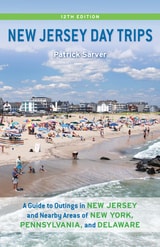
New Jersey Day Trips
A Guide to Outings in New Jersey and Nearby Areas of New York, Pennsylvania, and DelawareSarver, Patrick
Rutgers University Press, 0
Shades of F. Scott Fitzgerald roam Princeton as lads and lasses walk the well-clipped paths between venerable university halls, while russet leaves flutter overhead from rows of sturdy trees. Visions of knights and their fair maidens come to mind as explorers wander around Lambert Castle, an 1892 sandstone and granite mansion that looms like a medieval fortress with rounded towers and turrets on a hillside below the cliffs of the Garret Mountain Reservation. For art lovers who like to stroll on lush lawns and enjoy the beauty around them, Grounds for Sculpture is the place to be seen in New Jersey. And, then there's always the 127 miles of beach along the state's east coast that make perfect day trips for swimming, boating, fishing, and other fun activities.
Now in a revised and expanded 12th edition, New Jersey Day Trips offers everyone a fascinating journey through hundreds of tourist attractions in all corners of the Garden State. Plus, this comprehensive resource explores the most popular points just beyond the state's borders. Patrick Sarver has updated most entries and added more than twenty new points of interest to an already extensive list of destinations, making this the most sought-after guidebook about New Jersey. Attractions can be located easily by subject category, letting travelers zero in on places that appeal to them. Entries include descriptions, hours of operation, location, price range, telephone numbers, and Web sites, making this best seller a one-stop source of discovery for day trippers of all ages--an ideal travel guide for adults or families who live in or plan to visit New Jersey..
New Jersey Dreaming
Capital, Culture, and the Class of '58Sherry B. Ortner
Duke University Press, 2005
Ortner tracked down nearly all 304 of her classmates. She interviewedabout 100 in person and spoke with most of the rest by phone, recording her classmates’ vivid memories of time, place, and identity. Ortner shows how social class affected people’s livesin many hidden and unexamined ways. She also demonstrates that the Class of ‘58’s extreme upward mobility must be understood in relation to the major identity movements of the twentieth century—the campaign against anti-Semitism, the Civil Rights movement, and feminism.
A multisited study combining field research with an interdisciplinary analytical framework, New Jersey Dreaming is a masterly integration of developments at the vanguard of contemporary anthropology. Engaging excerpts from Ortner's field notes are interspersed throughout the book. Whether recording the difficulties and pleasures of studying one's own peer group, the cultures of driving in different parts of the country, or the contrasting experiences of appointment-making in Los Angeles and New York, they provide a rare glimpse into the actual doing of ethnographic research.
New Jersey Fan Club
Artists and Writers Celebrate the Garden StateKerri Sullivan
Rutgers University Press, 2022
Despite the many jokes and stereotypes about New Jersey and its residents, in reality the state is a wildly diverse place, home to a vast variety of landscapes, cultures, and people. There is no singular New Jersey experience, and the stories that its residents have to share about the state will surprise you.
New Jersey Fan Club: Artists and Writers Celebrate the Garden State is an eclectic anthology featuring personal essays, interviews, and comics from a broad group of established and emerging writers and artists who have something to say about New Jersey. It offers a multifaceted look at the state’s history and significance, told through narrative nonfiction, photographs, and illustrations.
New Jersey Fan Club is edited by Kerri Sullivan, founder of the popular Instagram account Jersey Collective (@jerseycollective), which features weekly takeovers by different New Jerseyans. This book functions the same way: it gives dozens of different contributors the chance to share what New Jersey looks like to them. The book is an exploration of how the same locale can shape people in different ways, and it will inspire readers to look at the Garden State with fresh eyes and appreciate its bounty of beautiful places and vibrant spaces.
New Jersey State of Mind
Peter Genovese
Rutgers University Press, 2020
For this new book, Genovese spent months scouring the state for rich stories and fascinating locations. New Jersey State of Mind takes us on a journey to over twenty-five of these places and introduces us to the colorful characters who live and work there, from a demolition derby driver to a female craft brewer, and from a Cuban celebrity chef to a Portuguese pig breeder. He also reveals the many natural wonders that have earned New Jersey its “Garden State” nickname, from cranberry bogs to river tours to wild bird sanctuaries.
Collectively, these pieces paint a picture of a diverse state full of hard-working individuals who care for their communities. This book cuts through the myths and stereotypes surrounding the state and reveals the proud beating heart of the real New Jersey.

New Jersey for Kids
Sarver, Patrick
Rutgers University Press, 2012
Many parents in the Garden State are familiar with Great Adventure in Jackson, the boardwalk at Point Pleasant, and the Adventure Aquarium in Camden, but do they know about Kindermusik in Teaneck, the Young Chef’s Academy in Hillsborough, or the Buehler Challenger and Science Center in Paramus?
In New Jersey for Kids, Patrick Sarver provides parents with a handy reference guide offering hundreds of educational and entertaining ideas for children and their parents to explore and enjoy. Activities are designed specifically for kids ages 12 and under and cover a wide array of fun ways to enrich their intellectual lives, build their athletic skills, express themselves creatively, or just have room to play. The activities covered include:
- Robotics workshops
- Themed tea parties
- Plays and performances for children
- Museum tours, special exhibits, and programs for kids
- Pony rides and horseback riding lessons
- Specialized summer camps
- Arts and crafts classes
- Gymnastics classes
- Zoos and nature activities
- Hockey, soccer, and baseball clinics
- Acting and dancing lessons
- Play centers with slides, ball pits, and bounce castles
Busy parents no longer need to spend hours surfing the Web and scouting out resources to find nearby activities their kids might enjoy. New Jersey for Kids puts this information right in the palms of their hands. Chapters are organized by category so it is easy to locate just the right activities to suit an individual child’s interests, whether it’s a fun way to spend an afternoon or a class that might inspire a lifelong passion. Along with descriptions and commentary, listings include recommended age ranges, handicap accessibility, and estimated durations of activities as well as practical information on hours, price ranges, Web sites, and phone numbers.
New Jersey's Coastal Heritage
A GuideDi Ionno, Mark
Rutgers University Press, 1997
Most people see the Jersey Shore as sun, sand, and surf . . . and hours in bumper-to-bumper traffic on the Garden State Parkway. But theres much more to the Shore!Long before the first hotel, miniature golf range, and amusement pier were built, explorers, sailors, and settlers were drawn to New Jerseys coast and left their mark upon it.
In this book, Mark Di Ionno invites you to join him in discovering New Jerseys rich and varied coastal heritage. Hell take you on a personal tour to explore the Sandy Hook Lighthouse and Spermaceti Cove Station, admire offbeat collections of saltwater taffy boxes and sand art in Atlantic City, spend an afternoon at Brigantine and unravel the legend of Captain Kidd, marvel at the skills of Tuckertons boatbuilders, discover New Jerseys own version of the Boston Tea Party in Greenwich, and find inspiration at Ocean Grove, a Methodist meeting place.
Organized by county and amply illustrated with photographs and maps, the guides entries give directions and information about hours, programs, and accessibility, and, above all, lively descriptions of the local history and cultural traditions that make each place special. Di Ionno includes many sites on the National Park Services Coastal Heritage Trail, but roves beyond the Trail to highlight a host of other wonderful museums, buildings, byways, and landmarks that could not be incorporated into the official trail.
New Jersey's Natures
Environmental Histories of the Garden StateRaechel Lutz
Rutgers University Press, 2026
New Jersey’s Natures takes up the challenge of expanding academic and popular conceptions of New Jersey and its landscapes through the lens of environmental history. Scholars’ essays showcase the ways in which nature is integral to understandings of the state and its past as well as its future. These essays show that New Jersey should no longer solely be known as a place where pollution and suburbanization run amok but rather a place where history happens.
The contributors investigate how nature and history are intertwined within this small but mighty state, covering topics from the colonial period to the present across North, South, and Central Jersey. They investigate natural features like the Delaware River and Bay, the Pinelands, and the unforgettable Jersey Shore. In this book, you will find Indigenous Americans making meaning as settlers threaten their ways of life, Governor William Livingston considering Central Jersey’s features as he fights in the American Revolution, farmers building the state’s industrial agriculture, a foreign diplomat planting an arboretum, squatters in the swampy Meadowlands subverting social and economic norms, activists fighting for parks, forests, and beaches across two centuries, and much more.
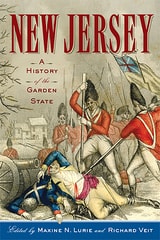
New Jersey
A History of the Garden StateLurie, Maxine N
Rutgers University Press, 2012
New Jersey: A History of the Garden State presents a fresh, comprehensive overview of New Jersey’s history from the prehistoric era to the present. The findings of archaeologists, political, social, and economic historians provide a new look at how the Garden State has evolved.
The state has a rich Native American heritage and complex colonial history. It played a pivotal role in the American Revolution, early industrialization, and technological developments in transportation, including turnpikes, canals, and railroads. The nineteenth century saw major debates over slavery. While no Civil War battles were fought in New Jersey, most residents supported it while questioning the policies of the federal government.
Next, the contributors turn to industry, urbanization, and the growth of shore communities. A destination for immigrants, New Jersey continued to be one of the most diverse states in the nation. Many of these changes created a host of social problems that reformers tried to minimize during the Progressive Era. Settlement houses were established, educational institutions grew, and utopian communities were founded. Most notably, women gained the right to vote in 1920. In the decades leading up to World War II, New Jersey benefited from back-to-work projects, but the rise of the local Ku Klux Klan and the German American Bund were sad episodes during this period.
The story then moves to the rise of suburbs, the concomitant decline of the state’s cities, growing population density, and changing patterns of wealth. Deep-seated racial inequities led to urban unrest as well as political change, including such landmark legislation as the Mount Laurel decision. Today, immigration continues to shape the state, as does the tension between the needs of the suburbs, cities, and modest amounts of remaining farmland.
Well-known personalities, such as Jonathan Edwards, George Washington, Woodrow Wilson, Dorothea Dix, Thomas Edison, Frank Hague, and Albert Einstein appear in the narrative. Contributors also mine new and existing sources to incorporate fully scholarship on women, minorities, and immigrants. All chapters are set in the context of the history of the United States as a whole, illustrating how New Jersey is often a bellwether for the nation..
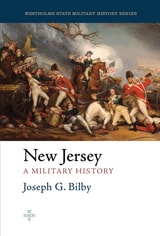
New Jersey
A Military HistoryJoseph G. Bilby
Westholme Publishing, 2017
New Jersey: A Military History by military historian Joseph G. Bilby tells the long, diverse, and sometimes complicated story of New Jersey’s citizens and their significant and continuing role in America’s defense. Over more than 350 years as a colony and state, hundreds of thousands of New Jersey residents have served in regular armed forces, militia, and National Guard units or in direct support of those organizations. New Jerseyans in the military include General “Scotch Willie” Maxwell of Sussex County, an unappreciated Revolutionary War master tactician; First Sergeant George Ashby of Allentown, of Company H, 45th United States Colored Infantry, the state’s last surviving Civil War veteran; Clara Maas of Newark, a nurse who sacrificed her life in the effort to eradicate Yellow Fever; Captain William J. Reddan, who led his company into hell during the Meuse-Argonne offensive in 1918; and Medal of Honor winner John Basilone, whose sense of duty and honor led him to return to combat and death in World War II.
Complete with maps, an annotated list of historical sites in the state, and further reading, New Jersey: A Military History is an important reference for those interested in the role of the Garden State in our nation’s wars.
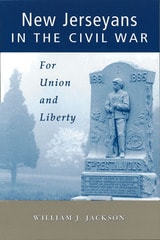
New Jerseyans in the Civil War
For Union and LibertyJackson, William J
Rutgers University Press, 2006
The Civil War divided New Jersey just as it did the nation. As a small state sandwiched between two large and powerful neighbors, New Jersey had always enthusiastically supported the creation of a strong central government. On the other hand, many New Jersey citizens did not share the anti-slavery sentiments of the North; they supported property rights of slave owners and believed in the natural inferiority of blacks. Subsequently, when southern states began to secede from the Union to form the Confederacy, New Jerseyans were left divided and confused.
William J. Jackson examines the ironies, paradoxes, and contradictions that characterized New Jersey's unique historical role in the war. This is the only book to incorporate social and political history with that of military history and strategy. Civil War aficionados and historians will also welcome Jackson's analysis of the participation of New Jersey African Americans on the home front and in the military.
New Latina Narrative
The Feminine Space of Postmodern EthnicityEllen McCracken
University of Arizona Press, 1999
New Left Revisited
edited by John McMillian and Paul Buhle
Temple University Press, 2003

New Left, New Right, and the Legacy of the Sixties
Paul Lyons
Temple University Press, 1996
New Lights in the Valley
The Emergence of UABTennant S. McWilliams
University of Alabama Press, 2007
A scholarly narrative of UAB from its nascent beginnings through the mid 1990s.
While the economy and culture of the post—World War II South changed from an era of material capital (e.g., cotton and iron ore) to a period of social capital (intellectual development and networked approaches to social change), one of the most important components of urban life, the university, emerged as both a creator and a reflector of such modernization.
This is the case with Birmingham and its youthful institution of higher learning, the University of Alabama at Birmingham. From its early days as a struggling offshoot of the capstone campus in Tuscaloosa, UAB’s journey to its current status as a major university has been a bumpy but interesting one. Tennant McWilliams, a longtime UAB history professor, explores the whole range of historical considerations, including UAB’s similarities and connections to trans-Atlantic civic universities; the irony of the shift from Big Steel to Big Medicine in Birmingham; the visionary administrations of Joseph F. Volker and others; and the evolving decision to make non-medical life at UAB less of a commuter experience and more of a traditional campus experience.
McWilliams does not palliate the missteps and disputes that have, from time to time, impeded the institution’s progress. But he explains why, despite various hurdles and distractions, UAB has risen to be Alabama’s largest employer and can rightly boast that its complex of health care services, especially organ transplantation and neuroscience, as well as such fields as philosophy and psychology, are among the best in the nation.
New Media Futures
The Rise of Women in the Digital ArtsEdited by Donna J. Cox, Ellen Sandor, and Janine Fron
University of Illinois Press, 2018
New Mexico's Buffalo Soldiers
1866-1900Monroe Lee Billington
University Press of Colorado, 1991