22279 books match the query 'Social Science' and 509 start with n
cover of Neither Cargo nor Cult: Ritual Politics and the Colonial Imagination in Fiji

Neither Cargo nor Cult

Ritual Politics and the Colonial Imagination in Fiji

Martha Kaplan

Duke University Press, 1995

In the 1880s an oracle priest, Navosavakadua, mobilized Fijians of the hinterlands against the encroachment of both Fijian chiefs and British colonizers. British officials called the movement the Tuka cult, imagining it as a contagious superstition that had to be stopped. Navosavakadua and many of his followers, deemed "dangerous and disaffected natives," were exiled. Scholars have since made Tuka the standard example of the Pacific cargo cult, describing it as a millenarian movement in which dispossessed islanders sought Western goods by magical means. In this study of colonial and postcolonial Fiji, Martha Kaplan examines the effects of narratives made real and traces a complex history that began neither as a search for cargo, nor as a cult.
Engaging Fijian oral history and texts as well as colonial records, Kaplan resituates Tuka in the flow of indigenous Fijian history-making and rereads the archives for an ethnography of British colonizing power. Proposing neither unchanging indigenous culture nor the inevitable hegemony of colonial power, she describes the dialogic relationship between plural, contesting, and changing articulations of both Fijian and colonial culture.
A remarkable enthnographic account of power and meaning, Neither Cargo nor Cult addresses compelling questions within anthropological theory. It will attract a wide audience among those interested in colonial and postcolonial societies, ritual and religious movements, hegemony and resistance, and the Pacific Islands.
[more]
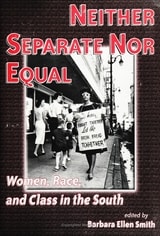
cover of Neither Separate Nor Equal

Neither Separate Nor Equal

edited by Barbara Ellen Smith

Temple University Press, 1999

When she began work on this collection, Barbara Ellen Smith was asked, "Why work on a book about women in the South? Nobody writes books about women in the Midwest." In an era of intensified globalization, when populations, cultures, and capital move across the boundaries of nation-states in multiple forms and directions, the concept of a subnational region seems parochial and out of date. "But," Smith argues, "it is precisely because of the historical construction of the secessionist South as an embattled region when all manners of social problems tend to be blamed on poor women and children and those whose skin is anything but white, that the experiences of racially diverse women in a region legendary for both white supremacy and male supremacy are important to explore."

Collecting in one volume the work of such well-known scholars on Appalachia and the South as Carl Stack, Mab Segrest, and Sally Maggard, among others, Neither Separate Nor Equal analyzes the complex and dramatic developments in the lives of contemporary Southern women. Case studies vividly portray women's diverse circumstances activities: from rural African American women in the Mississippi Delta taking on new roles as community builders to female textile workers in North Carolina contending with automation and reorganization of the mills.

Focusing on the South's historical legacies as they are manifested and contested in the lives of women today, including the tensions between long-lasting patterns of regional distinctiveness and the disruptions of globalizations, this collection approaches differences of race and class not as forms of separation among women, but as social -- be they often contentious, difficult, or exploitive -- relationships. Unifying around a theme of relationally, Neither Separate Nor Equal offers searching empirical studies of Southern women and a conceptual model for feminist scholarship as a whole.

[more]
cover of Neither Villain nor Victim: Empowerment and Agency among Women Substance Abusers

Neither Villain nor Victim

Empowerment and Agency among Women Substance Abusers

Anderson, Tammy

Rutgers University Press, 2008

Female drug addicts are often stereotyped either as promiscuous, lazy, and selfish, or as weak, scared, and trapped into addiction. These depictions typify the "pathology and powerlessness" narrative that has historically characterized popular and academic conversations about female substance abusers. Neither Villain Nor Victim attempts to correct these polarizing perspectives by presenting a critical feminist analysis of the drug world. By shifting the discussion to one centered on women's agency and empowerment, this book reveals the complex experiences and social relationships of women addicts.

Essays explore a range of topics, including the many ways that women negotiate the illicit drug world, how former drug addicts manage the more intimate aspects of their lives as they try to achieve abstinence, how women tend to use intervention resources more positively than their male counterparts, and how society can improve its response to female substance abusers by moving away from social controls (such as the criminalization of prostitution) and rehabilitative programs that have been shown to fail women in the long term.

Advancing important new perspectives about the position of women in the drug world, this book is essential reading in courses on women and crime, feminist theory, and criminal justice.
[more]
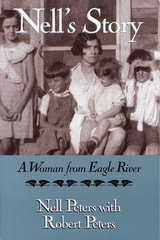
cover of Nell's Story: A Woman from Eagle River

Nell's Story

A Woman from Eagle River

Nell Peters, with Robert Peters

University of Wisconsin Press, 1995
With its desperate acts and dire consequences, Nell Peters's tale of a woman's life in northern Wisconsin is a remarkable story, full of the sense and sound and flavor of a time and place rarely visited in books. Nell's tomboy childhood, her businesslike initiation into sex on the eve of her departure for the WACs in 1951, her resulting pregnancy and return home to a life sharply at odds with small-town conventions, her struggle to keep her twin sons, and her disastrous sexual liaisons with men and women alike are recounted in this funny, gritty, and wildly candid book.
[more]
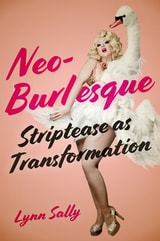
cover of Neo-Burlesque: Striptease as Transformation

Neo-Burlesque

Striptease as Transformation

Lynn Sally

Rutgers University Press, 2022

The neo-burlesque movement seeks to restore a sense of glamour, theatricality, and humor to striptease. Neo-burlesque performers strut their stuff in front of audiences that appreciate their playful brand of pro-sex, often gender-bending, feminism. 
 
Performance studies scholar and acclaimed burlesque artist Lynn Sally offers an inside look at the history, culture, and philosophy of New York’s neo-burlesque scene. Revealing how twenty-first century neo-burlesque is in constant dialogue with the classic burlesque of the nineteenth and twentieth centuries, she considers how today’s performers use camp to comment on preconceived notions of femininity. She also explores how the striptease performer directs the audience’s gaze, putting on layers of meaning while taking off layers of clothing. 
 
Through detailed profiles of iconic neo-burlesque performers such as Dita Von Teese, Dirty Martini, Julie Atlas Muz, and World Famous *BOB*, this book makes the case for understanding neo-burlesque as a new sexual revolution. Yet it also examines the broader community of “Pro-Am” performers who use neo-burlesque as a liberating vehicle for self-expression. Raising important questions about what feminism looks like, Neo-Burlesque celebrates a revolutionary performing art and participatory culture whose acts have political reverberations, both onstage and off.

[more]
cover of Neo-Confederacy: A Critical Introduction

Neo-Confederacy

A Critical Introduction

Edited by Euan Hague, Heidi Beirich, and Edward H. Sebesta

University of Texas Press, 2008

A century and a half after the conclusion of the Civil War, the legacy of the Confederate States of America continues to influence national politics in profound ways. Drawing on magazines such as Southern Partisan and publications from the secessionist organization League of the South, as well as DixieNet and additional newsletters and websites, Neo-Confederacy probes the veneer of this movement to reveal goals far more extensive than a mere celebration of ancestry.

Incorporating groundbreaking essays on the Neo-Confederacy movement, this eye-opening work encompasses such topics as literature and music; the ethnic and cultural claims of white, Anglo-Celtic southerners; gender and sexuality; the origins and development of the movement and its tenets; and ultimately its nationalization into a far-reaching factor in reactionary conservative politics. The first book-length study of this powerful sociological phenomenon, Neo-Confederacy raises crucial questions about the mainstreaming of an ideology that, founded on notions of white supremacy, has made curiously strong inroads throughout the realms of sexist, homophobic, anti-immigrant, and often "orthodox" Christian populations that would otherwise have no affiliation with the regionality or heritage traditionally associated with Confederate history.
[more]
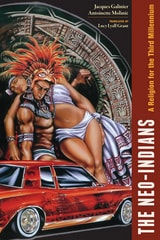
cover of Neo-Indians: A Religion for the Third Millenium

Neo-Indians

A Religion for the Third Millenium

Jacques Galinier

University Press of Colorado, 2013

The Neo-Indians is a rich ethnographic study of the emergence of the neo-Indian movement—a new form of Indian identity based on largely reinvented pre-colonial cultures and comprising a diverse group of people attempting to re-create purified pre-colonial indigenous beliefs and ritual practices without the contaminating influences of modern society.

There is no full-time neo-Indian. Both indigenous and non-indigenous practitioners assume Indian identities only when deemed spiritually significant. In their daily lives, they are average members of modern society, dressing in Western clothing, working at middle-class jobs, and retaining their traditional religious identities. As a result of this part-time status the neo-Indians are often overlooked as a subject of study, making this book the first anthropological analysis of the movement.

Galinier and Molinié present and analyze four decades of ethnographic research focusing on Mexico and Peru, the two major areas of the movement’s genesis. They examine the use of public space, describe the neo-Indian ceremonies, provide analysis of the ceremonies’ symbolism, and explore the close relationship between the neo-Indian religion and tourism. The Neo-Indians will be of great interest to ethnographers, anthropologists, and scholars of Latin American history, religion, and cultural studies.
[more]
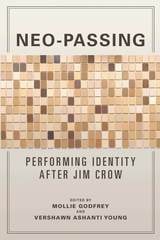
cover of Neo-Passing: Performing Identity after Jim Crow

Neo-Passing

Performing Identity after Jim Crow

Edited by Mollie Godfrey and Vershawn Ashanti Young: Foreword by Gayle Wald Afterword by Michele Elam

University of Illinois Press, 2018
African Americans once passed as whites to escape the pains of racism. Today's neo-passing has pushed the old idea of passing in extraordinary new directions. A white author uses an Asian pen name; heterosexuals live "out" as gay; and, irony of ironies, whites try to pass as black. Mollie Godfrey and Vershawn Ashanti Young present essays that explore practices, performances, and texts of neo-passing in our supposedly postracial moment. The authors move from the postracial imagery of Angry Black White Boy and the issues of sexual orientation and race in ZZ Packer's short fiction to the politics of Dave Chappelle's skits as a black President George W. Bush. Together, the works reveal that the questions raised by neo-passing—questions about performing and contesting identity in relation to social norms—remain as relevant today as in the past. Contributors: Derek Adams, Christopher M. Brown, Martha J. Cutter, Marcia Alesan Dawkins, Michele Elam, Alisha Gaines, Jennifer Glaser, Allyson Hobbs, Brandon J. Manning, Loran Marsan, Lara Narcisi, Eden Osucha, Gayle Wald, and Deborah Elizabeth Whaley
[more]
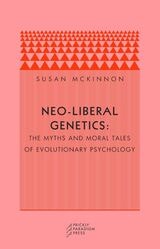
cover of Neo-liberal Genetics: The Myths and Moral Tales of Evolutionary Psychology

Neo-liberal Genetics

The Myths and Moral Tales of Evolutionary Psychology

Susan McKinnon

Prickly Paradigm Press, 2005

Evolutionary psychology claims to be the authoritative science of "human nature." Its chief architects, including Stephen Pinker and David Buss, have managed to reach well beyond the ivory tower to win large audiences and influence public discourse. But do the answers that evolutionary psychologists provide about language, sex, and social relations add up? Susan McKinnon thinks not.
Far from being an account of evolution and social relations that has historical and cross-cultural validity, evolutionary psychology is a stunning example of a "science" that twists evolutionary genetics into a myth of human origins. As McKinnon shows, that myth is shaped by neo-liberal economic values and relies on ethnocentric understandings of sex, gender, kinship, and social relations. She also explores the implications for public policy of the moral tales that are told by evolutionary psychologists in the guise of "scientific" inquiry.
Drawing widely from the anthropological record, Neo-liberal Genetics offers a sustained and accessible critique of the myths of human nature fabricated by evolutionary psychologists.
[more]
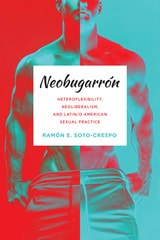
cover of Neobugarrón: Heteroflexibility, Neoliberalism, and Latin/o American Sexual Practice

Neobugarrón

Heteroflexibility, Neoliberalism, and Latin/o American Sexual Practice

Ramón E. Soto-Crespo

The Ohio State University Press, 2023

How should we understand the bugarrón, a man who has sex with other men while regarding himself as heterosexual? Reaching beyond queer and gay studies, Ramón E. Soto-Crespo’s research suggests that this paradoxical figure mutated into what he calls the “neobugarrón,” a neoliberal market-oriented actor who used the traditional sexual practice as an optimizing strategy for manipulating the forces of globalization during the 1990s. In Neobugarrón: Heteroflexibility, Neoliberalism, and Latin/o American Sexual Practice, Soto-Crespo chronicles the cultural modifications of bugarrón, a distinct male-male sexual practice in Latin/o America and the Caribbean, during the twentieth and twenty-first centuries. Working with and against Foucault and Kinsey to examine diverse works from anthropology, literature, cinema, and social media, he investigates a wide array of bugarrón sources, ranging from previously underexamined multimedia to ethnographies, fiction, films, and beyond. These works constitute a neobugarrón archive and attest to a sexual practice currently metamorphosing on the cusp of extinction. Soto-Crespo’s analysis challenges conventional understandings of “heteroflexible” sex between men and reveals a hitherto unnoticed transformation in neoliberal ecologies of bugarrón sexual practice.

[more]
cover of Neodomestic American Fiction

Neodomestic American Fiction

Kristin J. Jacobson

The Ohio State University Press, 2010

In American literature, domestic fictions—that is, novels focused on the home and homemaking—are linked with white, middle-class women’s fiction and culture. Employing a spatial lens, Neodomestic American Fiction joins and extends other studies in redefining domestic fiction’s literary history and definition. Unlike previous redefinitions and reevaluations, Neodomestic American Fiction reads domestic novels alongside feminist geography and architectural history to map the links and disjunctions among a range of authors writing during the same period as well as across centuries and cultures. Kristin Jacobson’s attention to domestic geographies reveals a new space and subgenre emerge in the 1980s: neodomestic fiction.
 
In this innovative study, Kristin Jacobson identifies over thirty novels that renovate traditional forms, therefore challenging model domesticity’s conservative gender, racial, and sexual politics. Rather than produce stable single-family homes, neodomestic fictions advance a politics of instability characterized by mobility, renovation and redesign, and relational space. These “alternative” domesticities—when read in the context of neodomestic fiction—are not marginal but rather central to domesticity’s configurations. Such resistance, as Iris Marion Young argues, “is integral to modern political theory and is not an alternative to it.”
 
Thus, this spatial analysis of post-1980 domestic novels does not indicate a post-feminist or post-gender world. Rather, neodomestic fiction’s heterogeneous, unstable spaces offer opportunities to examine contemporary hierarchies and experiment with more egalitarian homemaking. These fictions include Toni Morrison’s Paradise, Barbara Kingsolver’s The Poisonwood Bible, Leslie Marmon Silko’s Gardens in the Dunes, and Chang-rae Lee’s A Gesture Life.
[more]
cover of Neoliberal Apartheid: Palestine/Israel and South Africa after 1994

Neoliberal Apartheid

Palestine/Israel and South Africa after 1994

Andy Clarno

University of Chicago Press, 2017

In recent years, as peace between Israelis and Palestinians has remained cruelly elusive, scholars and activists have increasingly turned to South African history and politics to make sense of the situation. In the early 1990s, both South Africa and Israel began negotiating with their colonized populations. South Africans saw results: the state was democratized and black South Africans gained formal legal equality. Palestinians, on the other hand, won neither freedom nor equality, and today Israel remains a settler-colonial state. Despite these different outcomes, the transitions of the last twenty years have produced surprisingly similar socioeconomic changes in both regions: growing inequality, racialized poverty, and advanced strategies for securing the powerful and policing the racialized poor. Neoliberal Apartheid explores this paradox through an analysis of (de)colonization and neoliberal racial capitalism.

After a decade of research in the Johannesburg and Jerusalem regions, Andy Clarno presents here a detailed ethnographic study of the precariousness of the poor in Alexandra township, the dynamics of colonization and enclosure in Bethlehem, the growth of fortress suburbs and private security in Johannesburg, and the regime of security coordination between the Israeli military and the Palestinian Authority in the West Bank. The first comparative study of the changes in these two areas since the early 1990s, the book addresses the limitations of liberation in South Africa, highlights the impact of neoliberal restructuring in Palestine, and argues that a new form of neoliberal apartheid has emerged in both contexts.
[more]
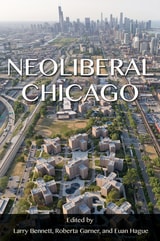
cover of Neoliberal Chicago

Neoliberal Chicago

Edited by Larry Bennett, Roberta Garner, and Euan Hague

University of Illinois Press, 2017

The neoliberal philosophy of fiscal austerity aligned with reduced regulation has transformed Chicago. As pursued by mayor Rahm Emanuel and his predecessor Richard M. Daley, neoliberalism led officials to privatize everything from parking meters to schools, gut regulations and social services, and promote gentrification wherever possible. The essayists in Neoliberal Chicago explore an essential question: how does neoliberalism work on the ground in today's Chicago? Contextual chapters explore race relations, physical development, and why Chicago embraced neoliberalism. Other contributors delve into aspects of the neoliberal vision, neoliberalism's impact on three iconic city spaces, and how events like the 2008 foreclosure crisis and the bid to attract the Olympic Games reveal the workings of neoliberalism. Contributors: Stephen Alexander, Larry Bennett, Michael Bennett, Carrie Breitbach, Sean Dinces, Kenneth Fidel, Roberta Garner, Euan Hague, Black Hawk Hancock, Christopher Lamberti, Michael J. Lorr, Martha Martinez, Brendan McQuade, Alex G. Papadopoulos, Rajiv Shah, Costas Spirou, Carolina Sternberg, and Yue Zhang.
[more]
cover of Neoliberal Frontiers: An Ethnography of Sovereignty in West Africa

Neoliberal Frontiers

An Ethnography of Sovereignty in West Africa

Brenda Chalfin

University of Chicago Press, 2010
In Neoliberal Frontiers, Brenda Chalfin presents an ethnographic examination of the day-to-day practices of the officials of Ghana’s Customs Service, exploring the impact of neoliberal restructuring and integration into the global economy on Ghanaian sovereignty. From the revealing vantage point of the Customs office, Chalfin discovers a fascinating inversion of our assumptions about neoliberal transformation: bureaucrats and local functionaries, government offices, checkpoints, and registries are typically held to be the targets of reform, but Chalfin finds that these figures and sites of authority act as the engine for changes in state sovereignty. Ghana has served as a model of reform for the neoliberal establishment, making it an ideal site for Chalfin to explore why the restructuring of a state on the global periphery portends shifts that occur in all corners of the world. At once a foray into international political economy, politics, and political anthropology, Neoliberal Frontiers is an innovative interdisciplinary leap forward for ethnographic writing, as well as an eloquent addition to the literature on postcolonial Africa.
[more]
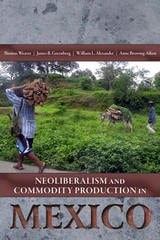
cover of Neoliberalism and Commodity Production in Mexico

Neoliberalism and Commodity Production in Mexico

Thomas Weaver

University Press of Colorado, 2012

Neoliberalism and Commodity Production in Mexico details the impact of neoliberal practice on the production and exchange of basic resources in working-class communities in Mexico. Using anthropological investigations and a market-driven approach, contributors explain how uneven policies have undermined constitutional protections and working-class interests since the Mexican Revolution of 1910.

Detailed ethnographic fieldwork shows how foreign investment, privatization, deregulation, and elimination of welfare benefits have devastated national industries and natural resources and threatened agriculture, driving the campesinos and working class deeper into poverty. Focusing on specific commodity chains and the changes to production and marketing under neoliberalism, the contributors highlight the detrimental impacts of policies by telling the stories of those most affected by these changes. They detail the complex interplay of local and global forces, from the politically mediated systems of demand found at the local level to the increasingly powerful municipal and state governments and the global trade and banking institutions.

Sharing a common theoretical perspective and method throughout the chapters, Neoliberalism and Commodity Production in Mexico is a multi-sited ethnography that makes a significant contribution to studies of neoliberal ideology in practice.
[more]
cover of Nested Ecologies: A Multilayered Ethnography of Functional Medicine

Nested Ecologies

A Multilayered Ethnography of Functional Medicine

Rosalynn A. Vega

University of Texas Press, 2023

How functional medicine leverages systems biology and epigenetic science to treat the microbiome and reverse chronic disease.

Each body is a system within a system—an ecology within the larger context of social, political, economic, cultural, and environmental factors. This is one of the lessons of epigenetics, whereby structural inequalities are literally encoded in our genes. But our ecological embeddedness extends beyond DNA, for each body also teems with trillions of bacteria, yeast, and fungi, all of them imprints of our individual milieus. Nested Ecologies asks what it would mean to take seriously our microbial being, given that our internal ecologies are shaped by inequalities embedded in our physical and social environments.

Further, Rosalynn Vega argues that health practices focused on patients’ unique biology inadvertently reiterate systemic inequities. In particular, functional medicine—which attempts to heal chronic disease by leveraging epigenetic science and treating individual microbiomes—reduces illness to problems of “lifestyle,” principally diet, while neglecting the inability of poor people to access nutrition. Functional medicine thus undermines its own critique of the economics of health care. Drawing on novel digital ethnographies and reflecting on her own experience of chronic illness, Vega challenges us to rethink not only the determinants of well-being but also what it is to be human.

[more]
cover of Net Neutrality and the Battle for the Open Internet

Net Neutrality and the Battle for the Open Internet

Danny Kimball

University of Michigan Press, 2022
“Net neutrality,” a dry but crucial standard of openness in network access, began as a technical principle informing obscure policy debates but became the flashpoint for an all-out political battle for the future of communications and culture. Net Neutrality and the Battle for the Open Internet is a critical cultural history of net neutrality that reveals how this intentionally “boring” world of internet infrastructure and regulation hides a fascinating and pivotal sphere of power, with lessons for communication and media scholars, activists, and anyone interested in technology and politics. While previous studies and academic discussions of net neutrality have been dominated by legal, economic, and technical perspectives, Net Neutrality and the Battle for the Open Internet offers a humanities-based critical theoretical approach, telling the story of how activists and millions of everyday people, online and in the streets, were able to challenge the power of the phone and cable corporations that historically dominated communications policy-making to advance equality and justice in media and technology.
[more]
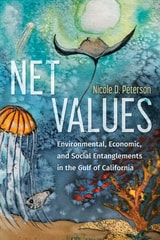
cover of Net Values: Environmental, Economic, and Social Entanglements in the Gulf of California

Net Values

Environmental, Economic, and Social Entanglements in the Gulf of California

Nicole D. Peterson

University of Arizona Press, 2025

In Loreto, Baja California Sur, Mexico, artisanal fishing families and staff of Loreto Bay National Park face an array of choices as tourism, environmental concerns, and economic precarity challenge livelihoods and natural resource availability. In Net Values, Nicole D. Peterson offers a critical examination of how the idea of “choice” is understood, and what it means for policies, planning, and programs to ignore the social, political, economic, and cultural contexts surrounding these choices.

Anchored by more than twenty years of research, Peterson provides insight into the fishing community of Loreto and reveals an important role in decision-making that diverges from previous studies. She argues that decisions about fishing, natural resource management, and other aspects of life are influenced by context, values, and expectations in ways that go beyond the typical psychological or cognitive theories of choice. Instead, Net Values highlights the ways that choices are constrained and enabled by values and expectations of cultures, histories, relationships, and experiences, both personal and shared. Peterson answers questions such as “why do the fishermen fish?” or “what is the marine park staff doing?” These decisions and choices are related to the larger implication addressed by this book: that in order to make effective policies around natural resource management and other issues, we must understand how those potential policies interact with the decision processes already underway.

Divided into five chapters, Net Values is rich in ethnographic detail, drawing from real people to inform the narratives, chapters, and theoretical elaboration. Peterson’s interactions with fishers such as Don Javier and his family and friends support the ideas offered around choice, values, and strategies, connecting ideas to real experiences.
[more]
cover of Network Aesthetics

Network Aesthetics

Patrick Jagoda

University of Chicago Press, 2016

The term “network” is now applied to everything from the Internet to terrorist-cell systems. But the word’s ubiquity has also made it a cliché, a concept at once recognizable yet hard to explain. Network Aesthetics, in exploring how popular culture mediates our experience with interconnected life, reveals the network’s role as a way for people to construct and manage their world—and their view of themselves.

Each chapter considers how popular media and artistic forms make sense of decentralized network metaphors and infrastructures. Patrick Jagoda first examines narratives from the 1990s and 2000s, including the novel Underworld, the film Syriana, and the television series The Wire, all of which play with network forms to promote reflection on domestic crisis and imperial decline in contemporary America. Jagoda then looks at digital media that are interactive, nonlinear, and dependent on connected audiences to show how recent approaches, such as those in the videogame Journey, open up space for participatory and improvisational thought.

Contributing to fields as diverse as literary criticism, digital studies, media theory, and American studies, Network Aesthetics brilliantly demonstrates that, in today’s world, networks are something that can not only be known, but also felt, inhabited, and, crucially, transformed.
[more]
cover of Networked Reenactments: Stories Transdisciplinary Knowledges Tell

Networked Reenactments

Stories Transdisciplinary Knowledges Tell

Katie King with a foreword by Donna Haraway

Duke University Press, 2012
Since the 1990s, the knowledge, culture, and entertainment industries have found themselves experimenting, not altogether voluntarily, with communicating complex information across multiple media platforms. Against a backdrop of competing national priorities, changing technologies, globalization, and academic capitalism, these industries have sought to reach increasingly differentiated local audiences, even as distributed production practices have made the lack of authorial control increasingly obvious. As Katie King describes in Networked Reenactments, science-styled television—such as the Secrets of Lost Empires series shown on the PBS program Nova—demonstrates how new technical and collaborative skills are honed by television producers, curators, hobbyists, fans, and even scholars. Examining how transmedia storytelling is produced across platforms such as television and the web, she analyzes what this all means for the humanities. What sort of knowledge projects take up these skills, attending to grain of detail, evoking affective intensities, and zooming in and out, representing multiple scales, as well as many different perspectives? And what might this mean for feminist transdisciplinary work, or something sometimes called the posthumanities?
[more]
cover of Networking Futures: The Movements against Corporate Globalization

Networking Futures

The Movements against Corporate Globalization

Jeffrey S. Juris

Duke University Press, 2008

Since the first worldwide protests inspired by Peoples’ Global Action (PGA)—including the mobilization against the November 1999 World Trade Organization meetings in Seattle—anti–corporate globalization activists have staged direct action protests against multilateral institutions in cities such as Prague, Barcelona, Genoa, and Cancun. Barcelona is a critical node, as Catalan activists have played key roles in the more radical PGA network and the broader World Social Forum process. In 2001 and 2002, the anthropologist Jeffrey S. Juris participated in the Barcelona-based Movement for Global Resistance, one of the most influential anti–corporate globalization networks in Europe. Combining ethnographic research and activist political engagement, Juris took part in hundreds of meetings, gatherings, protests, and online discussions. Those experiences form the basis of Networking Futures, an innovative ethnography of transnational activist networking within the movements against corporate globalization.

In an account full of activist voices and on-the-ground detail, Juris provides a history of anti–corporate globalization movements, an examination of their connections to local dynamics in Barcelona, and an analysis of movement-related politics, organizational forms, and decision-making. Depicting spectacular direct action protests in Barcelona and other cities, he describes how far-flung activist networks are embodied and how networking politics are performed. He further explores how activists have used e-mail lists, Web pages, and free software to organize actions, share information, coordinate at a distance, and stage “electronic civil disobedience.” Based on a powerful cultural logic, anti–corporate globalization networks have become models of and for emerging forms of radical, directly democratic politics. Activists are not only responding to growing poverty, inequality, and environmental devastation; they are also building social laboratories for the production of alternative values, discourses, and practices.
[more]
cover of Networks and Markets

Networks and Markets

James E. Rauch

Russell Sage Foundation, 2001
Networks and Markets argues that economists' knowledge of markets and sociologists' rich understanding of networks can and should be combined. Together they can help us achieve a more coherent view of economic life, where transactions follow both the logic of economic incentives and the established channels of personal relationships. Market exchange is impersonal, episodic, and carried out at arm's length. All that matters is how much the seller is asking, and how much the buyer is offering. An economic network, by contrast, is based upon more personalized and enduring relationships between people tied together by more than just price. Networks and Markets focuses on how the two concepts relate to each other: Are social networks an essential precondition for successful markets, or do networks arise naturally out of markets, as faceless traders build reputations and gain confidence in each other? The book includes contributions by both sociologists and economists, applying the concepts of markets and networks to concrete empirical phenomena. Among the topics analyzed, the book explains how, in Taiwan, South Korea, and Japan, firms combine into tightly-knit business blocs, how wholesalers in a Marseille fish market earn the loyalty of customers, and how ethnic retailers in the U.S. share valuable market information with other shopkeepers from their ethnic group. A response to each chapter discusses the issue from the standpoint of the other discipline. Sociologists are challenged to go beyond small-scale economic exchange and to integrate their concept of networks into a broader understanding of the economic system as a whole, while economists are challenged to consider the economic implications of network ties, which can be strong or weak, unconditional or highly contingent. This book proves that both economics and sociology provide stronger insights when they study markets and networks as parallel forms of exchange. But it also clarifies the healthy division of labor that remains between the two disciplines. Sociologists are adept at showing how markets are framed by social institutions; economists specialize in explaining how markets perform, taking the social context as a given. Networks and Markets showcases what each discipline does best and reveals where each discipline would do better by borrowing from the other.
[more]
cover of Networks of Power: Political Relations in the Late Postclassic Naco Valley

Networks of Power

Political Relations in the Late Postclassic Naco Valley

Edward Schortman

University Press of Colorado, 2011

Little is known about how Late Postclassic populations in southeast Mesoamerica organized their political relations. Networks of Power fills gaps in the knowledge of this little-studied area, reconstructing the course of political history in the Naco Valley from the fourteenth through early sixteenth centuries.

Describing the material and behavioral patterns pertaining to the Late Postclassic period using components of three settlements in the Naco Valley of northwestern Honduras, the book focuses on how contests for power shaped political structures. Power-seeking individuals, including but not restricted to ruling elites, depended on networks of allies to support their political objectives. Ongoing and partially successful competitions waged within networks led to the incorporation of exotic ideas and imported items into the daily practices of all Naco Valley occupants. The result was a fragile hierarchical structure forever vulnerable to the initiatives of agents operating on local and distant stages.

Networks of Power describes who was involved in these competitions and in which networks they participated; what resources were mustered within these webs; which projects were fueled by these assets; and how, and to what extent, they contributed to the achievement of political aims.
[more]
cover of Networks, Labour and Migration Among Indian Muslim Artisans

Networks, Labour and Migration Among Indian Muslim Artisans

Thomas Chambers

University College London, 2020
Networks, Labour and Migration Among Indian Muslim Artisans provides an ethnography of life, work, and migration in a North Indian Muslim-dominated woodworking industry. It traces artisanal connections within the local context, during migration within India, and to the Gulf, examining how woodworkers utilize local and transnational networks, based on identity, religiosity, and affective circulations, to access resources, support, and forms of mutuality. However, the book also illustrates how liberalization, intensifying forms of marginalization and incorporation into global production networks have led to spatial pressures, fragmentation of artisanal labor, and forms of enslavement that persist despite geographical mobility and connectedness. By working across the dialectic of marginality and connectedness, Thomas Chambers thinks through these complexities and dualities by providing an ethnographic account that shares everyday life with artisans and others in the industry.
 
[more]
cover of Neural Networks

Neural Networks

Ranjodh Singh Dhaliwal

University of Minnesota Press, 2024

A critical examination of the figure of the neural network as it mediates neuroscientific and computational discourses and technical practices

Neural Networks proposes to reconstruct situated practices, social histories, mediating techniques, and ontological assumptions that inform the computational project of the same name. If so-called machine learning comprises a statistical approach to pattern extraction, then neural networks can be defined as a biologically inspired model that relies on probabilistically weighted neuron-like units to identify such patterns. Far from signaling the ultimate convergence of human and machine intelligence, however, neural networks highlight the technologization of neurophysiology that characterizes virtually all strands of neuroscientific and AI research of the past century. Taking this traffic as its starting point, this volume explores how cognition came to be constructed as essentially computational in nature, to the point of underwriting a technologized view of human biology, psychology, and sociability, and how countermovements provide resources for thinking otherwise.
[more]
cover of Neutral Accent: How Language, Labor, and Life Become Global

Neutral Accent

How Language, Labor, and Life Become Global

A. Aneesh

Duke University Press, 2015

In Neutral Accent, A. Aneesh employs India's call centers as useful sites for studying global change. The horizon of global economic shift, the consequences of global integration, and the ways in which call center work "neutralizes" racial, ethnic, and national identities become visible from the confines of their cubicles. In his interviews with call service workers and in his own work in a call center in the high tech metropolis of Gurgoan, India, Aneesh observed the difficulties these workers face in bridging cultures, laws, and economies: having to speak in an accent that does not betray their ethnicity, location, or social background; learning foreign social norms; and working graveyard shifts to accommodate international customers. Call center work is cast as independent of place, space, and time, and its neutrality—which Aneesh defines as indifference to difference—has become normal business practice in a global economy. The work of call center employees in the globally integrated marketplace comes at a cost, however, as they become disconnected from the local interactions and personal relationships that make their lives anything but neutral.
[more]
cover of Nevada Place Names: A Geographical Dictionary

Nevada Place Names

A Geographical Dictionary

Helen S. Carlson

University of Nevada Press, 1974

Author and researcher Helen Carlson spent almost fourteen years searching for the origins of Nevada’s place names, using the maps of explorers, miners, government surveyors, and city planners and poring through historical accounts, archival documents, county records, and newspaper files. The result of her labors is Nevada Place Names, a fascinating mixture of history spiced with folklore, legend, and obscure facts. Out of print for some years, the book was reprinted in 1999.

[more]
cover of Nevada's Historic Buildings: A Cultural Legacy

Nevada's Historic Buildings

A Cultural Legacy

Ronald M. James

University of Nevada Press, 2009

In 1991, Nevada’s Commission for Cultural Affairs was formed to oversee the preservation of the state’s historic buildings and the conversion of the best of them for use as cultural centers. This program has rehabilitated dozens of historic structures valued by their communities for the ways they represent the development of the state and its culture.

Nevada’s Historic Buildings highlights ninety of these buildings, describing them in the context of the state’s history and the character of the people who created and used them. Here are reminders of mining boomtowns, historic ranches, transportation, the divorce and gaming industries, the New Deal, and the innovation of Las Vegas’s post-modern aesthetic. These buildings provide a cross-section of Nevada’s rich historic and cultural heritage and their survival offers everyone the experience of touching the past. 

 
[more]
cover of Nevada: A History

Nevada

A History

Robert Laxalt

University of Nevada Press, 1991

An evocative portrait of the state that "didn't deserve to be" but became one anyway. First published in 1977, this edition includes a new preface that reexamines Laxalt's predictions for Nevada made almost 20 years ago and reflects on the changes that have occurred in the state: the urban plight of Las Vegas and Reno, the renewed appreciation of the land by conservationists and opportunists, and the explosive growth of tourism and gaming.
[more]
cover of Never Alone, Except for Now: Art, Networks, Populations

Never Alone, Except for Now

Art, Networks, Populations

Kris Cohen

Duke University Press, 2017

How is it that one can be connected to a vast worldwide network of other people and places via digital technologies and yet also be completely alone? Kris Cohen tackles this philosophical question in Never Alone, Except for Now by exploring how contemporary technologies are changing group formations and affiliations within social life. He identifies a new form of collectivity that exists between publics, which are built through conscious acts, and populations, which are automatically constructed through the collection of Big Data. Finding traditional liberal concepts of the public sphere and neoliberal ideas of populations inadequate on their own to examine these new forms of sociality, Cohen places familiar features of the web—such as emoticons, trolling, and search engines—in conversation with artworks by Felix Gonzalez-Torres, William Gibson, Sharon Hayes, and Thomson & Craighead to more precisely articulate the affective and aesthetic experiences of living between publics and populations. This liminal experience—caught between existing as a set of data points and as individuals newly empowered to create their own online communities—explains, Cohen contends, how one is simultaneously alone and connected in ways never before possible.
[more]
cover of Never Done: A History of Women’s Work in Media Production

Never Done

A History of Women’s Work in Media Production

Hill, Erin

Rutgers University Press, 2016

Winner of the 2018 Best First Book Award from the Society for Cinema and Media Studies (SCMS)​

Histories of women in Hollywood usually recount the contributions of female directors, screenwriters, designers, actresses, and other creative personnel whose names loom large in the credits. Yet, from its inception, the American film industry relied on the labor of thousands more women, workers whose vital contributions often went unrecognized. 
 
Never Done introduces generations of women who worked behind the scenes in the film industry—from the employees’ wives who hand-colored the Edison Company’s films frame-by-frame, to the female immigrants who toiled in MGM’s backrooms to produce beautifully beaded and embroidered costumes. Challenging the dismissive characterization of these women as merely menial workers, media historian Erin Hill shows how their labor was essential to the industry and required considerable technical and interpersonal skills. Sketching a history of how Hollywood came to define certain occupations as lower-paid “women’s work,” or “feminized labor,” Hill also reveals how enterprising women eventually gained a foothold in more prestigious divisions like casting and publicity.   
 
 
[more]
cover of Never Married Women

Never Married Women

Barbara Levy Simon

Temple University Press, 1989
"[Simon] deals seriously and perceptively with lives almost never granted such respect--those of the 'spinster,' the 'old maid.' ...There is also a particular ironic energy." --The Nation "Nothing is more ridiculous than someone who says, upon learning that I never got married, ‘Oh, you would like my Aunt _____ ! She never got married either. You two would have a lot in common.' "--from an interview, August 1984. In this timely and provocative study, Barbara Levy Simon interviews fifty American women, born between 1884 and 1918 who were never married, and examines their emphatic refusal to be "yoked by wifing," as one woman expressed it. A spirit of independence pervades these compelling self-portraits as the women describe the day-to-day activities, options and adaptations, as well as the stigma that shaped lives that defied the spinster stereotype. Simon explains: "I have written this book about them because I want others to learn, as I have, about the diversity of their experiences and perspectives. It is only by immersion in this variety that one can begin to comprehend the discrepancy between popular notions of ‘old maids' and the actualities of single women's daily lives.... Though women who have never married have often been judged, they have seldom been studied." With care and empathy, the author presents women who lived at a time when not being married and being financially independent were considered deviant. From a variety of ethnic, religious, educational, and social groups, and ranging in age from sixty-six to one hundred and one years old, these women discuss the work they have loved or hated and their relations with family and friends. The autobiographical reflections provide insights about the symbolic and material worlds of never-married women and comparisons to the lives of single career women today. In the 1980s, a significantly higher proportion of American women are foregoing marriage than at any point in the past one hundred years. Simon confronts head-on the image of the passive and unhappy old maid, presenting instead a group of independent and self-actualizing women who, in many cases, chose to remain single. "With women choosing to be single in greater numbers than at any other time in this century, a study of single women is most timely.... Although considered deviant by the greater society, these women all manifest a feisty, independent spirit that defies conventional stereotypes of ‘old maids' or ‘spinsters.‘ ... Maybe you should give your mother a copy of this book the next time she asks." --New Directions for Women "An important work on a segment of the female population that has remained single for at least six decades in a society that expected its women to marry and bear children [Simon] evaluates the actualities of these women's lives versus popular images and stereotypes..." --Choice "By offering concrete examples of how the nuclear family is oppressive to those who stand outside of it, Never Married Women breathes life into critiques of the family articulated by...other feminist theorists. And by focusing on the lives of elderly single women, Simon aptly illustrates the injustice of our over reliance on the family--instead of the state--to care for the dependent elderly." --Contemporary Sociology "This book is a paean to women's resilience, adaptability, and courage to live with the consequences of their own decisions." --Readings: A Journal of Reviews and Commentary in Mental Health
[more]
cover of Never One Nation: Freaks, Savages, and Whiteness in U.S. Popular Culture, 1850-1877

Never One Nation

Freaks, Savages, and Whiteness in U.S. Popular Culture, 1850-1877

Linda Frost

University of Minnesota Press, 2005
In Never One Nation, Linda Frost argues that during the eventful decades surrounding the Civil War, American identity was constructed not only nationally but also locally. Depictions of race, class, and sexuality seen in P. T. Barnum's museums, in the image of the Circassian Beauty, and in popular periodicals like Harper's Weekly, the Southern Illustrated News, and the San Francisco Golden Era further illustrated who was - and who was not - an American. Local coverage of Native Americans and Chinese in the West, African Americans and recent Irish immigrants in New York, and slaves and Yankees in the South played a major role in conflating Americanness with whiteness. These ideas were shaped by reactions to events such as the 1863 Draft Riots and the Dakota uprising in Minnesota in 1862, and laid bare through the demonization of Northern whites in Confederate newspapers and anxieties expressed in California newspapers about the possibility of Chinese immigrants gaining U.S. citizenship. Through close readings of specific articles published in regional periodicals, mostly unexamined by literary scholars, Frost shows how Americanness came to be defined in the mid-nineteenth century by the mainstream popular culture. The era's many social upheavals - Emancipation, Reconstruction, the start of the Indian wars in the West, immigration, and the completion of the transcontinental railroad - sharpened the desire of Americans to feel part of a national community, even as they made this search for an American identity extremely contentious and necessarily fragmented. Never One Nation provocatively reframes the discourse on racial formation and reveals how local cultures and prejudices can recast the identity of a nation.
[more]
cover of Never Saw It Coming: Cultural Challenges to Envisioning the Worst

Never Saw It Coming

Cultural Challenges to Envisioning the Worst

Karen A. Cerulo

University of Chicago Press, 2006

People—especially Americans—are by and large optimists. They're much better at imagining best-case scenarios (I could win the lottery!) than worst-case scenarios (A hurricane could destroy my neighborhood!). This is true not just of their approach to imagining the future, but of their memories as well: people are better able to describe the best moments of their lives than they are the worst.

Though there are psychological reasons for this phenomenon, Karen A.Cerulo, in Never Saw It Coming, considers instead the role of society in fostering this attitude. What kinds of communities develop this pattern of thought, which do not, and what does that say about human ability to evaluate possible outcomes of decisions and events?

Cerulo takes readers to diverse realms of experience, including intimate family relationships, key transitions in our lives, the places we work and play, and the boardrooms of organizations and bureaucracies. Using interviews, surveys, artistic and fictional accounts, media reports, historical data, and official records, she illuminates one of the most common, yet least studied, of human traits—a blatant disregard for worst-case scenarios. Never Saw It Coming, therefore, will be crucial to anyone who wants to understand human attempts to picture or plan the future.

“In Never Saw It Coming, Karen Cerulo argues that in American society there is a ‘positive symmetry,’ a tendency to focus on and exaggerate the best, the winner, the most optimistic outcome and outlook. Thus, the conceptions of the worst are underdeveloped and elided. Naturally, as she masterfully outlines, there are dramatic consequences to this characterological inability to imagine and prepare for the worst, as the failure to heed memos leading up to both the 9/11 and NASA Challenger disasters, for instance, so painfully reminded us.”--Robin Wagner-Pacifici, Swarthmore College

“Katrina, 9/11, and the War in Iraq—all demonstrate the costliness of failing to anticipate worst-case scenarios. Never Saw It Coming explains why it is so hard to do so: adaptive behavior hard-wired into human cognition is complemented and reinforced by cultural practices, which are in turn institutionalized in the rules and structures of formal organizations. But Karen Cerulo doesn’t just diagnose the problem; she uses case studies of settings in which people effectively anticipate and deal with potential disaster to describe structural solutions to the chronic dilemmas she describes so well. Never Saw It Coming is a powerful contribution to the emerging fields of cognitive and moral sociology.”--Paul DiMaggio, Princeton University
[more]
cover of Never Say I: Sexuality and the First Person in Colette, Gide, and Proust

Never Say I

Sexuality and the First Person in Colette, Gide, and Proust

Michael Lucey

Duke University Press, 2006

Never Say I reveals the centrality of representations of sexuality, and particularly same-sex sexual relations, to the evolution of literary prose forms in twentieth-century France. Rethinking the social and literary innovation of works by Marcel Proust, André Gide, and Colette, Michael Lucey considers these writers’ production of a first-person voice in which matters related to same-sex sexuality could be spoken of. He shows how their writings and careers took on political and social import in part through the contribution they made to the representation of social groups that were only slowly coming to be publicly recognized. Proust, Gide, and Colette helped create persons and characters, points of view, and narrative practices from which to speak and write about, for, or as people attracted to those of the same sex.

Considering novels along with journalism, theatrical performances, correspondences, and face-to-face encounters, Lucey focuses on the interlocking social and formal dimensions of using the first person. He argues for understanding the first person not just as a grammatical category but also as a collectively produced social artifact, demonstrating that Proust’s, Gide’s, and Colette’s use of the first person involved a social process of assuming the authority to speak about certain issues, or on behalf of certain people. Lucey reveals these three writers as both practitioners and theorists of the first person; he traces how, when they figured themselves or other first persons in certain statements regarding same-sex identity, they self-consciously called attention to the creative effort involved in doing so.
[more]
cover of New Advances in the Study of Civic Voluntarism: Resources, Engagement, and Recruitment

New Advances in the Study of Civic Voluntarism

Resources, Engagement, and Recruitment

Casey Klofstad

Temple University Press, 2016

Individuals who are civically active have three things in common: they have the capacity to do so, they want to, and they have been asked to participate. New Advances in the Study of Civic Voluntarism is dedicated to examining the continued influence of these factors—resources, engagement, and recruitment—on civic participation in the twenty-first century. 

The contributors to this volume examine recent social, political, technological, and intellectual changes to provide the newest research in the field. Topics range from race and religion to youth in the digital age, to illustrate the continued importance of understanding the role of the everyday citizen in a democratic society. 

Contributors include:Molly Andolina, Allison P. Anoll, Leticia Bode, Henry E. Brady, Traci Burch, Barry C. Burden, Andrea Louise Campbell, David E. Campbell, Sara Chatfield, Stephanie Edgerly, Zoltán Fazekas, Lisa García Bedoll, Peter K. Hatemi, John Henderson, Krista Jenkins, Yanna Krupnikov, Adam Seth Levine, Melissa R. Michelson, S. Karthick Ramakrishnan, Dinorah Sánchez Loza, Kay Lehman Schlozman, Dhavan Shah, Sono Shah, Kjerstin Thorson, Sidney Verba, Logan Vidal, Emily Vraga, Chris Wells, JungHwan Yang, and the editor.
[more]
cover of New African Cinema

New African Cinema

Orlando, Valérie K

Rutgers University Press, 2017

New African Cinema examines the pressing social, cultural, economic, and historical issues explored by African filmmakers from the early post-colonial years into the new millennium. Offering an overview of the development of postcolonial African cinema since the 1960s, Valérie K. Orlando highlights the variations in content and themes that reflect the socio-cultural and political environments of filmmakers and the cultures they depict in their films.  
 
Orlando illuminates the diverse themes evident in the works of filmmakers such as Ousmane Sembène’s Ceddo (Senegal, 1977), Sarah Maldoror’s Sambizanga (Angola, 1972), Assia Djebar’s La Nouba des femmes de Mont Chenoua (The Circle of women of Mount Chenoua, Algeria, 1978), Zézé Gamboa’s The Hero (Angola, 2004) and Abderrahmane Sissako’s Timbuktu (Mauritania, 2014), among others. Orlando also considers the influence of major African film schools and their traditions, as well as European and American influences on the marketing and distribution of African film. For those familiar with the polemics of African film, or new to them, Orlando offers a cogent analytical approach that is engaging.
 
[more]
cover of New Approaches to Resistance in Brazil and Mexico

New Approaches to Resistance in Brazil and Mexico

John Gledhill and Patience A. Schell, eds.

Duke University Press, 2012

Bringing together historically and ethnographically grounded studies of the social and political life of Brazil and Mexico, this collection of essays revitalizes resistance as an area of study. Resistance studies boomed in the 1980s and then was subject to a wave of critique in the 1990s. Covering the colonial period to the present day, the case studies in this collection suggest that, even if much of that critique was justified, resistance remains a useful analytic rubric. The collection has three sections, each of which is preceded by a short introduction. A section focused on religious institutions and movements is bracketed by one featuring historical studies from the sixteenth through the nineteenth centuries and another gathering more contemporary, ethnographically-based studies. Introducing the collection, the anthropologist John Gledhill traces the debates about resistance studies. In the conclusion, Alan Knight provides a historian’s perspective on the broader implications of the contributors’ findings.

Contributors. Helga Baitenmann, Marcus J. M. de Carvalho, Guillermo de la Peña, John Gledhill, Matthew Gutmann, Maria Gabriela Hita, Alan Knight, Ilka Boaventura Leite, Jean Meyer, John Monteiro, Luis Nicolau Parés, Patricia R. Pessar, Patience A. Schell, Robert Slenes, Juan Pedro Viqueira, Margarita Zárate
[more]
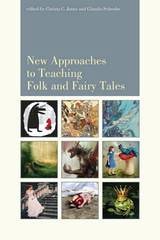
cover of New Approaches to Teaching Folk and Fairy Tales

New Approaches to Teaching Folk and Fairy Tales

Christa Jones

Utah State University Press, 2016

New Approaches to Teaching Folk and Fairy Tales provides invaluable hands-on materials and pedagogical tools from an international group of scholars who share their experiences in teaching folk- and fairy-tale texts and films in a wide range of academic settings.
 
This interdisciplinary collection introduces scholarly perspectives on how to teach fairy tales in a variety of courses and academic disciplines, including anthropology, creative writing, children’s literature, cultural studies, queer studies, film studies, linguistics, second language acquisition, translation studies, and women and gender studies, and points the way to other intermedial and intertextual approaches. Challenging the fairy-tale canon as represented by the Brothers Grimm, Charles Perrault, Hans Christian Andersen, and Walt Disney, contributors reveal an astonishingly diverse fairy-tale landscape.
 
The book offers instructors a plethora of fresh ideas, teaching materials, and outside-the-box teaching strategies for classroom use as well as new and adaptable pedagogical models that invite students to engage with class materials in intellectually stimulating ways. A cutting-edge volume that acknowledges the continued interest in university courses on fairy tales, New Approaches to Teaching Folk and Fairy Tales enables instructors to introduce their students to a new, critical understanding of the fairy tale as well as to a host of new tales, traditions, and adaptations in a range of media.
 
Contributors: Anne E. Duggan, Cyrille François, Lisa Gabbert, Pauline Greenhill, Donald Haase, Christa C. Jones, Christine A. Jones, Jeana Jorgensen, Armando Maggi, Doris McGonagill, Jennifer Orme, Christina Phillips Mattson, Claudia Schwabe, Anissa Talahite-Moodley, Maria Tatar, Francisco Vaz da Silva, Juliette Wood
[more]
cover of New Asian Marxisms

New Asian Marxisms

Tani E. Barlow, ed.

Duke University Press, 2002

Displaying the particular vitality of the global traditions of Marxism and neomarxism at the beginning of the twenty-first century, New AsianMarxisms collects essays by a diverse group of scholars—historians, political scientists, literary scholars, and sociologists—who offer a range of studies of the Marxist heritage focusing on Korea, Japan, India, and China.

While some of these essays take up key thinkers in Marxist history or draw attention to outstanding problematics, others focus on national literature and discourse in North and South Korea, the "Mao Zedong Fever" of the 1990s, the implications of Li Dazhao's poetry, and the Indian Naxalite movement.  Illustrating the importance of central analytical categories like exploitation, alienation, and violence to studies on the politics of knowledge, contributors confront prevailing global consumerist fantasies
with accounts of political struggle, cultural displacement, and theoretical strategies.

Contributors. Tani E. Barlow, Dai Jinhua, Michael Dutton, D. R. Howland, Marshall Johnson, Liu Kang, You-me Park, William Pietz, Claudia Pozzana, Alessandro Russo, Sanjay Seth, Gi-Wook Shin, Sugiyama Mitsunobu, Jing Wang

[more]
cover of New Black Feminist Criticism, 1985-2000

New Black Feminist Criticism, 1985-2000

Barbara Christian. Edited by Gloria Bowles, M. Giulia Fabi, and Arlene Keizer

University of Illinois Press, 2007

A passionate and celebrated pioneer in her own words New Black Feminist Criticism, 1985-2000 collects a selection of essays and reviews from Barbara Christian, one of the founding voices in black feminist literary criticism. Published between the release of her second landmark book Black Feminist Criticism and her death, these writings include eloquent reviews, evaluations of black feminist criticism as a discipline, reflections on black feminism in the academy, and essays on Toni Morrison, Alice Walker, Paule Marshall, and others.
[more]
cover of New Blood: Third-Wave Feminism and the Politics of Menstruation

New Blood

Third-Wave Feminism and the Politics of Menstruation

Chris Bobel

Rutgers University Press, 2010

New Blood offers a fresh interdisciplinary look at feminism-in-flux. For over three decades, menstrual activists have questioned the safety and necessity of feminine care products while contesting menstruation as a deeply entrenched taboo. Chris Bobel shows how a little-known yet enduring force in the feminist health, environmental, and consumer rights movements lays bare tensions between second- and third-wave feminisms and reveals a complicated story of continuity and change within the women's movement.

Through her critical ethnographic lens, Bobel focuses on debates central to feminist thought (including the utility of the category "gender") and challenges to building an inclusive feminist movement. Filled with personal narratives, playful visuals, and original humor, New Blood reveals middle-aged progressives communing in Red Tents, urban punks and artists "culture jamming" commercial menstrual products in their zines and sketch comedy, queer anarchists practicing DIY health care, African American health educators espousing "holistic womb health," and hopeful mothers refusing to pass on the shame to their pubescent daughters. With verve and conviction, Bobel illuminates today's feminism-on-the-ground--indisputably vibrant, contentious, and ever-dynamic.
[more]
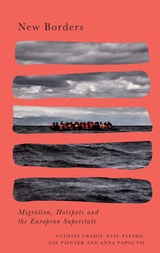
cover of New Borders: Migration, Hotspots and the European Superstate

New Borders

Migration, Hotspots and the European Superstate

Antonis Vradis, Evie Papada, Joe Painter, and Anna Papoutsi

Pluto Press, 2018

New Borders is the culmination of two years of research on the Mediterranean migration crisis of 2015-16. The book focuses on Lesbos, a Greek island that came under intense media and political scrutiny as more than one million people crossed its borders, changing and remaking life there. When these migrants—more than ten times the island’s earlier population—landed on Lesbos’s shores, local authorities were dismantled and replaced by supranational law and authority. In the ensuing months, reception turned to detention, rescue to registration, and refuge to duress.
            As borders across Europe have come to symbolize the European Union, this book provides answers to questions of European policy, the securitization of national boundaries, and how legislation determines who is free to belong to a place.
 
[more]
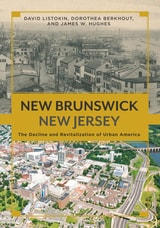
cover of New Brunswick, New Jersey: The Decline and Revitalization of Urban America

New Brunswick, New Jersey

The Decline and Revitalization of Urban America

Listokin, David

Rutgers University Press, 2016
While many older American cities struggle to remain vibrant, New Brunswick has transformed itself, adapting to new forms of commerce and a changing population, and enjoying a renaissance that has led many experts to cite this New Jersey city as a model for urban redevelopment. Featuring more than 100 remarkable photographs and many maps, New Brunswick, New Jersey explores the history of the city since the seventeenth century, with an emphasis on the dramatic changes of the past few decades.
 
Using oral histories, archival materials, census data, and surveys, authors David Listokin, Dorothea Berkhout, and James W. Hughes illuminate the decision-making and planning process that led to New Brunswick’s dramatic revitalization, describing the major redevelopment projects that demonstrate the city’s success in capitalizing on funding opportunities. These projects include the momentous decision of Johnson & Johnson to build its world headquarters in the city, the growth of a theater district, the expansion of Rutgers University into the downtown area, and the destruction and rebuilding of public housing. But while the authors highlight the positive effects of the transformation, they also explore the often heated controversies about demolishing older neighborhoods and ask whether new building benefits residents. Shining a light on both the successes and failures in downtown revitalization, they underscore the lessons to be learned for national urban policy, highlighting the value of partnerships, unwavering commitment, and local leadership. 
 
Today, New Brunswick’s skyline has been dramatically altered by new office buildings, residential towers, medical complexes, and popular cultural centers. This engaging volume explores the challenges facing urban America, while also providing a specific case study of a city’s quest to raise its economic fortunes and retool its economy to changing needs.
 
[more]
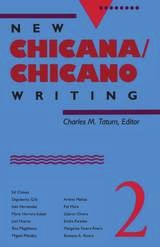
cover of New Chicana/Chicano Writing, Volume 2

New Chicana/Chicano Writing, Volume 2

Charles M. Tatum

University of Arizona Press, 1992

"This impressive collection augurs a bright future for Chicana/Chicano literature, and will be of interest to those who keep track of the wide diversity of American and world literature." —Publishers Weekly

"A sampling of typically captivating contemporary Chicano literature by established and emerging writers." —El Puente. The Quarterly Newsletter of the Hispanic Culture Foundation
[more]
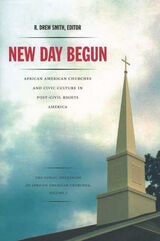
cover of New Day Begun: African American Churches and Civic Culture in Post-Civil Rights America

New Day Begun

African American Churches and Civic Culture in Post-Civil Rights America

R. Drew Smith, ed.

Duke University Press, 2003

New Day Begun presents the findings of the first major research project on black churches’ civic involvement since C. Eric Lincoln and Lawrence H. Mamiya’s landmark study The Black Church in the African American Experience. Since the passage of the 1964 Civil Rights Act and the 1965 Voting Rights Act, the scale and scope of African American churches’ civic involvement have changed significantly: the number of African American clergy serving in elective and appointive offices has noticeably increased, as have joint efforts by black churches and government agencies to implement policies and programs. Filling a vacuum in knowledge about these important developments, New Day Begun assesses the social, political, and ecclesiastical factors that have shaped black church responses to American civic and political life since the Civil Rights movement.

This collection of essays analyzes the results of an unprecedented survey of nearly 2,000 African American churches across the country conducted by The Public Influences of African-American Churches Project, which is based at Morehouse College in Atlanta. These essays—by political scientists, theologians, ethicists, and others—draw on the survey findings to analyze the social, historical, and institutional contexts of black church activism and to consider the theological and moral imperatives that have shaped black church approaches to civic life—including black civil religion and womanist and afrocentric critiques. They also look at a host of faith-based initiatives addressing economic development and the provision of social services. New Day Begun presents necessary new interpretations of how black churches have changed—and been changed by—contemporary American political culture.

Contributors.
Lewis Baldwin, Allison Calhoun-Brown, David D. Daniels III, Walter Earl Fluker, C.R.D. Halisi, David Howard-Pitney, Michael Leo Owens, Samuel Roberts, David Ryden, Corwin Smidt, R. Drew Smith
[more]
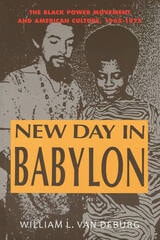
cover of New Day in Babylon: The Black Power Movement and American Culture, 1965-1975

New Day in Babylon

The Black Power Movement and American Culture, 1965-1975

William L. Van Deburg

University of Chicago Press, 1992

The most comprehensive account available of the rise and fall of the Black Power Movement and of its dramatic transformation of both African-American and larger American culture. With a gift for storytelling and an ear for street talk, William Van Deburg chronicles a decade of deep change, from the armed struggles of the Black Panther party to the cultural nationalism of artists and writers creating a new aesthetic. Van Deburg contends that although its tactical gains were sometimes short-lived, the Black Power movement did succeed in making a revolution—one in culture and consciousness—that has changed the context of race in America.

"New Day in Babylon is an extremely intelligent synthesis, a densely textured evocation of one of American history's most revolutionary transformations in ethnic group consciousness."—Bob Blauner, New York Times

Winner of the Gustavus Myers Center Outstanding Book Award, 1993
[more]
cover of New Deal Archaeology in Tennessee: Intellectual, Methodological, and Theoretical Contributions

New Deal Archaeology in Tennessee

Intellectual, Methodological, and Theoretical Contributions

Edited by David H. Dye

University of Alabama Press, 2016

Exploring how New Deal innovation transformed archaeology in the American South.

New Deal Archaeology in Tennessee tells the engrossing story of Southeastern archaeology in the 1930s. The Tennessee Valley Authority Act of May 1933 initiated an ambitious program of flood control and power generation by way of a chain of hydroelectric dams on the Tennessee River. The construction of these dams flooded hundreds of thousands of square miles of river bottoms, campsites, villages, and towns that had been homes to Native Americans for centuries. This triggered an urgent need to undertake extensive archaeological fieldwork throughout the region. Those studies continue to influence contemporary archaeology.

The state of Tennessee and the Tennessee Valley were especially well suited research targets thanks to their mild climate and long field seasons. A third benefit in the 1930s was the abundance of labor supplied by Tennesseans unemployed during the Great Depression. Within months of the passage of the Tennessee Valley Authority Act, teams of archaeologists fanned out across the state and region under the farsighted direction of Smithsonian Institution curators Neil M. Judd, Frank H. H. Roberts, and Frank M. Setzler. The early months of 1934 would become the busiest period of archaeological fieldwork in US history.

The twelve insightful essays in New Deal Archaeology in Tennessee document and explore this unique peak in archaeological study. Chapters highlight then-new techniques such as mound “peeling” and stratigraphic excavation adapted from the University of Chicago; the four specific New Deal sites of Watts Bar Reservoir, Mound Bottom, Pack, and Chickamauga Basin; bioarchaeology in the New Deal; and the enduring impact of the New Deal on contemporary fieldwork.

The challenges of the 1930s in recruiting skilled labor, training unskilled ancillary labor, developing and improvising new field methods, and many aspects of archaeological policies, procedures, and best-practices laid much of the foundation of contemporary archaeological practice. New Deal Archaeology in Tennessee offers an invaluable record of that pivotal time for professional, student, and amateur archaeologists.
[more]
cover of New Deal Archaeology in the West

New Deal Archaeology in the West

Edited by Kelly J. Pool and Mark L. Howe

University of Utah Press, 2023

From 1933 to 1944, a wide range of archaeological and cultural heritage projects were funded across this country as part of Franklin D. Roosevelt’s New Deal. The results of work east of the Mississippi River are amply documented in other publications. However, little has been reported or synthesized regarding western archaeological work, its role in economic recovery, or its impact on the direction and knowledge of the discipline. This volume shares previously untold stories of New Deal archaeology from across the American West and explores insights into the past revealed by these projects.
 
Descriptions of New Deal projects and their contributions to our understanding of the past, as well as the stories of those involved—archaeologists, avocationalists, and others—are woven together across the chapters. Also documented are lost or scattered artifacts, records, and ancestors’ remains; incomplete analyses; unpublished reports; inconsistent application of scientific methodology; and the loss of Native sacred sites and traditional lands and lifeways. Authors highlight characteristics that distinguished the American West from the East during the Depression and affected the nature of New Deal projects, including the extent of federal land available in the West, the reliance of sparsely populated areas upon tourism, the presence of large resident Native populations with deep histories, and the wide-ranging degree of existing archaeology infrastructure in each state. This volume demonstrates that despite regional differences, New Deal-funded archaeological and cultural heritage projects created a legacy of knowledge and practice across the nation.
[more]
cover of New Deal Modernism: American Literature and the Invention of the Welfare State

New Deal Modernism

American Literature and the Invention of the Welfare State

Michael Szalay

Duke University Press, 2000

In New Deal Modernism Michael Szalay examines the effect that the rise of the welfare state had on American modernism during the 1930s and 1940s, and, conversely, what difference this revised modernism made to the New Deal’s famed invention of “Big Government.”
Szalay situates his study within a liberal culture bent on security, a culture galvanized by its imagined need for private and public insurance.
Taking up prominent exponents of social and economic security—such as Franklin Delano Roosevelt, John Maynard Keynes, and John Dewey—Szalay demonstrates how the New Deal’s revision of free-market culture required rethinking the political function of aesthetics. Focusing in particular on the modernist fascination with the relation between form and audience, Szalay offers innovative accounts of Busby Berkeley, Jack London, James M. Cain, Robert Frost, Ayn Rand, Betty Smith, and Gertrude Stein, as well as extended analyses of the works of Ernest Hemingway, John Steinbeck, and Richard Wright.
[more]