168 books match the query '1989-' and 6 start with o
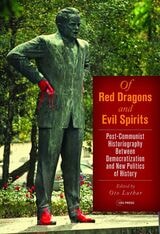
cover of Of Red Dragons and Evil Spirits: Post-Communist Historiography between Democratization and the New Politics of History

Of Red Dragons and Evil Spirits

Post-Communist Historiography between Democratization and the New Politics of History

Oto Luthar

Central European University Press, 2017
The collection of well-researched essays assesses the uses and misuses of history 25 years after the collapse of Soviet hegemony in Eastern Europe. As opposed to the revival of national histories that seemed to be the prevailing historiographical approach of the 1990s, the last decade has seen a particular set of narratives equating Nazism and Communism. This provides opportunities to exonerate wartime collaboration, casting the nation as victim even when its government was allied with Germany. While the Jewish Holocaust is acknowledged, its meaning and significance are obfuscated. In their comparative analysis the authors are also interested in new practices of ‘Europeanness’. Therefore their presentations of Slovak, Hungarian, Romanian, Bulgarian, Serbian, Bosnian, Croatian and Slovenian post-communist memory politics move beyond the common national myths in order to provide a new insight into transnational interactions and exchanges in Europe in general. The juxtaposition of these politics, the processes in other parts of Europe, the modes of remembering shaped by displacement and the transnational enable a close encounter with the divergences and assess the potential of the formation of common, European memory practices.
[more]
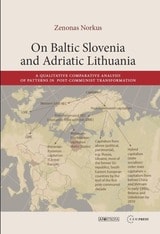
cover of On Baltic Slovenia and Adriatic Lithuania: A Qualitative Comparative Analysis of Patterns in Post-Communist Transformation

On Baltic Slovenia and Adriatic Lithuania

A Qualitative Comparative Analysis of Patterns in Post-Communist Transformation

Zenonas Norkus

Central European University Press, 2012
A unique application of social science software to generate typology and ranklist of transition models of twenty-nine countries in Europe and Asia, ranging from Estonia to Vietnam, Norkus provides a highly innovative internationally comparative causal analysis of the variation in political and economic outcomes after the first decade of post-communist transformations, using multi-value Qualitative Comparative Analysis and Tosmana programme. The analysis includes a critical revision of received dichotomies (e.g. on gradualism versus “shock therapy”), and contributes to current debates on the varieties of post-communist capitalism.This conceptual framework is applied in national case studies, searching for reasons behind successes and failures, with special consideration given to the possibility of alternatives to the Lithuanian way, and the challenges of populism in this country’s politics.
[more]
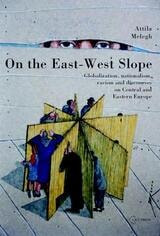
cover of On the East-West Slope: Globalization, Nationalism, Racism and Discourses on Eastern Europe

On the East-West Slope

Globalization, Nationalism, Racism and Discourses on Eastern Europe

Attila Melegh

Central European University Press, 2006
Melegh's work offers a powerful analysis of the sociological and symbolic meanings of East-West in Europe after the end of the Cold War. Melegh exposes the underbelly of liberal characterizations of East-West, highlighting the polarizing effect of extreme nationalism and ethnic racism. The theoretical underpinnings of this work involve the ideas of preeminent theorists such as Karl Mannheim, Michel Foucault and more recently Maria Todorova and Iver Neumann. The importance of this work lies in its ability to cast into fine relief how the "East-West Slope" oriented negatively from West to East has emerged from liberal characterizations of this project. In addition this is one of the first attempts to link post-colonial analysis to developments in Eastern Europe.
[more]
cover of On the Verge of Convergence: Social Stratification in Eastern Europe

On the Verge of Convergence

Social Stratification in Eastern Europe

Henryk Domanski

Central European University Press, 2000

Based on comparative surveys, the author presents a study of social transformation in Central and Eastern Europe after 1989. Focusing on Bulgaria, Czech Republic, Hungary, Poland, Russia and Slovakia, the author provides information relating to social structure, mobility, inequality, lifestyle and economic stratification. Applying the Erikson-Goldthorpe classification of class positions, Domanski effectively presents fully comparable data to enable political comparisons to be made with other countries, especially those with firmly established free market economies. As such, "On the Verge of Convergence" seeks to provide a clearer understanding of the on-going process of social transformation within developing capitalist societies.
[more]
cover of Our Man in Warszawa: How the West Misread Poland

Our Man in Warszawa

How the West Misread Poland

Jo Harper

Central European University Press, 2021

Written by a Brit who has lived in Poland for more than twenty years, this book challenges some accepted thinking in the West about Poland and about the rise of Law and Justice (PiS) as the ruling party in 2015. It is a remarkable account of the Polish post-1989 transition and contemporary politics, combining personal views and experience with careful fact and material collections. The result is a vivid description of the events and scrupulous explanations of the political processes, and all this with an interesting twist – a perspective of a foreigner and insider at the same time. Settled in the position of participant observer, Jo Harper combines the methods of macro and micro analysis with CDA, critical discourse analysis. He presents and interprets the constituent elements and issues of contemporary Poland: the main political forces, the Church, the media, issues of gender, the Russian connection, the much-disputed judicial reform and many others.

A special feature of the book is the detailed examination of the coverage of the Poland’s latest two elections, one in 2019 (parliamentary) and the other in 2020 (presidential) in the British media, an insightful and witty specimen of comparative cultural and political analysis.
[more]
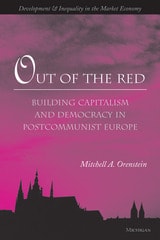
cover of Out of the Red: Building Capitalism and Democracy in Postcommunist Europe

Out of the Red

Building Capitalism and Democracy in Postcommunist Europe

Mitchell A. Orenstein

University of Michigan Press, 2001

After the fall of the Berlin Wall, the countries of East-Central Europe embarked on a journey to transform themselves into democratic capitalist societies. Their governments searched for strategies that would allow them to pursue radical market reforms within the context of nascent democratic politics. Poland adopted a neoliberal strategy that attempted to push through as much reform as possible before an antireform backlash could occur. In the Czech Republic, a social liberal strategy for transformation attempted to combine neoliberal macro-economic policies with social democratic measures designed to avert such a backlash.
A detailed analysis of Poland and the Czech Republic suggests that alternation between strategies has been the secret to the success of East-Central European countries.
This comparative case analysis identifies the significance of reform mistakes during transition and the corrective benefits of policy alternation, its claims illustrated with an in-depth study of privatization policy in the two countries.
Mitchell A. Orenstein delves into the historic struggle to build capitalism and democracy during a decade of post- communist transition in East-Central Europe and develops a model that explains why democratic policy alternation may accelerate policy learning under conditions of uncertainty and constraint.
Out of the Red is accessible to a general audience and as such is suitable for both graduate and undergraduate courses on political economy. It will be of particular interest to economists, political scientists, sociologists, students of postcommunism, and anyone interested in the relations between capitalism and democracy in the contemporary world.
Mitchell A. Orenstein is Assistant Professor of Political Science, Syracuse University.
[more]