Results by title
244 books match the query 'Arkansas' and 5 start with o
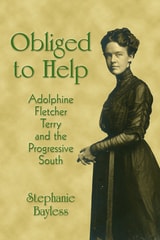
Obliged to Help
Adolphine Fletcher Terry and the Progressive SouthStephanie Bayless
Butler Center for Arkansas Studies, 2011
Author Stephanie Bayless examines why this Southern aristocratic matron, the daughter of a Confederate soldier, tirelessly devoted herself to improving the lives of others and, in so doing, became a model for activism across the South. It is the first work of its kind to consider Terry's lifelong commitment to social causes and is written for both traditional scholars and all those interested in history, civil rights, and the ability of women to create change within the gender limits of the time. Adolphine Fletcher Terry died in Little Rock, Arkansas, in July of 1976, at the age of ninety-three. Her life was a monument to progress in the South, particularly in her native state of Arkansas, a place she once described as "holy ground."
[more]
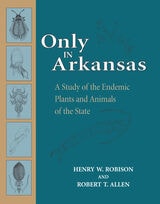
Only in Arkansas
A Study of the Endemic Plants and Animals of the StateHenry Robison
University of Arkansas Press, 1995
Besides extensive illustrations and photographs of each species, Only in Arkansas provides pertinent literature references to the original distributions of each form within the state and reports known information of the general biology, evolutionary relationships, and habitat occupied by each endemic form.
[more]
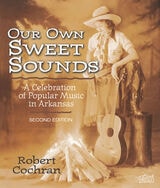
Our Own Sweet Sounds
A Celebration of Popular Music in ArkansasRobert Cochran
University of Arkansas Press, 2005
A rich portrait of the community that is Arkansas manifested in song, Our Own Sweet Sounds celebrates the diversity of musical forms and music makers that have graced the state since territorial times. Beginning with the earliest references to Quapaw and Caddo music as first reported by seventeenth-century European explorers and continuing forward to the “bizarrely named grunge bands” who will be stars tomorrow, Robert Cochran traces the music and voices that have enriched the life of the Natural State. Arkansas, many are starting to realize, was caught in a cultural crossfire of music. There were the nearby western swing influence of Tulsa, the blues of Memphis, the Louisiana Hayride of Shreveport, and the influence of Ozark music from Missouri. All of this resulted in the Arkansas cross-culture of blues, country, folk, and rock music, creating a broad spectrum of musical styles and musicians that has left an indelible impression on the Arkansas cultural scene. This new edition includes approximately seventy new artists, some of whom became famous after 1996, when the first edition was published, such as Joe Nichols, and some of whom were left out of the original edition, such as Little Willie John. The valuable “Featured Performers” section—lengthy discussions of individual artists with their photographs—is now one-third larger. This new edition, heavily illustrated, is a loving tribute to the common music that has filled local airwaves, lifted community gatherings to the level of joyous festivities, and enlivened the spirit of music lovers everywhere.
[more]

Outspoken
The Olly Neal StoryOlly Neal
Butler Center for Arkansas Studies, 2020
Born in 1941 on a farm near Marianna in rural eastern Arkansas, Olly Neal Jr. grew up in a large family with parents who insisted on their children getting a good education. Neal had the intellect but not the temperament to be a good student in high school, but a teacher took an interest in him when she saw him steal a book rather than risk his tough-guy reputation if someone saw him checking it out. Neal went on to start and lead the Lee County Cooperative Clinic in Marianna during the 1970s, a turbulent time fraught with conflicts between the white power structure and black citizens seeking their civil rights and increased economic opportunities. (The clinic remains a prominent community health center.) He became the first black district prosecuting attorney in Arkansas, and then served as a circuit court judge and on the Arkansas Court of Appeals. Historian Grif Stockley has characterized Neal as a civil rights activist, political agitator, Arkansas Delta advocate, and “black devil incarnate” to many of Marianna’s whites.
His road to success was not a smooth one, and Neal tells his unique story with humor, candor, and hard-earned wisdom, explaining his rocky journey from hardscrabble beginnings in rural Lee County to the role of prosecutor to the judicial bench. Along the way, many whites saw him as a threat to the established order and many blacks saw him as a traitor who was prosecuting and sitting in judgment of his own people. But Neal emphasized fairness and equal treatment at every opportunity, saying, “The way I got past all of this was by talking to my people about what I did and why, and by telling them how difficult it was for me. And I think that many folks understood me.” Looking back on these years and the people he met along the way, he offers insights into the traumas of the time and the toll they took on his mental and physical health, as well as the relationships that helped him face these challenges.
His road to success was not a smooth one, and Neal tells his unique story with humor, candor, and hard-earned wisdom, explaining his rocky journey from hardscrabble beginnings in rural Lee County to the role of prosecutor to the judicial bench. Along the way, many whites saw him as a threat to the established order and many blacks saw him as a traitor who was prosecuting and sitting in judgment of his own people. But Neal emphasized fairness and equal treatment at every opportunity, saying, “The way I got past all of this was by talking to my people about what I did and why, and by telling them how difficult it was for me. And I think that many folks understood me.” Looking back on these years and the people he met along the way, he offers insights into the traumas of the time and the toll they took on his mental and physical health, as well as the relationships that helped him face these challenges.
[more]
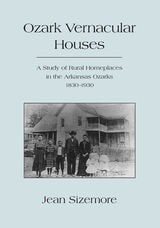
Ozark Vernacular Houses
A Study of Rural Homeplaces in the Arkansas Ozarks, 1830-1930Jean Sizemore
University of Arkansas Press, 1991
Over 160 photographs, drawings, and maps provide examples of the four traditional Ozark house types and reveal the unity of a distinctive Arkansas culture that bears identity with all hill peoples. Of importance to architects, folklorists, cultural historians, and anyone interested in the Ozarks, this fascinating examination of the Ozark house is a way toward understanding the mind of the inhabitants and their entire way of life.
[more]