Results by title
1272 books match the query 'Asia' and 18 start with o
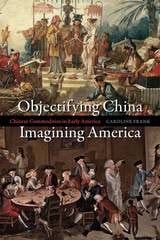
Objectifying China, Imagining America
Chinese Commodities in Early AmericaCaroline Frank
University of Chicago Press, 2011
With the ever-expanding presence of China in the global economy, Americans more and more look east for goods and trade. But as Caroline Frank reveals, this is not a new development. China loomed as large in the minds—and account books—of eighteenth-century Americans as it does today. Long before they had achieved independence from Britain and were able to sail to Asia themselves, American mariners, merchants, and consumers were aware of the East Indies and preparing for voyages there. Focusing on the trade and consumption of porcelain, tea, and chinoiserie, Frank shows that colonial Americans saw themselves as part of a world much larger than just Britain and Europe
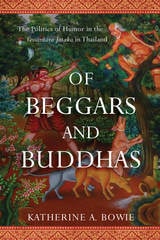
Of Beggars and Buddhas
The Politics of Humor in the Vessantara Jataka in ThailandKatherine A. Bowie
University of Wisconsin Press, 2020
The Vessantara Jataka has served both monastic and royal interests, encouraging parents to give their sons to religious orders and intimating that kings are future Buddhas. But, as Bowie shows, characterizations of the beggar Jujaka in various regions and eras have also brought ribald humor and sly antiroyalist themes to the story. Historically, these subversive performances appealed to popular audiences even as they worried the conservative Bangkok court. The monarchy sporadically sought to suppress the comedic recitations. As Thailand has changed from a feudal to a capitalist society, this famous story about giving away possessions is paradoxically being employed to promote tourism and wealth.
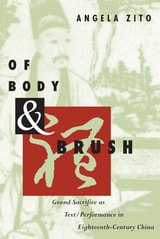
Of Body and Brush
Grand Sacrifice as Text/Performance in Eighteenth-Century ChinaAngela Zito
University of Chicago Press, 1997
Forging a critical cultural historical method that challenges traditional categories of Chinese studies, Zito shows for the first time that in their performance, the ritual texts embodied, literally, the metaphysics upon which imperial power rested. By combining rule through the brush (the production of ritual texts) with rule through the body (mandated performance), the throne both exhibited its power and attempted to control resistance to it. Bridging Chinese history, anthropology, religion, and performance and cultural studies, Zito brings an important new perspective to the human sciences in general.
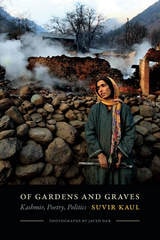
Of Gardens and Graves
Kashmir, Poetry, PoliticsSuvir Kaul
Duke University Press, 2017
Of Whales and Dinosaurs
The Story of Singapore's Natural History MuseumKevin Y. L. Tan
National University of Singapore Press, 2015
Oil and Water
Being Han in XinjiangTom Cliff
University of Chicago Press, 2016
With Oil and Water, anthropologist Tom Cliff offers the first ethnographic study of Han in Xinjiang, using in-depth vignettes, oral histories, and more than fifty original photographs to explore how and why they became the people they are now. By shifting focus to the lived experience of ordinary Han settlers, Oil and Water provides an entirely new perspective on Chinese nation building in the twenty-first century and demonstrates the vital role that Xinjiang Han play in national politics—not simply as Beijing’s pawns, but as individuals pursuing their own survival and dreams on the frontier.
On The Ho Chi Minh Trail
The Blood Road, The Women Who Defended It, The LegacySherry Buchanan
Asia Ink, 2020
Offering both a personal and historical exploration of the Ho Chi Minh Trail, this book highlights the critical role the Trail and the young women soldiers who helped build and defend it played in the Vietnam War. Accompanied by two traveling companions, Sherry Buchanan winds her way from Hanoi in the north to Ho Chi Minh City, formerly Saigon, in the south. Driving through the spectacular scenery of Vietnam and Laos, she encounters locations from the Truong Son mountains, the Phong Nha Caves, ancient citadels, and Confucian temples to the Khmer Temple of Wat Phu at the western-most point of the Trail in Laos.
Buchanan records her interactions—both scheduled and spontaneous—with those who experienced the Vietnam War firsthand. She listens to the women who defended the Trail roads against the greatest bombing campaign in modern times, walks through minefields with the demolition teams hunting for unexploded ordnance, and meets American veterans who have returned to Vietnam with an urge to “do something.” Buchanan weaves informative, and often humorous, tales from her journey with excerpts from the accounts of others, situating the locations she visits in their historical and political context. On the Ho Chi Minh Trail brings together geography, history, and personal accounts to reveal the scale of the tragedy, its harmful legacies, and our memory of it. Buchanan challenges American exceptionalism and calls for redress for those harmed by US military actions during the Vietnam War and America’s subsequent wars.
On the Bullet Train with Emily Brontë
Wuthering Heights in JapanJudith Pascoe
University of Michigan Press, 2017
In this and in her previous book, The Sarah Siddons Audio Files, Pascoe’s engaging narrative innovates a new scholarly form involving immersive research practice to attempt a cross-cultural version of reader-response criticism. On the Bullet Train with Emily Brontë will appeal to scholars in the fields of 19th-century British literature, adaptation studies, and Japanese literary history.
Ordering Tang China
Cultural Memory, Emperor Taizong, and the EssentialsKelly Ngo
Lever Press, 2024
By connecting the textual discourse with an analysis of its use and reception across the region, Ngo demonstrates that the Essentials was a key source of Confucian political thought and practice during the early Tang dynasty. In accounting for the place of the Essentials in political advice literature, Ngo illustrates how it drew from the ancient Confucian heritage and was still responsive to contemporaneous political concerns, suggesting that the Essentials played a part in the success of Zhenguan political practice.
Ordering Tang China also includes the first English-language translations of portions of the seventh-century anthology, with reference to partial translations published in nine languages. Utilizing the theory of cultural memory to study the Essentials not only opens a fresh approach to learning about the imperial consumption of literature, as well as the theory and practice of emperorship, but also offers a case study for how to study Chinese governance literature, including its “mirror for princes” genre.
Organizing Empire
Individualism, Collective Agency, and IndiaPurnima Bose
Duke University Press, 2003
From a historically grounded, feminist perspective, Bose offers four case studies, each of which illuminates a distinct individualizing rhetorical strategy. She looks at the parliamentary debates on the Amritsar Massacre of 1919, in which several hundred unarmed Indian protesters were killed; Margaret Cousins’s firsthand account of feminist organizing in Ireland and India; Kalpana Dutt’s memoir of the Bengali terrorist movement of the 1930s, which was modeled in part on Irish anticolonial activity; and the popular histories generated by ex-colonial officials and their wives. Bringing to the fore the constraints that colonial domination placed upon agency and activism, Organizing Empire highlights the complexity of the multiple narratives that constitute British colonial history.
Oriental Networks
Culture, Commerce, and Communication in the Long Eighteenth CenturyBärbel Czennia
Bucknell University Press, 2021
Published by Bucknell University Press. Distributed worldwide by Rutgers University Press.
Orientalists, Propagandists, and Ilustrados
Filipino Scholarship and the End of Spanish ColonialismMegan C. Thomas
University of Minnesota Press, 2012
The writings of a small group of scholars known as the ilustrados are often credited for providing intellectual grounding for the Philippine Revolution of 1896. Megan C. Thomas shows that the ilustrados’ anticolonial project of defining and constructing the “Filipino” involved Orientalist and racialist discourses that are usually ascribed to colonial projects, not anticolonial ones. According to Thomas, the work of the ilustrados uncovers the surprisingly blurry boundary between nationalist and colonialist thought.
By any measure, there was an extraordinary flowering of scholarly writing about the peoples and history of the Philippines in the decade or so preceding the revolution. In reexamining the works of the scholars José Rizal, Pardo de Tavera, Isabelo de los Reyes, Pedro Paterno, Pedro Serrano Laktaw, and Mariano Ponce, Thomas situates their writings in a broader account of intellectual ideas and politics migrating and transmuting across borders. She reveals how the ilustrados both drew from and refashioned the tools and concepts of Orientalist scholarship from Europe.
Interrogating the terms “nationalist” and “nationalism,” whose definitions are usually constructed in the present and then applied to the past, Thomas offers new models for studying nationalist thought in the colonial world.
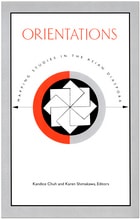
Orientations
Mapping Studies in the Asian DiasporaKandice Chuh and Karen Shimakawa, eds.
Duke University Press, 2001
With its recurrent themes of transnationalism, globalization, and postcoloniality, Orientations considers various embodiments of the Asian diaspora, including a rumination on minority discourses and performance studies, and a historical look at the journal Amerasia. Exploring the translation of knowledge from one community to another, other contributions consider such issues as Filipino immigrants’ strategies for enacting Asian American subjectivity and the link between area studies and the journal Subaltern Studies. In a section that focuses on how disciplines—or borders—form, one essay discusses “orientalist melancholy,” while another focuses on the construction of the Asian American persona during the Cold War. Other topics in the volume include the role Asian immigrants play in U.S. racial politics, Japanese American identity in postwar Japan, Asian American theater, and the effects of Asian and Asian American studies on constructions of American identity.
Contributors. Dipesh Chakrabarty, Kuan-Hsing Chen, Rey Chow, Kandice Chuh, Sharon Hom, Yoshikuni Igarashi, Dorinne Kondo, Russell Leong, George Lipsitz, Lisa Lowe, Martin F. Manalansan IV, David Palumbo-Liu, R. Radhakrishnan, Karen Shimakawa, Sau-ling C. Wong
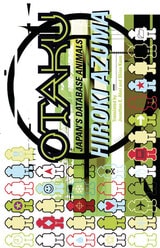
Otaku
Japan's Database AnimalsHiroki Azuma
University of Minnesota Press, 2009
Hiroki Azuma’s Otaku offers a critical, philosophical, and historical inquiry into the characteristics and consequences of this consumer subculture. For Azuma, one of Japan’s leading public intellectuals, otaku culture mirrors the transformations of postwar Japanese society and the nature of human behavior in the postmodern era. He traces otaku’s ascendancy to the distorted conditions created in Japan by the country’s phenomenal postwar modernization, its inability to come to terms with its defeat in the Second World War, and America’s subsequent cultural invasion. More broadly, Azuma argues that the consumption behavior of otaku is representative of the postmodern consumption of culture in general, which sacrifices the search for greater significance to almost animalistic instant gratification. In this context, culture becomes simply a database of plots and characters and its consumers mere “database animals.”
A vital non-Western intervention in postmodern culture and theory, Otaku is also an appealing and perceptive account of Japanese popular culture.
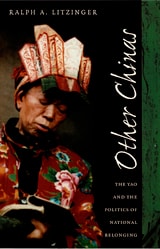
Other Chinas
The Yao and the Politics of National BelongingRalph A. Litzinger
Duke University Press, 2000
Litzinger begins by describing how during the Republican period the Yao were considered a dangerous people who preferred to consort with beasts and goblins rather than join in the making of a modern nation. He then compares this to the communist revolutionaries’ view of the Yao as impressive rebels and positive examples of subaltern agency. Litzinger shows how scholars, government workers, communist party officials, and Taoist ritual specialists have influenced the varied depictions of the Yao and, in doing so, he advances a new understanding of both the Yao and the effects of official discourse, written histories, state policy, and practices of minority empowerment. In addition to analyzing issues of ritual practice, social order, morality, and the governance of ethnic populations, Litzinger considers the Yao’s role in the cultural reforms of the 1980s. By distancing his study from romanticized depictions of minorities Litzinger is able to focus on how minority representation, struggle, and agency have influenced the history of the People’s Republic, cultural debates within contemporary Chinese society, and China’s rapidly changing role in the global order.
This book will be of interest to Asianists in both anthropology and cultural studies and should appeal more generally to scholars invested in issues of ethnic identity, minority politics, and transnationalism.
Our History, Their History, Whose History?
Romila Thapar
Seagull Books, 2023
In this timely book, historian Romila Thapar delves into the complex world of nationalism and its impact on the interpretations of the past and on the discipline of history itself. History, she expounds, is no mere collection of information and chronology, and its purpose extends well beyond storytelling.
Recognizing nationalism as a powerful force that gives rise to various narratives that provide ancestry to communities and shape the direction of societies, Thapar explores how, in India, two conflicting notions of nationalism have evolved and shaped the idea of the nation. Today, one such nationalistic theory claims the victimization of one religious community by another through centuries of “misrule.” Such a claim willfully ignores ample evidence to the contrary to suit a particular political and ideological purpose. Thapar counters such attempts at misrepresentation by citing several historical instances of the nuanced interface and intermingling of cultures, as well as by showing how today’s conflicts have their roots in the British colonial construction of India’s history. She also addresses the recent controversy surrounding the deletions of sections of Indian history textbooks published by NCERT, the Indian educational council, and suggests that the intention is more likely to be the promotion of a particular reading of history that conforms to the ideology of those in power.
Engaging and thought-provoking, Our History, Their History, Whose History? invites readers to question the authenticity of historical narratives touted by one group of nationalists, and it explores the clash between professional historians who study the past to understand our inherited present and fabricators who wield history for political gain.
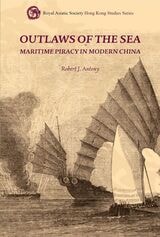
Outlaws of the Sea
Maritime Piracy in Modern ChinaRobert J. Antony
Hong Kong University Press, 2024
In Outlaws of the Sea, Robert J. Antony provides a comprehensive account of the history of maritime piracy in coastal south China from the 1630s to the 1940s. He neither romanticizes nor maligns pirates, but rather analyzes them in the context of their times and the broader world in which they lived. The author demonstrates that Chinese piracy was a pervasive force shaping maritime society as it ebbed and flowed between sporadic, small-scale ventures and professional, large-scale enterprises in the modern era. This book offers important new insights into the underside of modern China’s history and the interactions between pirates, foreign traders, local communities, and the state.
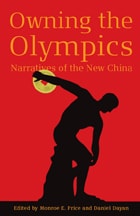
Owning the Olympics
Narratives of the New ChinaMonroe E. Price and Daniel Dayan, Editors
University of Michigan Press, 2008
"A major contribution to the study of global events in times of global media. Owning the Olympics tests the possibilities and limits of the concept of 'media events' by analyzing the mega-event of the information age: the Beijing Olympics. . . . A good read from cover to cover."
—Guobin Yang, Associate Professor, Asian/Middle Eastern Cultures & Sociology, Barnard College, Columbia University
From the moment they were announced, the Beijing Games were a major media event and the focus of intense scrutiny and speculation. In contrast to earlier such events, however, the Beijing Games are also unfolding in a newly volatile global media environment that is no longer monopolized by broadcast media. The dramatic expansion of media outlets and the growth of mobile communications technology have changed the nature of media events, making it significantly more difficult to regulate them or control their meaning. This volatility is reflected in the multiple, well-publicized controversies characterizing the run-up to Beijing 2008. According to many Western commentators, the People's Republic of China seized the Olympics as an opportunity to reinvent itself as the "New China"---a global leader in economics, technology, and environmental issues, with an improving human-rights record. But China's maneuverings have also been hotly contested by diverse global voices, including prominent human-rights advocates, all seeking to displace the official story of the Games.
Bringing together a distinguished group of scholars from Chinese studies, human rights, media studies, law, and other fields, Owning the Olympics reveals how multiple entities---including the Chinese Communist Party itself---seek to influence and control the narratives through which the Beijing Games will be understood.
digitalculturebooks is an imprint of the University of Michigan Press and the Scholarly Publishing Office of the University of Michigan Library dedicated to publishing innovative and accessible work exploring new media and their impact on society, culture, and scholarly communication. Visit the website at www.digitalculture.org.