Results by title
69 books match the query 'Bilingual Edition' and 2 start with o
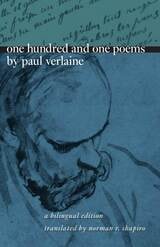
One Hundred and One Poems by Paul Verlaine
A Bilingual EditionPaul Verlaine
University of Chicago Press, 1999
French poet Paul Verlaine, a major representative of the Symbolist Movement during the latter half of the nineteenth century, was one of the most gifted and prolific poets of his time. Norman Shapiro's superb translations display Verlaine's ability to transform into timeless verse the essence of everyday life and make evident the reasons for his renown in France and throughout the Western world.
"Shapiro's skillfully rhymed formal translations are outstanding." —St. Louis Post-Dispatch "Best Book of 1999"
"Paul Verlaine's rich, stylized, widely-variable oeuvre can now be traced through his thirty years of published volumes, from 1866 to 1896, in a set of luminous new translations by Norman Shapiro. . . . [His] unique translations of this whimsical, agonized music are more than adequate to bring the multifarious Verlaine to a new generation of English speakers." —Genevieve Abravanel, Harvard Review
"Shapiro demonstrates his phenomenal ability to find new rhymes and always follows Verlaine's rhyme schemes." —Carrol F. Coates, ATA Chronicle
[more]
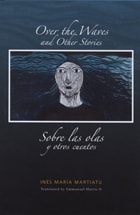
Over the Waves and Other Stories / Sobre las olas y otros cuentos
A Bilingual EditionInés María Martiatu
Swan Isle Press, 2009
Appearing for the first time outside of Cuba, this bold collection of short stories provides an intimate and critical view of Afro-Cuba. Inés María Martiatu’s stories—presented in a unique "split" English/Spanish edition—span postcolonial Cuba of the early twentieth century, the First Republic, the “victorious revolution,” and contemporary life in the streets of Havana. Taking real risks as an Afro-Cubana, Martiatu confronts conflicts about identity, race, marginalization, and discrimination.
The history of the Caribbean, as part of the African diaspora, is reflected in the textures of life in Cuba, its music, rituals and myths, the Church and Santería, past and present. While race is unquestionably fundamental to the stories, they are at the same time rooted in the universality of the human experience. The vantage is that of an unflinching, yet compassionate observer of society—one who simultaneously turns an introspective mirror on the complicated layers of self.
[more]