Results by title
277 books match the query 'Biology' and 6 start with o
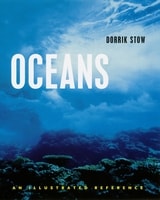
Oceans
An Illustrated ReferenceDorrik Stow
University of Chicago Press, 2005
Oceans: An Illustrated Reference tells the story of this last great frontier. With hundreds of beautiful full-color photographs and explanatory diagrams, charts, and maps, Oceans combines the visual splendor of ocean life with up-to-date scientific information to provide an invaluable and fascinating resource on this vital realm. Covering all major areas of oceanographic knowledge and research, Oceans is divided into two parts. The first, "Ocean Systems," examines the physical nature of the oceans, including plate tectonics, temperature and climate, waves and tides, natural resources and much more. The second, "Ocean Life,"explores biodiversity, evolution and adaptation, marine ecosystems and complex communities, and the preservation of fragile marine environments.
Oceans also offers readers a host of tools to better understand the magnificent world of the sea. A special section of bathymetric maps-made possible by satellite observation, deep-towed surveying craft, and remotely operated submarine vessels-provides a view of the depth and texture of ocean floors around the globe, giving us a glimpse of worlds rarely seen. And throughout the book, engagingly written special features delve into specific marine environments and phenomena such as the lost Tethys Ocean, from which the Himalayas were born. Cross-references and a detailed index help readers navigate this multifaceted volume, and a glossary provides clear definitions of scientific vocabulary.
Although the oceans are vast, their resources are finite. Oceans clearly presents the future challenge to us all-that of ensuring that our common ocean heritage is duly respected, wisely managed, and carefully harnessed for the benefit of the whole planet. Lavishly illustrated and filled with current research, Oceans is a step in that direction: a rich, magnificent, and illuminating volume for anyone who has ever heard the siren song of the sea.
Of Maybugs and Men
A History and Philosophy of the Sciences of HomosexualityPieter R. Adriaens and Andreas De Block
University of Chicago Press, 2022
Questions about the naturalness or unnaturalness of homosexuality are as old as the hills, and the answers have often been used to condemn homosexuals, their behaviors, and their relationships. In the past two centuries, a number of sciences have involved themselves in this debate, introducing new vocabularies, theories, arguments, and data, many of which have gradually helped tip the balance toward tolerance and even acceptance. In this book, philosophers Pieter R. Adriaens and Andreas De Block explore the history and philosophy of the gay sciences, revealing how individual and societal values have colored how we think about homosexuality.
The authors unpack the entanglement of facts and values in studies of male homosexuality across the natural and human sciences and consider the extent to which science has mitigated or reinforced homonegative mores. The focus of the book is on homosexuality’s assumed naturalness. Geneticists rephrased naturalness as innateness, claiming that homosexuality is innate—colloquially, that homosexuals are born gay. Zoologists thought it a natural affair, documenting its existence in myriad animal species, from maybugs to men. Evolutionists presented homosexuality as the product of natural selection and speculated about its adaptive value. Finally, psychiatrists, who initially pathologized homosexuality, eventually appealed to its naturalness or innateness to normalize it.
Discussing findings from an array of sciences—comparative zoology, psychiatry, anthropology, evolutionary biology, social psychology, developmental biology, and machine learning—this book is essential reading for anyone interested in what science has to say about homosexuality.
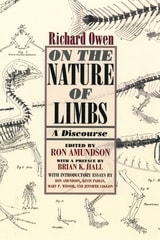
On the Nature of Limbs
A DiscourseRichard Owen
University of Chicago Press, 2007
Just as Darwin’s ideas continue to propel the modern study of adaptation, so too will Owen’s contributions fuel the new interest in homology, organic form, and evolutionary developmental biology. His theory of the archetype and his views on species origins were first offered to the general public in On the Nature of Limbs, published in 1849. It reemerges here in a facsimile edition with introductory essays by prominent historians, philosophers, and practitioners from the modern evo-devo community.
Our Magnetic Earth
The Science of GeomagnetismRonald T. Merrill
University of Chicago Press, 2010
But as Ronald T. Merrill reveals in Our Magnetic Earth, geomagnetism really is an enduring, vibrant area of science, one that offers answers to some of the biggest questions about our planet’s past—and maybe even its future. In a clear and careful fashion, he lays out the physics of geomagnetism and magnetic fields, then goes on to explain how Earth’s magnetic field provides crucial evidence for our understanding of continental drift and plate tectonics; how and why animals, ranging from bacteria to mammals, sense and use the magnetic field; how changes in climate over eons can be studied through variations in the magnetic field in rocks; and much more. Throughout, Merrill peppers his scientific account with bizarre anecdotes and fascinating details, from levitating pizzas to Moon missions to blackmailing KGB agents—a reminder that real science can at times be stranger, and more amusing, than fiction.
A winning primer for anyone who has ever struggled with a compass or admired a ragged V of migrating geese, Our Magnetic Earth demonstrates that education and entertainment need not be polar opposites.
Our Marvelous Bodies
An Introduction to the Physiology of Human HealthMerrill, Gary F
Rutgers University Press, 2008
Our Marvelous Bodies offers a unique perspective on the structure, function, and care of the major systems of the human body. Unlike other texts that use a strictly scientific approach, physiologist Gary F. Merrill relays medical facts alongside personal stories that help students relate to and apply the information.
Readers learn the basics of feedback control systems, homeostasis, and physiological gradients. These principles apply to an understanding of the body’s functioning under optimal, healthy conditions, and they provide insight into states of acute and chronic illness. Separate chapters are devoted to each of the body’s systems in detail: nervous, endocrine, cardiovascular, respiratory, renal, gastrointestinal, musculoskeletal, reproductive, and immune. Through a series of real-life examples, the book also shows the importance of maintaining careful medical records for health care professionals, scientists, and patients alike.
Outsider Scientists
Routes to Innovation in BiologyEdited by Oren Harman and Michael R. Dietrich
University of Chicago Press, 2013