Results by title
239 books match the query 'Black people' and 4 start with o
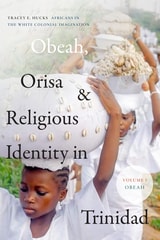
Obeah, Orisa, and Religious Identity in Trinidad, Volume I, Obeah
Africans in the White Colonial Imagination, Volume 1Tracey E. Hucks
Duke University Press, 2022
Obeah, Orisa, and Religious Identity in Trinidad is an expansive two-volume examination of social imaginaries concerning Obeah and Yoruba-Orisa from colonialism to the present. Analyzing their entangled histories and systems of devotion, Tracey E. Hucks and Dianne M. Stewart articulate how these religions were criminalized during slavery and colonialism yet still demonstrated autonomous modes of expression and self-defense. In Volume I, Obeah, Hucks traces the history of African religious repression in colonial Trinidad through the late nineteenth century. Drawing on sources ranging from colonial records, laws, and legal transcripts to travel diaries, literary fiction, and written correspondence, she documents the persecution and violent penalization of African religious practices encoded under the legal classification of “obeah.” A cult of antiblack fixation emerged as white settlers defined themselves in opposition to Obeah, which they imagined as terrifying African witchcraft. These preoccupations revealed the fears that bound whites to one another. At the same time, persons accused of obeah sought legal vindication and marshaled their own spiritual and medicinal technologies to fortify the cultural heritages, religious identities, and life systems of African-diasporic communities in Trinidad.
[more]
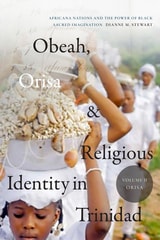
Obeah, Orisa, and Religious Identity in Trinidad, Volume II, Orisa
Africana Nations and the Power of Black Sacred Imagination, Volume 2Dianne M. Stewart
Duke University Press, 2022
Obeah, Orisa, and Religious Identity in Trinidad is an expansive two-volume examination of social imaginaries concerning Obeah and Yoruba-Orisa from colonialism to the present. Analyzing their entangled histories and systems of devotion, Tracey E. Hucks and Dianne M. Stewart articulate how these religions were criminalized during slavery and colonialism yet still demonstrated autonomous modes of expression and self-defense. In Volume II, Orisa, Stewart scrutinizes the West African heritage and religious imagination of Yoruba-Orisa devotees in Trinidad from the mid-nineteenth century to the present and explores their meaning-making traditions in the wake of slavery and colonialism. She investigates the pivotal periods of nineteenth-century liberated African resettlement, the twentieth-century Black Power movement, and subsequent campaigns for the civil right to religious freedom in Trinidad. Disrupting syncretism frameworks, Stewart probes the salience of Africa as a religious symbol and the prominence of Africana nations and religious nationalisms in projects of black belonging and identity formation, including those of Orisa mothers. Contributing to global womanist thought and activism, Yoruba-Orisa spiritual mothers disclose the fullness of the black religious imagination’s affective, hermeneutic, and political capacities.
[more]
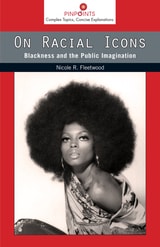
On Racial Icons
Blackness and the Public ImaginationFleetwood, Nicole R
Rutgers University Press, 2015
What meaning does the American public attach to images of key black political, social, and cultural figures? Considering photography’s role as a means of documenting historical progress, what is the representational currency of these images? How do racial icons “signify”?
Nicole R. Fleetwood’s answers to these questions will change the way you think about the next photograph that you see depicting a racial event, black celebrity, or public figure. In On Racial Icons, Fleetwood focuses a sustained look on photography in documenting black public life, exploring the ways in which iconic images function as celebrations of national and racial progress at times or as a gauge of collective racial wounds in moments of crisis.
Offering an overview of photography’s ability to capture shifting race relations, Fleetwood spotlights in each chapter a different set of iconic images in key sectors of public life. She considers flash points of racialized violence in photographs of Trayvon Martin and Emmett Till; the political, aesthetic, and cultural shifts marked by the rise of pop stars such as Diana Ross; and the power and precarity of such black sports icons as Serena Williams and LeBron James; and she does not miss Barack Obama and his family along the way. On Racial Icons is an eye-opener in every sense of the phrase.
Images from the book. (http://rutgerspress.rutgers.edu/pages/Fleetwood.aspx)Nicole R. Fleetwood’s answers to these questions will change the way you think about the next photograph that you see depicting a racial event, black celebrity, or public figure. In On Racial Icons, Fleetwood focuses a sustained look on photography in documenting black public life, exploring the ways in which iconic images function as celebrations of national and racial progress at times or as a gauge of collective racial wounds in moments of crisis.
Offering an overview of photography’s ability to capture shifting race relations, Fleetwood spotlights in each chapter a different set of iconic images in key sectors of public life. She considers flash points of racialized violence in photographs of Trayvon Martin and Emmett Till; the political, aesthetic, and cultural shifts marked by the rise of pop stars such as Diana Ross; and the power and precarity of such black sports icons as Serena Williams and LeBron James; and she does not miss Barack Obama and his family along the way. On Racial Icons is an eye-opener in every sense of the phrase.
[more]
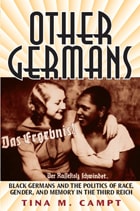
Other Germans
Black Germans and the Politics of Race, Gender, and Memory in the Third ReichTina M. Campt
University of Michigan Press, 2005
It's hard to imagine an issue or image more riveting than Black Germans during the Third Reich. Yet accounts of their lives are virtually nonexistent, despite the fact that they lived through a regime dedicated to racial purity.
Tina Campt's Other Germans tells the story of this largely forgotten group of individuals, with important distinctions from other accounts. Most strikingly, Campt centers her arguments on race, rather than anti-semitism. She also provides oral history as background for her study, interviewing two Black Germans for the book.
In the end, the author comes face to face with an inevitable question: Is there a relationship between the history of Black Germans and those of other black communities?
The answers to Campt's questions make Other Germans essential reading in the emerging study of what it meant to be black and German in the context of a society that looked at anyone with non-German blood as racially impure at best.
Tina Campt is Associate Professor of Women's Studies at Duke University.
[more]