Results by title
282 books match the query 'Caribbean & West Indies' and 8 start with o
Obeah and Other Powers
The Politics of Caribbean Religion and HealingDiana Paton and Maarit Forde, eds.
Duke University Press, 2012
Contributors. Kenneth Bilby, Erna Brodber, Alejandra Bronfman, Elizabeth Cooper, Maarit Forde, Stephan Palmié, Diana Paton, Alasdair Pettinger, Lara Putnam, Karen Richman, Raquel Romberg, John Savage, Katherine Smith
Omens of Adversity
Tragedy, Time, Memory, JusticeDavid Scott
Duke University Press, 2014
On Captivity
A Spanish Soldier's Experience in a Havana Prison, 1896-1898Manuel Ciges Aparicio
University of Alabama Press, 2012
A rare and unfiltered witness to Spain’s colonial collapse—Ciges Aparicio’s prison memoir exposes the political, human, and moral stakes of the Cuban War of Independence.
Ciges enlisted in the Spanish army in 1893 at the age of twenty. He served in Africa and then in Cuba, where he opposed Spanish General Valeriano Weyler’s policies in Cuba as well as the war itself. Ciges soon found himself imprisoned and facing execution for treason as punishment for an article critical of Weyler’s conducting of the war that was intercepted by Spanish authorities before it could be published in the pro-Cuban Parisian paper L’Intransigeant.
First published in book form in 1903, Ciges’s account includes detailed observations concerning prison organization, perceptions of political events and personalities of the time, as well as graphic descriptions of the daily life of the men confined in the infamous prison. Ciges is the only one of the so-called Generation of 1898—writers considered to have been deeply marked by el desastre (the loss of the colonies)—who was in Cuba during the war years. His witness to events there, colored by his stance as a freethinker and political skeptic, constitutes a significant historical document. Following his release from prison, Ciges returned to Spain where he resumed his career as an activist journalist and also earned acclaim as a translator and novelist. In time, his political allegiances shifted from socialism to liberal republicanism. He was acting as provincial governor of Avila when he was killed by unidentified assassins on August 4, 1936—eighteen days after the Falangist uprising against the Second Republic.
On Land and Sea
Native American Uses of Biological Resources in the West IndiesLee A. Newsom and Elizabeth S. Wing
University of Alabama Press, 2003
During the vast stretches of early geologic time, the islands of the Caribbean archipelago separated from continental land masses, rose and sank many times, merged with and broke from other land masses, and then by the mid-Cenozoic period settled into the current pattern known today. By the time Native Americans arrived, the islands had developed complex, stable ecosystems. The actions these first colonists took on the landscape—timber clearing, cultivation, animal hunting and domestication, fishing and exploitation of reef species—affected fragile land and sea biotic communities in both beneficial and harmful ways.
On Land and Sea examines the condition of biosystems on Caribbean islands at the time of colonization, human interactions with those systems through time, and the current state of biological resources in the West Indies. Drawing on a massive data set collected from long-term archaeological research, the study reconstructs past lifeways on these small tropical islands. The work presents a wide range of information, including types of fuel and construction timber used by inhabitants, cooking techniques for various shellfish, availability and use of medicinal and ritual plants, the effects on native plants and animals of cultivation and domestication, and diet and nutrition of native populations.
The islands of the Caribbean basin continue to be actively excavated and studied in the quest to understand the earliest human inhabitants of the New World. This comprehensive work will ground current and future studies and will be valuable to archaeologists, anthropologists, botanists, ecologists, Caribbeanists, Latin American historians, and anyone studying similar island environments.

On the Border of Belonging
Luisa Capetillo, Ofelia Rodríguez Acosta, and Evangelina Rodríguez PerozoStephanie Rivera Berruz
Rutgers University Press, 2027
On the Border of Belonging: Luisa Capetillo, Ofelia Rodríguez Acosta, and Evangelina Rodríguez Perozo is a philosophical-historiographical project that spearheads the construction of an intellectual tradition of women from the Hispanophone Caribbean at the turn of the 20th century. On the Border of Belonging engages Luisa Capetillo (Puerto Rico), Ofelia Rodríguez Acosta (Cuba), Evangelina Rodríguez Perozo (Dominican Republic) as interlocutors with the landfall of Western modernity revealing a tense intersection between a desire to belong to modernity while sitting on the margins of its possibilities. The vexed relationship with belonging creates a counter-archive of contradictions that reveals a vivid philosophical patchwork that spirals and repeats across the archipelago. In this crosscurrent of ideas, Luisa Capetillo defends the possibilities of a spiritual- anarchist political life; Ofelia Rodríguez Acosta challenges the norms of love and kinship; and Evangelina Rodríguez Perozo contests the standards of maternal and infant care.

Other 1898s
Working-Class Politics in the Postemancipation CaribbeanAnne Eller
Duke University Press, 2027
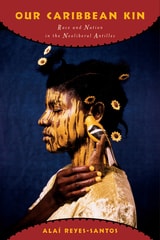
Our Caribbean Kin
Race and Nation in the Neoliberal AntillesReyes-Santos, Alaí
Rutgers University Press, 2015
Our Caribbean Kin considers three key moments in the region’s history: the nineteenth century, when the antillanismo movement sought to throw off the yoke of colonial occupation; the 1930s, at the height of the region’s struggles with US imperialism; and the past thirty years, as neoliberal economic and social policies have encroached upon the islands. At each moment, the book demonstrates, specific tropes of brotherhood, marriage, and lineage have been mobilized to construct political kinship among Antilleans, while racist and xenophobic discourses have made it difficult for them to imagine themselves as part of one big family.
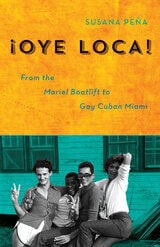
Oye Loca
From the Mariel Boatlift to Gay Cuban MiamiSusana Peña
University of Minnesota Press, 2013
During only a few months in 1980, 125,000 Cubans entered the United States as part of a massive migration known as the Mariel boatlift. The images of boats of all sizes, in various conditions, filled with Cubans of all colors and ages, triggered a media storm. Fleeing Cuba’s repressive government, many homosexual men and women arrived in the United States only to face further obstacles. Deemed “undesirables” by the U.S. media, the Cuban state, and Cuban Americans already living in Miami, these new entrants marked a turning point in Miami’s Cuban American and gay histories.
In Oye Loca, Susana Peña investigates a moment of cultural collision. Drawing from first-person stories of Cuban Americans as well as government documents and cultural texts from both the United States and Cuba, Peña reveals how these discussions both sensationalized and silenced the gay presence, giving way to a Cuban American gay culture. Through an examination of the diverse lives of Cuban and Cuban American gay men, we learn that Miami’s gay culture was far from homogeneous. By way of in-depth interviews, participant observation, and archival analysis, Peña shows that the men who crowded into small apartments together, bleached their hair with peroxide, wore housedresses in the street, and endured ruthless insults challenged what it meant to be Cuban in Miami.
Making a critical incision through the study of heteronormativity, homosexualities, and racialization, ultimately Oye Loca illustrates how a single historical event helped shape the formation of an entire ethnic and sexual landscape.