Results by title
303 books match the query 'Church history' and 5 start with o
Of Wonders and Wise Men
Religion and Popular Cultures in Southeast Mexico, 1800-1876By Terry Rugeley
University of Texas Press, 2001
2004 – Harvey L. Johnson Award – Southwest Council of Latin American Studies
In the tumultuous decades following Mexico's independence from Spain, religion provided a unifying force among the Mexican people, who otherwise varied greatly in ethnicity and socioeconomic status. Accordingly, religion and the popular cultures surrounding it form the lens through which Terry Rugeley focuses this cultural history of southeast Mexico from independence (1821) to the rise of the dictator Porfirio Díaz in 1876.
Drawing on a wealth of previously unused archival material, Rugeley vividly reconstructs the folklore, beliefs, attitudes, and cultural practices of the Maya and Hispanic peoples of the Yucatán. In engagingly written chapters, he explores folklore and folk wisdom, urban piety, iconography, and anticlericalism. Interspersed among the chapters are detailed portraits of individual people, places, and institutions, that, with the archival evidence, offer a full and fascinating history of the outlooks, entertainments, and daily lives of the inhabitants of southeast Mexico in the nineteenth century. Rugeley also links this rich local history with larger events to show how macro changes in Mexico affected ordinary people.
On Illustrious Men
Saint Jerome
Catholic University of America Press, 1999
One State Under God
A History of Religion in TexasJoseph L. Locke
University of Texas Press, 2026
A broad and accessible history of religion in Texas, from prehistory to the present.
From sprawling megachurches to religious billboards and towering steel crosses, religion quite literally looms over Texas. Christian nationalism determines the state’s politics and, every school day, more than five million Texas children pledge allegiance to “one state under God.” But it wasn’t always this way.
In this wide-ranging chronicle, Joseph Locke uncovers the breadth of Texas’s religious history, from Indigenous painters of cosmological cave art and Spanish invaders who constructed missions to irreligious Anglo colonists, freethinking frontiersmen, Tejano folk saints, evangelical culture warriors, and Muslim immigrants. Locke traces the state’s religious transformations across the centuries, bringing them to life through his depiction of compelling figures, like enslaved preacher Anderson Edwards, fighting fundamentalist J. Frank Norris, and celebrated humanitarian Sister Norma Pimentel, and gripping moments, such as the murder of atheist newspaperman William Cowper Brann and the siege of the Branch Davidian compound in Waco. Comprehensive, fast-paced, and highly readable, One State Under God reveals how the Lone Star State’s spiritual path was blazed.
Our Southern Zion
A History of Calvinism in the South Carolina Low Country, 1690-1990Erskine Clarke
University of Alabama Press, 1996
Three centuries of faith, intellect, and resilience—Calvinism’s quiet power in the Southern low country.
The South Carolina low country has long been regarded—not only in popular imagination and paperback novels but also by respected scholars—as a region dominated by what earlier historians called “a cavalier spirit” and by what later historians have simply described as “a wholehearted devotion to amusement and the neglect of religion and intellectual pursuits.” Such images of the low country have been powerful interpreters of the region because they have had some foundation in social and cultural realities. It is a thesis of this study, however, that there has been a strong Calvinist community in the Carolina low country since its establishment as a British colony and that this community (including in its membership both whites and after the 1740s significant numbers of African Americans) contradicts many of the images of the "received version" of the region. Rather than a devotion to amusement and a neglect of religion and intellectual interests, this community has been marked throughout most of its history by its disciplined religious life, its intellectual pursuits, and its work ethic.
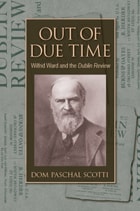
Out of due time
Wilfrid Ward and the Dublin reviewPaschal Scotti
Catholic University of America Press, 2006