Results by title
173 books match the query 'Commerce' and 8 start with o
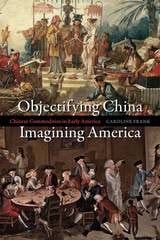
Objectifying China, Imagining America
Chinese Commodities in Early AmericaCaroline Frank
University of Chicago Press, 2011
With the ever-expanding presence of China in the global economy, Americans more and more look east for goods and trade. But as Caroline Frank reveals, this is not a new development. China loomed as large in the minds—and account books—of eighteenth-century Americans as it does today. Long before they had achieved independence from Britain and were able to sail to Asia themselves, American mariners, merchants, and consumers were aware of the East Indies and preparing for voyages there. Focusing on the trade and consumption of porcelain, tea, and chinoiserie, Frank shows that colonial Americans saw themselves as part of a world much larger than just Britain and Europe
Obsidian
Geology and Archaeology in the North American SouthwestM. Steven Shackley
University of Arizona Press, 2005
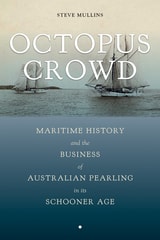
Octopus Crowd
Maritime History and the Business of Australian Pearling in Its Schooner AgeSteve Mullins
University of Alabama Press, 2019
For most of its history, Australian pearling was a shore-based activity. But from the mid-1880s until the World War I era, the industry was dominated by highly mobile, heavily capitalized, schooner-based fleets of pearling luggers, known as floating stations, that exploited Australia’s northern continental shelf and the nearby waters of the Netherlands Indies. Octopus Crowd: Maritime History and the Business of Australian Pearling in Its Schooner Age is the first book-length study of schooner-based pearling and explores the floating station system and the men who developed and employed it.
Steve Mullins focuses on the Clark Combination, a syndicate led by James Clark, Australia’s most influential pearler. The combination honed the floating station system to the point where it was accused of exhausting pearling grounds, elbowing out small-time operators, strangling the economies of pearling ports, and bringing the industry to the brink of disaster. Combination partners were vilified as monopolists—they were referred to as an “octopus crowd”—and their schooners were stigmatized as hell ships and floating sweatshops.
Schooner-based floating stations crossed maritime frontiers with impunity, testing colonial and national territorial jurisdictions. The Clark Combination passed through four fisheries management regimes, triggering significant change and causing governments to alter laws and extend maritime boundaries. It drew labor from ports across the Asia-Pacific, and its product competed in a volatile world market. Octopus Crowd takes all of these factors into account to explain Australian pearling during its schooner age. It argues that the demise of the floating station system was not caused by resource depletion, as was often predicted, but by ideology and Australia’s shifting sociopolitical landscape
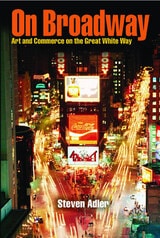
On Broadway
Art and Commerce on the Great White WaySteven Adler
Southern Illinois University Press, 2004
At a critical, transitional moment in the history of Broadway—and, by extension, of American theatre itself—former Broadway stage manager Steven Adlerenlists insider perspectives from sixty-six practitioners and artists to chronicle the recent past and glimpse the near future of the Great White Way. From marquee names to behind-the-scenes power brokers, Adler has assembled a distinctly knowledgeable cast of theatre’s elite, including Stephen Sondheim, Arthur Laurents, Des McAnuff, Frank Rich, Robin Wagner, Rocco Landesman, Robert Longbottom, Todd Haimes, Bernard Gersten, and Alan Eisenberg.
On Broadway: Art and Commerce on the Great White Way spotlights the differing vantage points of performers, artists, writers, managers, producers, critics, lawyers, theatre owners, union leaders, city planners, and other influential players. Each details his or her firsthand account of the creative and economic forces that have wrought extraordinary changes in the way Broadway theatre is conceived, produced, marketed, and executed. Once the paramount site of American theatre, Broadway today is becoming a tourist-driven, family-friendly, middle-class entertainment oasis in Midtown, an enterprise inextricably bound to the larger mosaic of national and international professional theatre.
Accounting for this transformation and presaging Broadway’s identity for the twenty-first century, Adler and his interviewees assess the impact of the advent of corporate producers, the ascendance of not-for-profit theatres on Broadway, and the growing interdependence between regional and Broadway productions. Also critiqued are the important roles of the radical urban redevelopment staged in Times Square and the changing demographics and appetites of contemporary theatre audiences in New York and around the globe.
Actors and administrators, performers and producers, theatre students and theatregoers will all benefit from the perceptive insights in this authoritative account of theatre making for the new millennium.
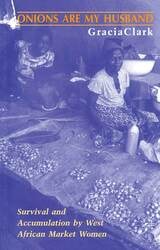
Onions Are My Husband
Survival and Accumulation by West African Market WomenGracia Clark
University of Chicago Press, 1994
Probably the largest of its kind in West Africa, the Kumasi Central Market houses women whose positions vary from hawkers of meals and cheap manufactured goods to powerful wholesalers, who control the flow of important staples. Drawing on more than four years of field research, during which she worked alongside several influential market "Queens", Clark explains the economic, political, gender, and ethnic complexities involved in the operation of the marketplace and examines the resourcefulness of the market women in surviving the various hazards they routinely encounter, from coups d'etat to persistent sabotage of their positions from within.
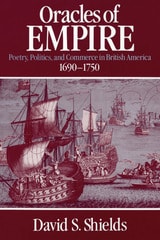
Oracles of Empire
Poetry, Politics, and Commerce in British America, 1690-1750David S. Shields
University of Chicago Press, 1990
British America's poetry of empire was dominated by three issues: mercantilism's promise that civilization and wealth would be transmitted from London to the provinces; the debate over the extent of metropolitan prerogatives in law and commerce when they obtruded upon provincial rights and interests; and the argument that Britain's imperium pelagi was an ethical empire, because it depended upon the morality of trade, while the empires of Spain and France were immoral empires because they were grounded upon conquest. In discussing these issues, Shields provides a virtual anthology of poems long lost to students of American literature.
Oriental Networks
Culture, Commerce, and Communication in the Long Eighteenth CenturyBärbel Czennia
Bucknell University Press, 2021
Published by Bucknell University Press. Distributed worldwide by Rutgers University Press.
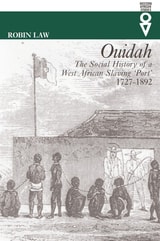
Ouidah
The Social History of a West African Slaving Port, 1727–1892Robin Law
Ohio University Press, 2004
Ouidah, an African town in the Republic of Benin, was the principal precolonial commercial center of its region and the second-most-important town of the Dahomey kingdom. It served as a major outlet for the transatlantic slave trade. Between the seventeenth and the nineteenth centuries, Ouidah was the most important embarkation point for slaves in the region of West Africa known to outsiders as the Slave Coast. This is the first detailed study of the town’s history and of its role in the Atlantic slave trade.
Ouidah is a well-documented case study of precolonial urbanism, of the evolution of a merchant community, and in particular of the growth of a group of private traders whose relations with the Dahomian monarchy grew increasingly problematic over time.