Results by title
126 books match the query 'Communism' and 3 start with o
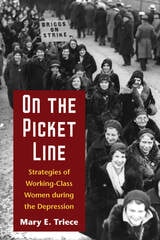
On the Picket Line
Strategies of Working-Class Women during the DepressionMary Triece
University of Illinois Press, 2006
Bonnie Ritter Book Award, National Communication Association's Feminist and Women Studies Division, 2008.
On the Picket Line uncovers the voices of working-class women, particularly those active in the Communist Party, U.S.A., in order to examine how these individuals confronted the tensions between their roles as workers, wives, mothers, and consumers. Combining critical analysis, Marxist and feminist theory, and labor history, Mary E. Triece analyzes the protest tactics employed by working class women to challenge dominant ideologies surrounding domesticity.
She details the rhetorical strategies used by women to argue for their rights as workers in the paid labor force and as caregivers in the home. Their overtly coercive tactics included numerous sit-ins, strikes, and boycotts that won tangible gains for working poor and unemployed women. The book also gives voice to influential figures in the 1930s labor movement (many of whom were members of the Communist Party, U.S.A.), such as Ella Reeve Bloor, Margaret Cowl, Anna Damon, Ann Burlak, and Grace Hutchins. Triece ultimately argues that these confrontational protest tactics of the 1930s remain relevant in today’s fights for more humane workplaces and better living conditions.
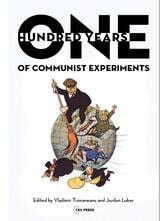
One Hundred Years of Communist Experiments
Vladimir Tismaneanu
Central European University Press, 2021
Why has communism’s humanist quest for freedom and social justice without exception resulted in the reign of terror and lies? The authors of this collective volume address this urgent question covering the one hundred years since Lenin’s coup brought the first communist regime to power in St. Petersburg, Russia in November 1917. The first part of the volume is dedicated to the varieties of communist fantasies of salvation, and the remaining three consider how communist experiments over many different times and regions attempted to manage economics, politics, as well as society and culture. Although each communist project was adapted to the situation of the country where it operated, the studies in this volume find that because of its ideological nature, communism had a consistent penchant for totalitarianism in all of its manifestations.
This book is also concerned with the future. As the world witnesses a new wave of ideological authoritarianism and collectivistic projects, the authors of the nineteen essays suggest lessons from their analyses of communism’s past to help better resist totalitarian projects in the future.

Opening the Books
Essays on the Cultural and Social History of the British Communist PartyGeoff Andrews
Pluto Press, 1995