Results by title
355 books match the query 'Communism, Post-Communism & Socialism' and 14 start with o

Of G-Men and Eggheads
The FBI and the New York IntellectualsJohn Rodden
University of Illinois Press, 2017
John Rodden cuts this tall tale down to its authentic pint size, refusing to indulge the public relations myth promoted by J. Edgar Hoover's FBI. In Of G-Men and Eggheads, Rodden portrays federal agents’ hilarious obsession with monitoring that ever-present threat to national security, the American literary intellectual. Drawing on government dossiers and archives, Rodden focuses on the onetime members of a radical political sect of ex-Trotskyists (barely numbering a thousand at its height), the so-called New York intellectuals. He describes the nonsensical decades-long pursuit of this group of intellectuals, especially Lionel Trilling, Dwight Macdonald, and Irving Howe. The Keystone Cops style of numerous FBI agents is documented carefully in Rodden's meticulous case studies of how Hoover's men recruited informants to snoop on the "Commies," opened their personal mail, tracked their movements, and reported on their wives and friends.
Of Red Dragons and Evil Spirits
Post-Communist Historiography between Democratization and the New Politics of HistoryOto Luthar
Central European University Press, 2017
On The Edge
Ukrainian - Central European - Russian Security TriangleMargarita M. Balmaceda
Central European University Press, 2001
A new globally significant relationship arising after the break-up of the Soviet Union is the main topic of this unparalleled volume – the geopolitical link between Russia, Ukraine and the three bordering ‘Central European’ states, Hungary, Poland and Slovakia. On the Edge is a path-breaking analysis of this triangular relationship with an in-depth focus on economic, political and, more importantly, security issues.
The expansion of NATO up to Ukraine’s borders is likely to leave Ukraine in a delicate position vis-à-vis Russia. On the Edge addresses key questions, such as: how are events in Ukraine affecting the security calculations of the Central European states; Central European relations with Russia and NATO; and relations among Central European states themselves? The volume examines what Central European states can do to solidify Ukraine’s independence and help it avoid international isolation.
On the Edge gives a Central European perspective on all these issues and suggests concrete forms of co-operation.

On Western Terrorism - New Edition
From Hiroshima to Drone WarfareNoam Chomsky and Andre Vltchek
Pluto Press, 2017
“Noam Chomsky is a global phenomenon.”—New York Review of Books
In On Western Terrorism, world-renowned intellectual Noam Chomsky discusses Western power and propaganda with filmmaker and investigative journalist Andre Vltchek. Together they touch on colonialism, propaganda, and the media, and cover topics from the Soviet Union to Latin America to the Arab Spring.
Here is the perfect introduction to Chomsky's political thought and provides an accessible approach for anyone who wishes to better understand the West's fraught role in the world. Admired by some, condemned by others, and feared by all—the military might of the West is undeniably colossal.
Beginning with stories of the New York newsstand where Chomsky started his political education as a teenager, the discussion broadens out to encompass colonialism, imperial control, propaganda, and drone warfare.
Chomsky and Vltchek offer a powerful critique of the legacy of colonialism, touching upon many countries including Syria, Nicaragua, Cuba, China, Chile, and Turkey. The Table of Contents:
1. The Murderous Legacy of Colonialism
2. Concealing the Crimes of the West
3. Propaganda and the Media
4. The Soviet Bloc
5. India and China
6. Latin America
7. The Middle East and the Arab Spring
8. Hope in the Most Devastated Places on Earth
9. The Decline of U.S. Power Timeline
With a fresh design and a new foreword by Chomsky, this edition of On Western Terrorism stands as an influential and powerful critique of the West's role in the world, inspiring all who read it to think independently and critically.

On Your Marx
Relinking Socialism and the LeftRandy Martin
University of Minnesota Press, 2001
Reclaims Marx for today through a fundamental reconsideration of how his works should be read.
Why-and how-does Marx speak to our day? Seeking to reestablish the link between Marx, socialism, and the Left, this book negotiates the common ground between orthodox marxism and postmarxism to show how Marx can elaborate the present. More than a claim for his relevance, this book is also a forceful statement about how theory relates to political project and organization.
What, Randy Martin asks, does Marx have to say to the discourses of radical democracy, postmodernism, and globalization-all of which purport to solve problems that emerge in Marx’s writings? A reading of Marx can in fact disclose the limitations of the contemporary modes of criticism, identifying the difficult conceptual problems that cannot be avoided or overcome. Using readings of Marx to restage contemporary political discussions, On Your Marx reengages orthodox and postmarxist understandings in a critical and constructive conversation. In doing so, the book points to powerful new alliances between cultural and political theorists and activists, opening new possibilities for mobilization and social justice.
On the Left in America
Memoirs of the Scandinavian-American Labor MovementHenry Bengston. Translated by Kermit B. Westerberg. Edited and with an Introduction by Michael Brook
Southern Illinois University Press, 1999
Previously available only in an out-of-print Swedish edition published in 1955, Henry Bengston's firsthand account deals with what historian Dag Blanck calls the "other Swedish America."
Swedish immigrants in general were conservative, but Bengston and others—most notably Joe Hill—joined the working-class labor movement on the left, primarily as Debsian socialists, although their ranks included other socialists, communists, and anarchists. Involved in the radical labor movement on many fronts, Bengston was the editor of Svenska Socialisten from 1912 until he dropped out of the Scandinavian Socialist Federation in 1920. Even after 1920, however, his sympathies remained with the movement he had once strongly espoused.
On the Picket Line
Strategies of Working-Class Women during the DepressionMary Triece
University of Illinois Press, 2006
Bonnie Ritter Book Award, National Communication Association's Feminist and Women Studies Division, 2008.
On the Picket Line uncovers the voices of working-class women, particularly those active in the Communist Party, U.S.A., in order to examine how these individuals confronted the tensions between their roles as workers, wives, mothers, and consumers. Combining critical analysis, Marxist and feminist theory, and labor history, Mary E. Triece analyzes the protest tactics employed by working class women to challenge dominant ideologies surrounding domesticity.
She details the rhetorical strategies used by women to argue for their rights as workers in the paid labor force and as caregivers in the home. Their overtly coercive tactics included numerous sit-ins, strikes, and boycotts that won tangible gains for working poor and unemployed women. The book also gives voice to influential figures in the 1930s labor movement (many of whom were members of the Communist Party, U.S.A.), such as Ella Reeve Bloor, Margaret Cowl, Anna Damon, Ann Burlak, and Grace Hutchins. Triece ultimately argues that these confrontational protest tactics of the 1930s remain relevant in today’s fights for more humane workplaces and better living conditions.
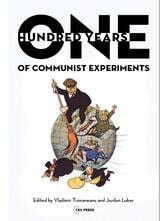
One Hundred Years of Communist Experiments
Vladimir Tismaneanu
Central European University Press, 2021
Why has communism’s humanist quest for freedom and social justice without exception resulted in the reign of terror and lies? The authors of this collective volume address this urgent question covering the one hundred years since Lenin’s coup brought the first communist regime to power in St. Petersburg, Russia in November 1917. The first part of the volume is dedicated to the varieties of communist fantasies of salvation, and the remaining three consider how communist experiments over many different times and regions attempted to manage economics, politics, as well as society and culture. Although each communist project was adapted to the situation of the country where it operated, the studies in this volume find that because of its ideological nature, communism had a consistent penchant for totalitarianism in all of its manifestations.
This book is also concerned with the future. As the world witnesses a new wave of ideological authoritarianism and collectivistic projects, the authors of the nineteen essays suggest lessons from their analyses of communism’s past to help better resist totalitarian projects in the future.

Open Government, Open Diplomacy
Conversations with a Former American Diplomat M. André GoodfriendIstván Hargittai
Central European University Press, 2023
André Goodfriend was Deputy Chief of Mission from 2013 to 2015 at the US Embassy in Budapest. In the absence of an ambassador, most of the time he was Chargé d’Affaires. Goodfriend represented his country, and for that matter, liberal democracy, in the early period of the increasingly autocratic Orbán regime. This tenure was distinguished by an unusually high public visibility and broad-based popularity. This book contains the distilled essence of conversations recorded in the fall of 2015 and in the years after his departure.
Aside from Goodfriend’s reflections on his personal history, the main focus of the deliberations is on open government: its characteristics, preconditions, benefits, and its relation to modern diplomacy. The mindset of a democracy-rooted diplomat with a working experience in an increasingly autocratic regime lends a particular perspective to the topics discussed. These topics include the fight against corruption, the protection of civil society, crisis prevention, education, economy, international relations, applied humanities, and the use of the social and traditional media to achieve policy goals.
This book presents modern, “people-friendly” diplomacy in an era in which public officials are increasingly expected to be transparent and engaged.
Open Marxism 1
Dialectics and HistoryWerner Bonefeld
Pluto Press, 1992
In this study, distinguished international contributors project an ‘open’ Marxism - a rejection of the determinism and positivism which characterise so much of contemporary left-wing thought. Topics covered in the two volumes include Marxism and political economy, historical materialism, dialectics, state theory, class, fetishism and the periodisation of capitalist development.
Open Marxism 2
Theory and PracticeWerner Bonefeld
Pluto Press, 1992
Open Marxism 3
Emancipating MarxKosmas Psychopedis
Pluto Press, 1995
The contributors argue that sociological heritage which grew up under the banner of scientific Marxism has had a detrimental effect on the movement of socialist thinking. The 'emancipation of Marx' implies both freeing Marx from the understanding of the 20th century and the freeing of the human spirit from the control of capital.
Open Marxism 4
Against a Closing WorldAna Cecilia Dinerstein
Pluto Press, 2019
Open Marxism 4
Against a Closing WorldAna Cecilia Dinerstein
Pluto Press, 2019