Results by title
103 books match the query 'Conservatism & Liberalism' and 2 start with o

Once Upon a Time in Texas
A Liberal in the Lone Star StateBy David Richards
University of Texas Press, 2002
Once upon a time in Texas...there were liberal activists of various stripes who sought to make the state more tolerant and more tolerable. David Richards was one of them. In this fast-paced, often humorous memoir, he remembers the players, the strategy sessions, the legal and political battles, and the wins and losses that brought significant gains in civil rights, voter rights, labor law, and civil liberties to the people of Texas from the 1950s to the 1990s.
In his work as a lawyer, Richards was involved in cases covering voters' rights, school finance reform, and a myriad of civil liberties and free speech cases. In telling these stories, he vividly evokes the "glory days" of Austin liberalism, when a who's who of Texas activists plotted strategy at watering holes such as Scholz Garden and the Armadillo World Headquarters. Likewise, he offers vivid portraits of liberal politicians from Ralph Yarborough to Ann Richards (his former wife), progressive journalists such as Molly Ivins and the Texas Observer staff, and the hippies, hellraisers, and musicians who all challenged Texas's conservative status quo.
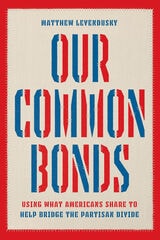
Our Common Bonds
Using What Americans Share to Help Bridge the Partisan DivideMatthew Levendusky
University of Chicago Press, 2023
One of the defining features of twenty-first-century American politics is the rise of affective polarization: Americans increasingly not only disagree with those from the other party but distrust and dislike them as well. This has toxic downstream consequences for both politics and social relationships. Is there any solution?
Our Common Bonds shows that—although there is no silver bullet that will eradicate partisan animosity—there are concrete interventions that can reduce it. Matthew Levendusky argues that partisan animosity stems in part from partisans’ misperceptions of one another. Democrats and Republicans think they have nothing in common, but this is not true. Drawing on survey and experimental evidence, the book shows that it is possible to help partisans reframe the lens through which they evaluate the out-party by priming commonalities—specifically, shared identities outside of politics, cross-party friendships, and common issue positions and values identified through civil cross-party dialogue. Doing so lessons partisan animosity, and it can even reduce ideological polarization. The book discusses what these findings mean for real-world efforts to bridge the partisan divide.