Results by title
123 books match the query 'Courts' and 3 start with o
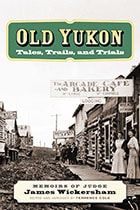
Old Yukon
Tales, Trails, and TrialsJames Wickersham
University of Alaska Press, 2009
In this humorous and upbeat memoir, James Wickersham describes his career as a pioneer judge and later as a congressional representative assigned to a vast, snow-covered district, extending over 300,000 square miles in the undeveloped Alaska Territory. Wickersham’s many adventures include traveling by dogsled over hundreds of miles through snow-covered mountains; serving as judge for the trials of many famous outlaws in the midst of the gold strikes; and hunting, mining, and climbing in his local Alaska wilderness. Though he was instrumental in the early history of Alaska, and his legacy is evident throughout the state—for example, he named the city of Fairbanks—this is the first and only work to focus on Wickersham’s life during this pivotal time in Alaska’s history.
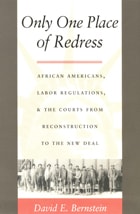
Only One Place of Redress
African Americans, Labor Regulations, and the Courts from Reconstruction to the New DealDavid E. Bernstein
Duke University Press, 2001
A pioneer in applying the insights of public choice theory to legal history, Bernstein contends that the much-maligned jurisprudence of the Lochner era—with its emphasis on freedom of contract and private market ordering—actually discouraged discrimination and assisted groups with little political clout. To support this thesis he examines the motivation behind and practical impact of laws restricting interstate labor recruitment, occupational licensing laws, railroad labor laws, minimum wage statutes, the Davis-Bacon Act, and New Deal collective bargaining. He concludes that the ultimate failure of Lochnerism—and the triumph of the regulatory state—not only strengthened racially exclusive labor unions but contributed to a massive loss of employment opportunities for African Americans, the effects of which continue to this day.
Scholars and students interested in race relations, labor law, and legal or constitutional history will be fascinated by Bernstein’s daring—and controversial—argument.
Oral Arguments and Coalition Formation on the U.S. Supreme Court
A Deliberate DialogueRyan C. Black, Timothy R. Johnson, and Justin Wedeking
University of Michigan Press, 2014
The U.S. Supreme Court, with its controlled, highly institutionalized decision-making practices, provides an ideal environment for studying coalition formation. The process begins during the oral argument stage, which provides the justices with their first opportunity to hear one another's attitudes and concerns specific to a case. This information gathering allows them eventually to form a coalition.
In order to uncover the workings of this process, the authors analyze oral argument transcripts from every case decided from 1998 through 2007 as well as the complete collection of notes kept during oral arguments by Justice Lewis F. Powell and Justice Harry A. Blackmun. Both justices clearly monitored their fellow justices' participation in the discussion and used their observations to craft opinions their colleagues would be likely to support. This study represents a major step forward in the understanding of coalition formation, which is a crucial aspect of many areas of political debate and decision making.