Results by title
434 books match the query 'Criticism & Theory' and 17 start with o
Object-Oriented Feminism
Katherine Behar
University of Minnesota Press, 2016
The essays in Object-Oriented Feminism explore OOF: a feminist intervention into recent philosophical discourses—like speculative realism, object-oriented ontology (OOO), and new materialism—that take objects, things, stuff, and matter as primary. Object-oriented feminism approaches all objects from the inside-out position of being an object too, with all of its accompanying political and ethical potentials.
This volume places OOF thought in a long history of ongoing feminist work in multiple disciplines. In particular, object-oriented feminism foregrounds three significant aspects of feminist thinking in the philosophy of things: politics, engaging with histories of treating certain humans (women, people of color, and the poor) as objects; erotics, employing humor to foment unseemly entanglements between things; and ethics, refusing to make grand philosophical truth claims, instead staking a modest ethical position that arrives at being “in the right” by being “wrong.”
Seeking not to define object-oriented feminism but rather to enact it, the volume is interdisciplinary in approach, with contributors from a variety of fields, including sociology, anthropology, English, art, and philosophy. Topics are frequently provocative, engaging a wide range of theorists from Heidegger and Levinas to Irigaray and Haraway, and an intriguing diverse array of objects, including the female body as fetish object in Lolita subculture; birds made queer by endocrine disruptors; and truth claims arising in material relations in indigenous fiction and film. Intentionally, each essay can be seen as an “object” in relation to others in this collection.
Contributors: Irina Aristarkhova, University of Michigan; Karen Gregory, University of Edinburgh; Marina Gržinić, Slovenian Academy of Science and Arts; Frenchy Lunning, Minneapolis College of Art and Design; Timothy Morton, Rice University; Anne Pollock, Georgia Tech; Elizabeth A. Povinelli, Columbia University; R. Joshua Scannell, CUNY Graduate Center; Adam Zaretsky, VASTAL.
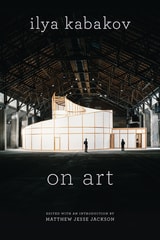
On Art
Ilya Kabakov
University of Chicago Press, 2018
Devoted to themes that range from the “cosmism” of pre-Revolutionary Russian modernism to the philosophical implications of Moscow’s garbage, Kabakov’s handmade booklets were typed out on paper, then stapled or sewn together using rough butcher paper for their covers. Among these writings are faux Socialist Realist verses, theoretical explorations, art historical analyses, accompaniments to installation projects, and transcripts of dialogues between the artist and literary theorists, critics, journalists, and other artists.
This volume offers for the first time in English the most significant texts written by Kabakov. The writings have been expressly selected for this English-language volume and there exists no equivalent work in any language.
On Following
Straight Lines and Infrastructural SensibilitiesIna Blom
University of Chicago Press, 2027
A cross-disciplinary examination of the relation between straight lines and sensory capacities in modern art, architecture, and music.
The human hand cannot draw a straight line, claimed nineteenth-century polymath John Ruskin. Straight lines are typically seen as incompatible with human bodies, and this is one of the reasons why their proliferation in modern art and architecture has been associated with the rational, universalist perspectives of a new industrial culture. With On Following, art historian Ina Blom traces a different genealogy of straight lines through modern and contemporary art, offering a perspective on straight-line works that addresses the close connections between the sensory capacities and experiences of human bodies and new media infrastructures. She considers what happens to aesthetic expression when bodies are surrounded by technologies that are themselves sensing systems.
Taking an expansive look at visual art, architecture, film, and music from the late nineteenth century to the present day, Blom considers practitioners including Walter De Maria, Marcel Duchamp, August Endell, Liam Gillick, Raoul Hausmann, Florian Hecker, Jenny Holzer, Ryoji Ikeda, Piero Manzoni, László Moholy-Nagy, Krzysztof Penderecki, Superstudio, Mies van der Rohe, and La Monte Young.
On Modern Art
Jean-Paul Sartre
Seagull Books, 2021
Iconic French novelist, playwright, and essayist Jean-Paul Sartre is widely recognized as one of the most important philosophers of the twentieth century, and his work has remained relevant and thought-provoking through the decades. The Seagull Sartre Library now presents some of his most incisive philosophical, cultural, and literary critical essays in twelve newly designed and affordable editions.
Sartre was a prodigious commentator on contemporary art, as is evident from the short but incisive essays that make up this important volume. Sartre examines here the work of a wide range of artists, including recognized masters such as Alberto Giacometti, Alexander Calder, and André Masson, alongside unacknowledged greats like French painter Robert Lapoujade and German painter-photographer Wols.
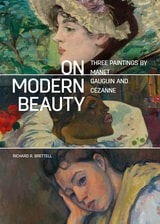
On Modern Beauty
Three Paintings by Manet, Gauguin, and CézanneRichard R. Brettell
J. Paul Getty Trust, The, 2019
Brettell shapes his manifesto around three masterworks from the collection of the J. Paul Getty Museum: Édouard Manet’s Jeanne (Spring), Paul Gauguin’s Arii Matamoe (The Royal End), and Paul Cézanne’s Young Italian Woman at a Table. The provocative discussion reveals how each of these exceptional paintings, though depicting very different subjects—a fashionable actress, a preserved head, and a weary working woman—enacts a revolutionary, yet enduring, icon of beauty.
On Obliteration
An Interview with Françoise Armengaud Concerning the Work of Sacha SosnoEmmanuel Levinas
Diaphanes, 2019
On Painting
Courses, March-June 1981Gilles Deleuze
University of Minnesota Press, 2025
Available for the first time in English: the complete and annotated transcripts of Deleuze’s 1981 seminars on painting
From 1970 until 1987, Gilles Deleuze held a weekly seminar at the Experimental University of Vincennes and, starting in 1980, at Saint-Denis. In the spring of 1981, he began a series of eight seminars on painting and its intersections with philosophy. The recorded sessions, newly transcribed and translated into English, are now available in their entirety for the first time. Extensively annotated by philosopher David Lapoujade, On Painting illuminates Deleuze’s thinking on artistic creation, significantly extending the lines of thought in his book Francis Bacon.
Through paintings and writing by Rembrandt, Delacroix, Turner, Cézanne, Van Gogh, Klee, Pollock, and Bacon, Deleuze explores the creative process, from chaos to the pictorial fact. The introduction and use of color feature prominently as Deleuze elaborates on artistic and philosophical concepts such as the diagram, modulation, code, and the digital and the analogical. Through this scrutiny, he raises a series of profound and stimulating questions for his students: How does a painter ward off grayness and attain color? What is a line without contour? Why paint at all?
Written and thought in a rhizomatic manner that is thoroughly Deleuzian—strange, powerful, and novel—On Painting traverses both the conception of art history and the possibility of color as a philosophical concept.
Retail e-book files for this title are screen-reader friendly with images accompanied by short alt text and/or extended descriptions.
On Withdrawal—Scenes of Refusal, Disappearance, and Resilience in Art and Cultural Practices
Edited by Sebastián Eduardo Dávila, Rebecca Hanna John, Ulrike Jordan, Thorsten Schneider, Judith Sieber, and Nele Wulff
Diaphanes, 2023
What forms does withdrawal—meaning either that which withdraws itself or which is being withdrawn—take in artistic and cultural practices? What movements does it create or follow in specific contexts, and with what theoretical, material, and political consequences? The contributors to this book address these questions in a variety of writing practices, each focusing on specific scenes.
Through interviews, artistic and literary texts, visual contributions, and academic texts, On Withdrawal explores various modalities of withdrawal, ranging from a silencing of critical voices to a political and aesthetic strategy of refusal.
Contributors: Arnika Ahldag, Sofia Bempeza, Lauren Berlant, Kathrin Busch, Helen Cammock, Knut Ebeling, Sebastián Eduardo Dávila, Mutlu Ergün-Hamaz, Stefanie Graefe, Rebecca Hanna John, Ulrike Jordan, Pinar Ögrenci, Pallavi Paul, Thorsten Schneider, Judith Sieber, Diana Taylor, Deniz Utlu, Marivi Véliz, Nele Wulff, and Akram Zaatari
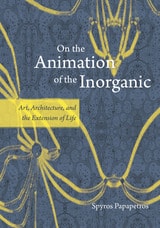
On the Animation of the Inorganic
Art, Architecture, and the Extension of LifeSpyros Papapetros
University of Chicago Press, 2012
Throughout human history, people have imagined inanimate objects to have intelligence, language, and even souls. In our secular societies today, we still willingly believe that nonliving objects have lives of their own as we find ourselves interacting with computers and other equipment. In On the Animation of the Inorganic, Spyros Papapetros examines ideas about simulated movement and inorganic life during and after the turn of the twentieth century—a period of great technical innovation whose effects continue to reverberate today.
Exploring key works of art historians such as Aby Warburg, Wilhelm Worringer, and Alois Riegl, as well as architects and artists like Fernand Léger, Mies van der Rohe, and Salvador Dalí, Papapetros tracks the evolution of the problem of animation from the fin de siècle through the twentieth century. He argues that empathy—the ability to identify with objects of the external world—was repressed by twentieth-century modernist culture, but it returned, projected onto inorganic objects such as machines, automobiles, and crystalline skyscrapers. These modern artifacts, he demonstrates, vibrated with energy, life, and desire of their own and had profound effects on people. Subtle and insightful, this book will change how we view modernist art, architecture, and their histories.

One Hundred Years of Futurism
Aesthetics, Politics and PerformanceEdited by John London
Intellect Books, 2017
One Hundred Years of Futurism
Aesthetics, Politics and PerformanceEdited by John London
Intellect Books, 2017
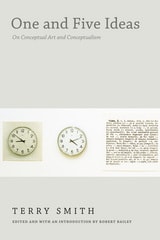
One and Five Ideas
On Conceptual Art and ConceptualismTerry Smith
Duke University Press, 2017

Ontology Of Work Of Art
Musical Work, Picture, Arch., FilmRoman Ingarden
Ohio University Press, 1989
Ingarden elaborates upon the conception of concretization which he present in The Literary Work of Art and applies it to music and visual art. He also employs the concept of aspect to clarify the ontic structure of these art works and the distinction between the concretization of the work and the work itself. The distinction between the work’s concretization — effectuated in the mental experiences of the listener or viewer — and the work itself serves to help Ingarden confirm and account for the work’s intersubjective identity.
The problem of aesthetic value, Ingarden maintains, can be fruitfully treated only after the ontic structure of art work has been clarified. His primary concern in Ontology of the Work of Art is to ascertain and describe that structure and the mode of existence of works of art. In addition, he offers several discussions of aesthetic value, showing in the m the connections between questions of aesthetic value and the structure of the work of art.
Other Criteria
Confrontations with Twentieth-Century ArtLeo Steinberg
University of Chicago Press, 2007
Leo Steinberg’s classic Other Criteria comprises eighteen essays on topics ranging from “Contemporary Art and the Plight of Its Public” and the “flatbed picture plane” to reflections on Picasso, Rauschenberg, Rodin, de Kooning, Pollock, Guston, and Jasper Johns. The latter, which Francine du Plessix Gray called “a tour de force of critical method,” is widely regarded as the most eye-opening analysis of the Johns’s work ever written. This edition includes a new preface and a handful of additional illustrations.
“The art book of the year, if not of the decade and possibly of the century. . . .The significance of this volume lies not so much in the quality of its insights—although the quality is very high and the insights are important—as in the richness, precision, and elegance of its style. . . . A meeting with the mind of Leo Steinberg is one of the most enlightening experiences that contemporary criticism affords.”
“Not only one of the most lucid and independent minds among art critics, but a profound one.”—Robert Motherwell
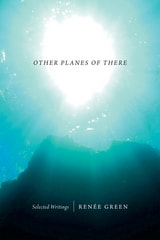
Other Planes of There
Selected WritingsRenée Green
Duke University Press, 2014
Charting this cosmopolitan artist’s thinking through the decades, Other Planes of There brings essays, film scripts, reviews, and polemics together with reflections on Green's own artistic practice and seminal artworks. It immerses the reader in three decades of contemporary art showcasing the art and thought, the incisive critiques and prescient observations of one of our foremost artists and intellectuals. Sound, cinema, literature, time-based media, and the relationship between art forms and other forms of knowledge are just a few of the matters that Green takes up and thinks through. Sixty-four pages of color plates were selected by the artist for this lavishly illustrated volume.
Other Things
Bill Brown
University of Chicago Press, 2015
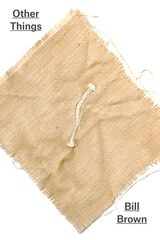
The book ranges across the literary, visual, and plastic arts to depict the curious lives of things. Beginning with Achilles’s Shield, then tracking the object/thing distinction as it appears in the work of Martin Heidegger and Jacques Lacan, Bill Brown ultimately focuses on the thingness disclosed by specific literary and artistic works. Combining history and literature, criticism and theory, Other Things provides a new way of understanding the inanimate object world and the place of the human within it, encouraging us to think anew about what we mean by materiality itself.
Out of Breath
Vulnerability of Air in Contemporary ArtCaterina Albano
University of Minnesota Press, 2022
Explores the intrinsic relation of life to air, and breathing, through contemporary art
In Out of Breath, Caterina Albano examines the cultural significance of breath and air to a wide array of forces in our midst, including economy, politics, infection, and ecological violence. Through a consideration of recent art practices and projects, including the dance project Breath Catalogue, which makes visible the breathing patterns of dancers, and Forensic Architecture’s Cloud Studies video, which investigates eight different kinds of clouds from airstrikes to herbicides to tear gas, Albano focuses on breath as both an intuitive process and a conveyer of meanings.
Conceived in response to the Covid-19 pandemic and systemic inequalities that it has laid bare, Out of Breath shows the potential of artistic practices to mobilize affect as a form of cultural and political critique.
Forerunners is a thought-in-process series of breakthrough digital works. Written between fresh ideas and finished books, Forerunners draws on scholarly work initiated in notable blogs, social media, conference plenaries, journal articles, and the synergy of academic exchange. This is gray literature publishing: where intense thinking, change, and speculation take place in scholarship.