Results by title
120 books match the query 'Cultural Policy' and 3 start with o
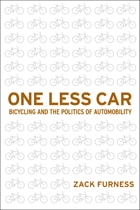
One Less Car
Bicycling and the Politics of AutomobilityAuthored by Zack Furness
Temple University Press, 2010
Although millions of people in the United States love to ride bicycles for exercise or leisure, statistics show that only 1% of the total U.S. population ride bicycles for transportation—and barely half as many use bikes to commute to work. In his original and exciting book, One Less Car, Zack Furness examines what it means historically, culturally, socioeconomically, and politically to be a bicycle transportation advocate/activist.
Presenting an underground subculture of bike enthusiasts who aggressively resist car culture, Furness maps out the cultural trajectories between mobility, technology, urban space and everyday life. He connects bicycling to radical politics, public demonstrations, alternative media production (e.g., ‘zines), as well as to the development of community programs throughout the world.
One Less Car also positions the bicycle as an object with which to analyze and critique some of the dominant cultural and political formations in the U.S.—and even breaks down barriers of race, class and gender privilege that are interconnected to mobility. For Furness, bicycles not only liberate people from technology, they also support social and environmental justice. So, he asks, Why aren’t more Americans adopting them for their transportation needs?

Orwell’s Alert!
Power and the Politics of Control in George Orwell’s NovelsROBERT VAN DELLEN
Parkhurst Brothers, Inc., 2026
A college professor and former college president reveals the political underpinnings of George Orwell as expressed in his novels, with special emphasis on the author’s last two novels, Animal Farm and 1984. The growth of Orwell’s disdain for colonialism, as well as his concern for the quality of life under various political systems, undergirds the analysis. While flaws in Orwell’s analyses are acknowledged, the author believes readers can learn important lessons from the study, lessons that can be applied to the individual’s relationship to the state in our time.

Over the Edge
The Growth of Homelessness in the 1980sMartha M. Burt
Russell Sage Foundation, 1992