Results by title
87 books match the query 'Developing & Emerging Countries' and 2 start with o
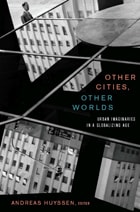
Other Cities, Other Worlds
Urban Imaginaries in a Globalizing AgeAndreas Huyssen, ed.
Duke University Press, 2008
The effects of global processes such as the growth of transnational corporations and investment, the weakening of state sovereignty, increasing poverty, and the privatization of previously public services are described and analyzed in essays by Teresa P. R. Caldeira (São Paulo), Beatriz Sarlo (Buenos Aires), Néstor García Canclini (Mexico City), Farha Ghannam (Cairo), Gyan Prakash (Mumbai), and Yingjin Zhang (Beijing). Considering Johannesburg, the architect Hilton Judin takes on themes addressed by other contributors as well: the relation between the country and the city, and between racial imaginaries and the fear of urban violence. Rahul Mehrotra writes of the transitory, improvisational nature of the Indian bazaar city, while AbdouMaliq Simone sees a new urbanism of fragmentation and risk emerging in Douala, Cameroon. In a broader comparative frame, Okwui Enwezor reflects on the proliferation of biennales of contemporary art in African, Asian, and Latin American cities, and Ackbar Abbas considers the rise of fake commodity production in China. The volume closes with the novelist Orhan Pamuk’s meditation on his native city of Istanbul.
Contributors: Ackbar Abbas, Teresa P. R. Caldeira, Néstor García Canclini, Okwui Enwezor, Farha Ghannam, Andreas Huyssen, Hilton Judin, Rahul Mehrotra, Orhan Pamuk, Gyan Prakash, Beatriz Sarlo, AbdouMaliq Simone, Yingjin Zhang
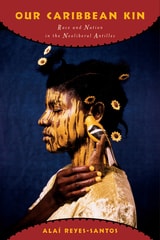
Our Caribbean Kin
Race and Nation in the Neoliberal AntillesReyes-Santos, Alaí
Rutgers University Press, 2015
Our Caribbean Kin considers three key moments in the region’s history: the nineteenth century, when the antillanismo movement sought to throw off the yoke of colonial occupation; the 1930s, at the height of the region’s struggles with US imperialism; and the past thirty years, as neoliberal economic and social policies have encroached upon the islands. At each moment, the book demonstrates, specific tropes of brotherhood, marriage, and lineage have been mobilized to construct political kinship among Antilleans, while racist and xenophobic discourses have made it difficult for them to imagine themselves as part of one big family.