Results by title
59 books match the query 'Drugs' and 2 start with o
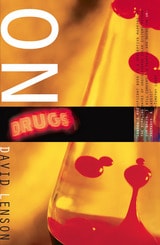
On Drugs
David Lenson
University of Minnesota Press, 1995
A critical exploration of the user’s perspective on drug consciousness-now in paperback!
Engaging, articulate, and brilliantly argued, On Drugs is destined to become a revolutionary classic that redefines what it means to be “high.” Calling for the acceptance of a “diversity of consciousness,” Lenson delivers a searing critique of the War on Drugs as an effort based, like all attempts to eradicate “getting high,” on an incomplete understanding of human nature.
In lucid prose, Lenson ventures outside the conventional genres of drug writing and offers a new look at the drug debate from a lost, and often forbidden, point of view: the user’s. Walking a fine line between the antidrug hysteria of the 1980s and an uncritical advocacy of drug use, he describes in provocative detail the experiences and dynamics of drugs of pleasure and desire-from nicotine to marijuana, alcohol to LSD, and caffeine to cocaine.From lotus-eaters to hippies to crackheads, history has shown the state’s inability to legislate the bloodstreams of its citizens. After considering several specific issues associated with drug use-including sex, violence, and money-On Drugs asks what drugs really do and challenges society’s accepted notions of sobriety and addiction. Lenson concludes with his vision of the end of the War on Drugs by questioning the sense in condemning millions of Americans to lives of concealment and deceit.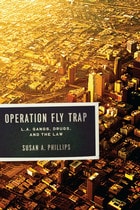
Operation Fly Trap
L. A. Gangs, Drugs, and the LawSusan A. Phillips
University of Chicago Press, 2012
In 2003, an FBI-led task force known as Operation Fly Trap attempted to dismantle a significant drug network in two Bloods-controlled, African American neighborhoods in Los Angeles. The operation would soon be considered an enormous success, noted for the precision with which the task force targeted and removed gang members otherwise entrenched in larger communities. In Operation Fly Trap, Susan A. Phillips questions both the success of this operation and the methods used to conduct it. Based on in-depth ethnographic research with Fly Trap participants, Phillips’s work brings together police narratives, crime statistics, gang cultural histories, and extensive public policy analysis to examine the relationship between state persecution and the genesis of violent social systems.
Crucial to Phillips’s contribution is the presentation of the voices and perspectives of both the people living in impoverished communities and the agents that police them. Phillips positions law enforcement surveillance and suppression as a critical point of contact between citizen and state. She tracks the bureaucratic workings of police and FBI agencies and the language, ideologies, and methods that prevail within them, and shows how gangs have adapted, seeking out new locations, learning to operate without hierarchies, and moving their activities more deeply underground. Additionally, she shows how the targeted efforts of task forces such as Fly Trap wreak sweeping, sustained damage on family members and the community at large. Balancing her roles as even-handed reporter and public scholar, Phillips presents multiple flaws within the US criminal justice system and builds a powerful argument that many law enforcement policies in fact nurture, rather than prevent, violence in American society.