Results by title
201 books match the query 'English fiction' and 2 start with o
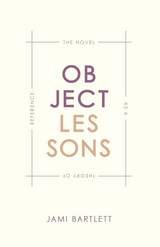
Object Lessons
The Novel as a Theory of ReferenceJami Bartlett
University of Chicago Press, 2016
Object Lessons explores a fundamental question about literary realism: How can language evoke that which is not language and render objects as real entities? Drawing on theories of reference in the philosophy of language, Jami Bartlett examines novels by George Meredith, William Makepeace Thackeray, Elizabeth Gaskell, and Iris Murdoch that provide allegories of language use in their descriptions, characters, and plots. Bartlett shows how these authors depict the philosophical complexities of reference by writing through and about referring terms, the names and descriptions that allow us to “see” objects. At the same time, she explores what it is for words to have meaning and delves into the conditions under which a reference can be understood. Ultimately, Object Lessons reveals not only how novels make references, but also how they are about referring.
[more]
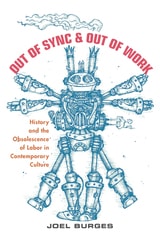
Out of Sync & Out of Work
History and the Obsolescence of Labor in Contemporary CultureBurges, Joel
Rutgers University Press, 2018
Out of Sync & Out of Work explores the representation of obsolescence, particularly of labor, in film and literature during a historical moment in which automation has intensified in capitalist economies. Joel Burges analyzes texts such as The Invention of Hugo Cabret, Wreck-It Ralph, Fantastic Mr. Fox, and Iron Council, and examines their “means” of production. Those means include a range of subjects and narrative techniques, including the “residual means” of including classic film stills in a text, the “obstinate means” of depicting machine breaking, the “dated means” of employing the largely defunct technique of stop-motion animation, and the “obsolete” means of celebrating a labor strike. In every case, the novels and films that Burges scrutinizes call on these means to activate the reader’s/viewer’s awareness of historical time. Out of Sync & Out of Work advances its readers’ grasp of the complexities of historical time in contemporary culture, moving the study of temporality forward in film and media studies, literary studies, critical theory, and cultural critique.
[more]