Results by title
304 books match the query 'Entertainment & Performing Arts' and 7 start with o
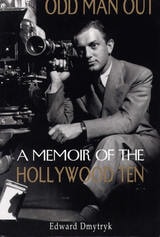
Odd Man Out
A Memoir of the Holllywood TenEdward Dmytryk
Southern Illinois University Press, 1996
In 1947, the House Un-American Activities Committee rudely interrupted the successful career and life of Edward Dmytryk, citing him with contempt of Congress. As a result, Dmytryk was fired by RKO and spent three years in England before returning to the United States to serve a six-month jail sentence and undergo a second round of hearings, during which he recanted and provided evidence against several of his former colleagues.
In this personal and perceptive book, Dmytryk sharply chronicles the history of a particularly turbulent era in American political life while examining his own life before and after the events universally called the witch hunts. He details his brief membership in the Communist Party of America, explaining his initial commitment to what he perceived as communist ideals of civil liberties, economic justice, and antifacism, followed by his eventual disillusionment with the party as itbetrayed those ideals. He goes on to provide a fair assessment of what then happened to him and the effect it had on the rest of his life.
Dmytryk describes the activities, prejudices, and personal behaviors of all the parties enmeshed in the congressional hearings on communism in Hollywood. His reactions to other members of the Hollywood Ten and his recollection of conversations with them lend his book an immediacy that is not only informative but also absorbing. Most importantly, he does not uphold an ideology but rather presents the events as he perceived them, understood them, and responded to them. Dmytryk’s account is characterized by an openness born of a mature awareness of personal trial as history.
Of Walking in Ice
Munich-Paris, 23 November–14 December 1974Werner Herzog
University of Minnesota Press, 2015
In late November 1974, filmmaker Werner Herzog received a phone call from Paris delivering some terrible news. German film historian, mentor, and close friend Lotte Eisner was seriously ill and dying. Herzog was determined to prevent this and believed that an act of walking would keep Eisner from death. He took a jacket, a compass, and a duffel bag of the barest essentials, and wearing a pair of new boots, set off on a three-week pilgrimage from Munich to Paris through the deep chill and snowstorms of winter.
Of Walking in Ice is Herzog’s beautifully written, much-admired, yet often-overlooked diary account of that journey. Herzog documents everything he saw and felt on his quest to his friend’s bedside, from poetic descriptions of the frozen landscape and harsh weather conditions to the necessity of finding shelter in vacant or abandoned houses and the intense loneliness of his solo excursion.
Includes, for the first time, Werner Herzog’s 1982 “Tribute to Lotte Eisner” upon her receipt of the Helmut Käutner Prize
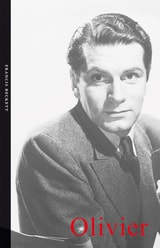
Olivier
Francis Beckett
Haus Publishing, 2006
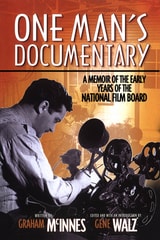
One Man’s Documentary
A Memoir of the Early Years of the National Film BoardGraham McInnes
University of Manitoba Press, 2004
Operatic Lives
Alberto Savinio
Northwestern University Press, 1988
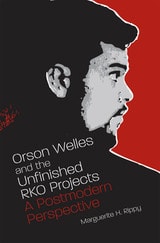
Orson Welles and the Unfinished RKO Projects
A Postmodern PerspectiveMarguerite H. Rippy
Southern Illinois University Press, 2009
Orson Welles and the Unfinished RKO Projects: A Postmodern Perspective traces the impact of legendary director Orson Welles on contemporary mass media entertainment and suggests that, ironically, we can see Welles’s performance genealogy most clearly in his unfinished RKO projects.
Author Marguerite H. Rippy provides the first in-depth examination of early film and radio projects shelved by RKO or by Welles himself. While previous studies of Welles largely fall into the categories of biography or modernist film studies, this book extends the understanding of Welles via postmodern narrative theory and performance analysis, weaving his work into the cultural and commercial background of its production. By identifying the RKO years as a critical moment in performance history, Rippy synthesizes scholarship that until now has been scattered among film studies, narrative theory, feminist critique, American studies, and biography.
Building a bridge between auteur and postmodern theories, Orson Welles and the Unfinished RKO Projects offers a fresh look at Welles in his full complexity. Rippy trains a postmodern lens on Welles’s early projects and reveals four emerging narrative modes that came to define his work: deconstructions of the first-person singular; adaptations of classic texts for mass media; explorations of the self via primitivism; and examinations of the line between reality and fiction. These four narrative styles would greatly influence the development of modern mass media entertainment.
Rippy finds Welles’s legacy alive and well in today’s mockumentaries and reality television. It was in early, unfinished projects where Welles first toyed with fact and fiction, and the pleasure of this interplay still resonates with contemporary culture. As Rippy suggests, the logical conclusion of Welles’s career-long exploration of “truthiness” lies in the laughs of fake news shows. Offering an exciting glimpse of a master early in his career, Orson Welles and the Unfinished RKO Projects documents Welles’s development as a storyteller who would shape culture for decades to come.
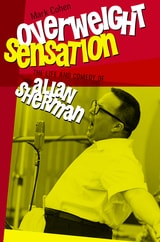
Overweight Sensation
The Life and Comedy of Allan ShermanMark Cohen
Brandeis University Press, 2013