Results by title
314 books match the query 'Environmental aspects' and 7 start with o
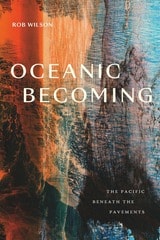
Oceanic Becoming
The Pacific beneath the PavementsRob Wilson
Duke University Press, 2025
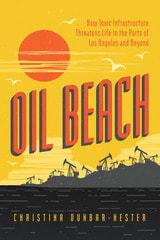
Oil Beach
How Toxic Infrastructure Threatens Life in the Ports of Los Angeles and BeyondChristina Dunbar-Hester
University of Chicago Press, 2023
San Pedro Bay, which contains the contiguous Ports of Los Angeles and Long Beach, is a significant site for petroleum shipping and refining as well as one of the largest container shipping ports in the world—some forty percent of containerized imports to the United States pass through this so-called America’s Port. It is also ecologically rich. Built atop a land- and waterscape of vital importance to wildlife, the heavily industrialized Los Angeles Harbor contains estuarial wetlands, the LA River mouth, and a marine ecology where colder and warmer Pacific Ocean waters meet. In this compelling interdisciplinary investigation, award-winning author Christina Dunbar-Hester explores the complex relationships among commerce, empire, environment, and the nonhuman life forms of San Pedro Bay over the last fifty years—a period coinciding with the era of modern environmental regulation in the United States. The LA port complex is not simply a local site, Dunbar-Hester argues, but a node in a network that enables the continued expansion of capitalism, propelling trade as it drives the extraction of natural resources, labor violations, pollution, and other harms. Focusing specifically on cetaceans, bananas, sea birds, and otters whose lives are intertwined with the vitality of the port complex itself, Oil Beach reveals how logistics infrastructure threatens ecologies as it circulates goods and capital—and helps us to consider a future where the accumulation of life and the accumulation of capital are not in violent tension.

Oil Spills
Joanna Burger
Rutgers University Press, 1997
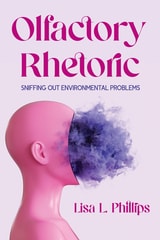
Olfactory Rhetoric
Sniffing Out Environmental ProblemsLisa L. Phillips
The Ohio State University Press, 2025
Human senses have the potential to play a significant role in inspiring action to combat climate change. When we smell pollutants in the air, for example, or feel the blast of a polar vortex, we are more likely to act in response to these changes in environmental conditions. However, the sensorium—and particularly our sense of smell—is often downplayed when we consider the rhetorics of environmental crises. In Olfactory Rhetoric, Lisa L. Phillips argues that how we sense the world around us should be a crucial piece of rhetorical evidence when evaluating environmental injustices. Specifically, Phillips elevates olfaction (what we smell) and olfactory rhetoric (how we talk about and experience what we smell) when discussing three contemporary environmental crises set in historically marginalized communities: the Sriracha sauce factory controversy, the Salton Sea scent events, and the Blue Ridge Landfill emissions problem. On a broader scale, Phillips develops an intersectional ecofeminist sensory-rhetorical approach for evaluating how olfactory and sensory persuasions work and how they can be used to advocate for environmental justice and a more breathable future.
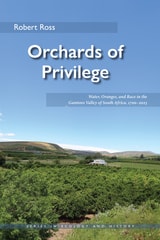
Orchards of Privilege
Water, Oranges, and Race in the Gamtoos Valley of South Africa, 1700–2023Robert Ross
Ohio University Press, 2025
This study of the Gamtoos River floodplain in South Africa’s Eastern Cape Province traces its transformation from an eighteenth-century natural landscape of thick bush into an agricultural zone now threatened by climate change. The first half of the book explains how missionaries from the London Missionary Society and residents of the Hankey Mission Station introduced irrigation, turning the area into a community of small-scale farmers. Despite early failures, by 1849 they had constructed South Africa’s first major irrigation tunnel and aqueduct. However, conflicts between the missionaries and residents led to the loss of communal lands to privatization, which ultimately impoverished the local farmers. The second half explores efforts to develop the valley for large-scale agriculture, addressing challenges like drought, flash floods, and saline water. By the mid-twentieth century, Afrikaners dominated the area, benefiting from the construction in 1970 of the Kouga Dam, which provided fresh water for the floodplain. This led to the rise of a wealthy white farming community, sustained by apartheid policies and labor from the “Coloured” and African populations. In the early twenty-first century, however, this prosperity has become threatened by severe droughts linked to global climate change. In view of these historical transformations, the Gamtoos River floodplain exemplifies the complex interplay between human ambition, environmental challenges, and sociopolitical forces.
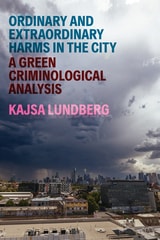
Ordinary and Extraordinary Harms in the City
A Green Criminological AnalysisKajsa Lundberg
Rutgers University Press, 2026
This book, based on original research in Melbourne, Australia, explores the spatial politics of urban expansion both upwards and outwards as the city continues to colonize non-urban areas around its fringes. The everyday decisions and tools bound up in urban growth accelerate a malign colonization of land, resources, air and water, thereby exacerbating a broad variety of social and environmental harms. In addition to the quotidian nature of urban growth, this book also explores the ‘crisis’ in the form of extreme fire events in urban areas. Moving between local planning and national and international climate change mitigation policies and approaches, this book highlights various 'necropolicies’ - policies causing harm and death to more-than-human populations. Such death-bound policies are the result of neoliberal urban development, fueled by state-corporate relations and prosperity concerns. In sum, this book connects green and urban criminology, urban studies and planning to reveal how ordinary and extraordinary challenges are entangled in urban design, harm and, most importantly, imagining alternative futures and cities.
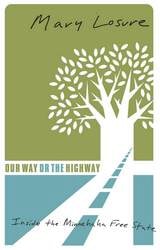
Our Way Or The Highway
Inside The Minnehaha Free StateMary Losure
University of Minnesota Press, 2002
An eyewitness account of this controversial environmental action.
Construction plans for the reroute of Highway 55 through south Minneapolis sparked an environmental movement that pitted activists against public authorities in one of the most dramatic episodes in the city’s history. Mary Losure was there; as a reporter for Minnesota Public Radio she witnessed the neighborhood’s transformation from a quiet street to the center of an emotionally charged standoff. Fueled by idealism and anger, a diverse coalition banded together to try to stop the highway expansion. Beginning in 1998, this group sustained protests for more than one year and eventually faced an unprecedented show of force by law enforcement.
In Our Way or the Highway Losure offers an inside view of the activist subculture that converged into a makeshift encampment dubbed the "Minnehaha Free State." Here, a retired stenographer befriended EarthFirst! members and appeared in the organization’s national journal, fist raised in protest of the destruction of her home. A pipe fitter abandoned his old life to defend what he believed to be the sacred sites of his Dakota ancestors. A dreamy, dreadlocked seeker hitchhiked to Minneapolis and spent days perched in a doomed cottonwood tree. A police lieutenant watched the trees fall and felt surprising sympathy for the activists’ beliefs. Engagingly written, Our Way or the Highway reveals the motivations, perceptions, and dynamics of those involved in this conflict of wills and ideals.Among the issues Losure explores are the roles of ecoanarchism and grassroots activism in the age of globalization. This fascinating subculture, brought to the spotlight during protests over the World Trade Organization in Seattle and Genoa, has been largely undocumented in the mainstream press. With a practiced reporter’s eye, Mary Losure shows the activists’ world and the way the establishment views them, and ultimately she lays bare the power of the existing order and the fragility and absolute necessity of dissent.