Results by title
316 books match the query 'Ethnomusicology' and 4 start with o
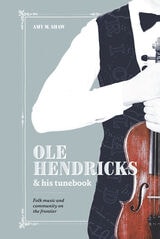
Ole Hendricks and His Tunebook
Folk Music and Community on the FrontierAmy M. Shaw
University of Wisconsin Press, 2020
Such tunebooks, popular during the nineteenth century, rarely survive and are often overlooked by folk scholars in favor of commercially produced recordings, published sheet music, or oral tradition. Based on extensive historical and genealogical research, Amy Shaw presents a grounded picture of a musician, his family, and his community in the Upper Midwest, revealing much about music and dance in the area. This notable contribution to regional music and folklore includes more than one hundred of Ole's dance tunes, transcribed into modern musical notation for the first time. Ole Hendricks and His Tunebook will be valuable to readers and scholars interested in ethnomusicology and the Norwegian American immigrant experience.
On Site, In Sound
Performance Geographies in América LatinaKirstie A. Dorr
Duke University Press, 2018
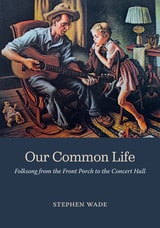
Our Common Life
Folksong from the Front Porch to the Concert HallStephen Wade
University of Illinois Press, 2026
Stephen Wade recounts creators and conservators like Doc Hopkins, many of them born in the closing years of the nineteenth century and the first decades of the twentieth. The figures include Sid Harkreader, Kirk McGee, Ola Belle Reed, Jewel Fagan Haynes, Cordell and Olean Kemp, Bill Monroe, Helen Marie Rowe, Virgil and Mabel Anderson, Joe and Odell Thompson, John Jackson, Huddie Ledbetter, Uncle Dave Macon, Dorris Macon, Raeburn Flerlage, David “Honeyboy” Edwards, Jim Schwall, Archie Green, Lloyd Lewis, Thaddeus Willingham, Jack Conroy, and Fleming Brown. As Will Keys, another of the musicians featured here, once told the author about his way of playing, it’s “AWYC, Any Way You Can.” These individuals and their stories demonstrate how folklore offers a way of understanding the world.
Thoughtfully written, filled with original research, and abundantly illustrated with both color and black and white photography, Our Common Life illuminates the truth that creative freedom within informal tradition, fundamental to the artists and their processes, speaks to a resourcefulness inscribed in the nation’s founding charter and expressed in its common life.

Outlaw Music in Russia
The Rise of an Unlikely GenreAnastasia Gordienko
University of Wisconsin Press, 2023
The Russian shanson can be heard across the country today, on radio and television shows, at mass events like political rallies, and even at the Kremlin. Yet despite its ubiquity, it has attracted almost no scholarly attention. Anastasia Gordienko provides the first full history of the shanson, from its tenuous ties to early modern criminals’ and robbers’ folk songs, through its immediate generic predecessors in the Soviet Union, to its current incarnation as the soundtrack for daily life in Russia. It is difficult to firmly define the shanson or its family of song genres, but they all have some connection, whether explicit or implicit, to the criminal underworld or to groups or activities otherwise considered subversive. Traditionally produced by and popular among criminals and other marginalized groups, and often marked by characters and themes valorizing illegal activities, the songs have undergone censorship since the early nineteenth century. Technically legal only since the collapse of the Soviet Union, the shanson is today not only broadly popular but also legitimized by Vladimir Putin’s open endorsement of the genre.
With careful research and incisive analysis, Gordienko deftly details the shanson’s history, development, and social meanings. Attempts by imperial rulers, and later by Soviet leaders, to repress the songs and the lifestyles they romanticized not only did little to discourage their popularity but occasionally helped the genre flourish. Criminals and liberal intelligentsia mingled in the Gulag system, for instance, and this contact introduced censored songs to an educated, disaffected populace that inscribed its own interpretations and became a major point of wider dissemination after the Gulag camps were closed. Gordienko also investigates the shanson as it exists in popular culture today: not divorced from its criminal undertones (or overtones) but celebrated for them. She argues that the shanson expresses fundamental themes of Russian culture, allowing for the articulation of anxieties, hopes, and dissatisfactions that are discouraged or explicitly forbidden otherwise.