Results by title
375 books match the query 'Excavations (Archaeology)' and 9 start with o
Of Caves and Shell Mounds
Edited by Kenneth C. Carstens and Patty Jo Watson
University of Alabama Press, 1996
Ancient human groups in the Eastern Woodlands of North America were long viewed as homogeneous and stable hunter-gatherers, changing little until the late prehistoric period when Mesoamerican influences were thought to have stimulated important economic and social developments. The authors in this volume offer new, contrary evidence to dispute this earlier assumption, and their studies demonstrate the vigor and complexity of prehistoric peoples in the North American Midwest and Midsouth. These peoples gathered at favored places along midcontinental streams to harvest mussels and other wild foods and to inter their dead in the shell mounds that had resulted from their riverside activities. They created a highly successful, pre-maize agricultural system beginning more than 4,000 years ago, established far-flung trade networks, and explored and mined the world's longest cave—the Mammoth Cave System in Kentucky.
Contributors include:
Kenneth C. Carstens, Cheryl Ann Munson, Guy Prentice, Kenneth B. Tankersley, Philip J. DiBlasi, Mary C. Kennedy, Jan Marie Hemberger, Gail E. Wagner, Christine K. Hensley, Valerie A. Haskins, Nicholas P. Herrmann, Mary Lucas Powell, Cheryl Claassen, David H. Dye, and Patty Jo Watson
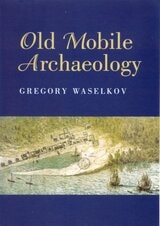
Old Mobile Archaeology
Gregory A. Waselkov
University of Alabama Press, 2005
An archaeological guide to the earliest French settlement on the northern Gulf Coast. Archaeological excavations since 1989 have uncovered exciting evidence of the original townsite of Mobile, first capital of the Louisiana colony, and remnants of the colony's port on Dauphin Island.
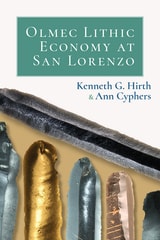
Olmec Lithic Economy at San Lorenzo
Kenneth Hirth
University Press of Colorado, 2020
The obsidian blade was the cutting tool of choice across Mesoamerica and used in a wide range of activities, from domestic food preparation to institutional ritual activities. Hirth and Cyphers conducted a three-decade investigation of obsidian artifacts recovered at Puerto Malpica, the earliest known workshop, and seventy-six other sites on San Lorenzo Island, where these tools were manufactured for local and regional distribution. Evidence recovered from these excavations provides some of the first information on how early craft specialists operated and how the specialized technology used to manufacture obsidian blades spread across Mesoamerica. The authors use geochemical analyses to identify thirteen different sources for obsidian during San Lorenzo’s occupation. This volcanic glass, not locally available, was transported over great distances, arriving in nodular and finished blade form.
Olmec Lithic Economy at San Lorenzo offers a new way to analyze the Preclassic lithic economy—the procurement, production, distribution, and consumption of flaked stone tools—and shows how the study of lithics aids in developing a comprehensive picture of the internal structure and operation of Olmec economy. The book will be significant for Mesoamericanists as well as students and scholars interested in economy, lithic technology, and early complex societies.
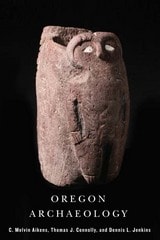
Oregon Archaeology
Melvin C. Aikens
Oregon State University Press, 2011
Origins Of A Pacific Coast Chiefdom
Jeanne E Arnold
University of Utah Press, 2001
When Europeans first visited California, they encountered one of the most culturally diverse regions of the New World. The coasts and ecologically richest areas were dotted with small polities which were supported not by horticulture but exclusively by hunting, fishing, and gathering, placing them among the more complex hunter-gatherer groups in the world.
The Origins of a Pacific Coast Chiefdom considers the Chumash, perhaps the most hierarchically organized of the California groups. It explores the final thousand years of coastal Chumash culture, which culminated in the complex society witnessed by the earliest Spanish explorers.
Chumash life was characterized by settled villages, massive production of prestige goods, sophisticated plank canoes, and extensive maritime exchange systems—features more characteristic of agricultural societies. Archaeological sites in the island Chumash area are exceptionally well preserved, permitting precise interpretations of both subtle and major changes in technologies, subsistence, prestige goods, and specialized shell and lithic industries. The data and interpretations presented here are the result of fifteen years of intensive investigation on the Channel Islands.
Ostraka and Other Inscribed Material from Bir Shawish, Small Oasis
Excavation Seasons 2005 and 2007Marek Dospel
University of Michigan Press, 2020
Informal documents and remains of material culture, when analyzed properly, offer a unique window into the daily lives and workings of ancient civilizations. Published here in their archaeological context and with any relevant artifacts, the documents and inscriptions excavated recently in Egypt’s Western Desert represent a valuable addition to our meager documentation of the Bahriya Oasis in the first centuries CE.
This is the first comprehensive treatment of an archaeological dataset from the archaeological exploration of Bīr Shawīsh. Dating to around 400 CE, these primary historical sources include documentary texts written on ostraka, informal inscriptions on various ceramic objects, plus a group of incised lids. The core of the volume consists of an annotated edition and analytical indices. This is prefaced by the historical and archaeological context and is followed by a synthesis of selected issues inherent to the published material. The book includes appendices and pictures of all published objects. Doubling the number of texts and inscriptions published to date from the Small Oasis, this new corpus furthers our understanding of the economic, administrative, and social history of Late Antique Egypt.
Out of Many, One People
The Historical Archaeology of Colonial JamaicaEdited by James A. Delle, Mark W. Hauser, and Douglas W. Armstrong
University of Alabama Press, 2011
Normal0falsefalsefalseEN-USX-NONEX-NONEMicrosoftInternetExplorer4
Out of the Cold
Archaeology on the Arctic Rim of North AmericaOwen K. Mason
University Press of Colorado, 2018
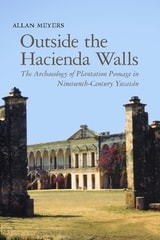
Outside the Hacienda Walls
The Archaeology of Plantation Peonage in Nineteenth-Century YucatánAllan Meyers
University of Arizona Press, 2012
Drawing on a dozen years of archaeological and historical investigation, Allan Meyers breaks new ground in the study of Yucatán haciendas. He explores a plantation village called San Juan Bautista Tabi, which once stood at the heart of a vast sugar estate. Occupied for only a few generations, the village was abandoned during the revolutionary upheaval. Its ruins now lie within a state-owned ecological reserve.
Through oral histories, archival records, and physical remains, Meyers examines various facets of the plantation landscape. He presents original data and fresh interpretations on settlement organization, social stratification, and spatial relationships. His systematic approach to "things underfoot," small everyday objects that are now buried in the tropical forest, offers views of the hacienda experience that are often missing in official written sources. In this way, he raises the voices of rural, mostly illiterate Maya speakers who toiled as laborers. What emerges is a portrait of hacienda social life that transcends depictions gleaned from historical methods alone.
Students, researchers, and travelers to Mexico will all find something of interest in Meyers's lively presentation. Readers will see the old haciendas—once forsaken but now experiencing a rebirth as tourist destinations—in a new light. These heritage sites not only testify to social conditions that prevailed before the Mexican Revolution, but also remind us that the human geography of modern Yucatán is as much a product of plantation times as it is of more ancient periods.