Results by title
520 books match the query 'Family' and 16 start with o
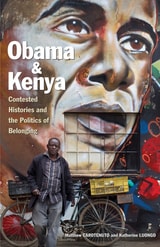
Obama and Kenya
Contested Histories and the Politics of BelongingMatthew Carotenuto
Ohio University Press, 2016
Barack Obama’s political ascendancy has focused considerable global attention on the history of Kenya generally and the history of the Luo community particularly. From politicos populating the blogosphere and bookshelves in the U.S and Kenya, to tourists traipsing through Obama’s ancestral home, a variety of groups have mobilized new readings of Kenya’s past in service of their own ends.
Through narratives placing Obama into a simplified, sweeping narrative of anticolonial barbarism and postcolonial “tribal” violence, the story of the United States president’s nuanced relationship to Kenya has been lost amid stereotypical portrayals of Africa. At the same time, Kenyan state officials have aimed to weave Obama into the contested narrative of Kenyan nationhood.
Matthew Carotenuto and Katherine Luongo argue that efforts to cast Obama as a “son of the soil” of the Lake Victoria basin invite insights into the politicized uses of Kenya’s past. Ideal for classroom use and directed at a general readership interested in global affairs, Obama and Kenya offers an important counterpoint to the many popular but inaccurate texts about Kenya’s history and Obama’s place in it as well as focused, thematic analyses of contemporary debates about ethnic politics, “tribal” identities, postcolonial governance, and U.S. African relations.
On Colfax Avenue
A Victorian ChildhoodElizabeth Young
University Press of Colorado, 2004
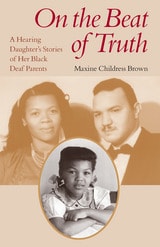
On the Beat of Truth
A Hearing Daughter’s Stories of Her Black Deaf ParentsMaxine Childress Brown
Gallaudet University Press, 2013
As an African American woman born in 1943, Maxine Childress Brown possessed a unique vantage point to witness the transformative events in her parents’ lives. Both came from the South -- her father, Herbert Childress, from Nashville, TN, and her mother, Thomasina Brown, from Concord, NC. The oldest of three daughters, Maxine was fascinated by her parents’ stories. She marveled at how they raised a well-respected, middle-class family in the midst of segregation with the added challenge of being deaf.
Her parents met in Washington, DC, where they married and settled down. Her father worked as a shoe repairman for $65 per week for more than 15 years. A gifted seamstress, her mother gave up sewing to clean houses. Because of their modest means, Maxine and her sisters lived more than modest lives. When Maxine’s tonsils became infected, her parents could not afford the operation to have them removed. For her high school prom, her mother bought her a dress on credit because she had no time to sew. Herbert Childress showed great love for his young daughters, but events turned him to bitterness and to drink. Throughout all, Thomasina encouraged her girls, always urging them to excel. She demanded their honest best with her signature phrase, her flat hand raised from her mouth straight up in the air, “on the beat of truth.”
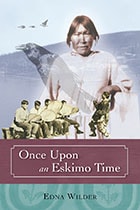
Once Upon an Eskimo Time
Edna Wilder
University of Alaska Press, 2009
Continuing the sacred tradition of her ancestors, in Once Upon an Eskimo Time Edna Wilder retells a year in her Eskimo mother’s life. Wilder eloquently captures the oral storytelling traditions of her people, and she employs descriptions of the weather and harsh climates of Alaska’s Norton Sound to illustrate the hardiness of her mother’s spirit. Family values, subsistence living, and the cycle’s of life form a narrative that captures the now-vanished lifestyle along the Bering Sea.
“Readers of whatever age will enjoy Nedercook’s delightful account of the day-to-day, legends, and beliefs of the ancient Eskimo village of Rocky Point.”—Ames Tribune
One Hundred Hungers
Lauren Camp
Tupelo Press, 2016

One Must Also Be Hungarian
Adam Biro
University of Chicago Press, 2006
The only country in the world with a line in its national anthem as desperate as “this people has already suffered for its past and its future,” Hungary is a nation defined by poverty, despair, and conflict. Its history, of course, took an even darker and more tragic turn during the Holocaust. But the story of the Jews in Hungary is also one of survival, heroism, and even humor—and that is the one acclaimed author Adam Biro sets out to recover in One Must Also Be Hungarian, an inspiring and altogether poignant look back at the lives of his family members over the past two hundred years.
A Hungarian refugee and celebrated novelist working in Paris, Biro recognizes the enormous sacrifices that his ancestors made to pave the way for his successes and the envious position he occupies as a writer in postwar Europe. Inspired, therefore, to share the story of his family members with his grandson, Biro draws some moving pictures of them here: witty and whimsical vignettes that convey not only their courageous sides, but also their inner fears, angers, jealousies, and weaknesses—traits that lend an indelible humanity to their portraiture. Spanning the turn of the nineteenth century, two destructive world wars, the dramatic rise of communism, and its equally astonishing fall, the stories here convey a particularly Jewish sense of humor and irony throughout—one that made possible their survival amid such enormous adversity possible.
Already published to much acclaim in France, One Must Also Be Hungarian is a wry and compulsively readable book that rescues from oblivion the stories of a long-suffering but likewise remarkable and deservedly proud people.
One Step Ahead
A Jewish Fugitive in Hitler's EuropeAlfred Feldman. Foreword by Susan Zuccotti
Southern Illinois University Press, 2001
Through compelling personal accounts and family correspondence, One Step Ahead documents Alfred Feldman’s harrowing flight into exile as he and his family fled the pogroms that flooded across Nazi-occupied Europe. It is a memoir of horror and hope recounted by a man who survived the organized terror of Hitler’s "Final Solution" as it destroyed entire generations of European Jewish life within ten catastrophic years in the mid-twentieth century. Feldman’s memoir conveys the searing pain that has never left him, while demonstrating the triumphant humanity of a survivor.
Feldman vividly describes the impact of the escalating anti-Semitic hatred and violence in Germany during the 1930s, the impact of the notorious Nuremberg Laws in 1935, and the terrifying Kristallnacht pogrom in 1938. By age sixteen, Feldman was living with his parents and three younger sisters in Antwerp, Belgium, during the 1939 German invasions of Poland, marking the start of World War II. In the face of increasing persecution, Feldman’s extended family scattered over the globe in a desperate attempt to remain one step ahead of their Nazi pursuers.
Recalling his life on the run, Feldman describes what few survivors have chosen to write about: the Vichy raids of August 26, 1942; the French labor brigades; the Comité Dubouchage; and life in super-vised residence in France under the Italians. While in the south of France, Feldman endured food shortages and Nazi anti-Semitic measures, beginning with work camps and culminating in the deportation and ultimate death of his mother and sisters at Auschwitz.
To evade the Germans, Feldman and his father fled into the Italian Alps in September of 1943, hiding between the Allies and the Germans. Aided by local villagers, the Feldmans survived precariously for over a year and a half, along with other Jewish refugees, until that region was liberated. Only then, and only gradually, did Feldman manage to piece together the fate of his surviving family and learn at last of the death of his mother and sisters.
Now, as an adult, Alfred Feldman has retraced his escape and exile, taking his wife and children to his hometown in Germany, the mountains in Italy, and Montagnac, where a plaque commemorates his mother and sisters.

One Winter Up North
John Owens
University of Minnesota Press, 2022
A picture-book journey through the Boundary Waters Canoe Area Wilderness in winter, snowshoeing the frozen lakes and silent forest with family, encountering the wonders of northern wildlife in the cold season
In winter the Boundary Waters, way up north in Minnesota, is not the same place you canoed last summer—but still it beckons and welcomes you. Grab a pack, strap on snowshoes, make a path (Oh! they take some getting used to!), and venture out across the frozen lakes and through the snowy woods. The vast wintery world here is so still and quiet, you might think you’re all alone—but no! Who made these tracks? A deer? A hare? A fox? And far off there’s a musher, making tracks with his sled dogs.
It’s a magical place. The bright sun brilliant on the snow, the sparkling silence—wait, is that a wolf calling? Try to answer! And when the dark descends, the stars and pine trees holding up the night, your nose gets cold and it’s back to camp, to your warm winter tent, where Father feeds the stove with wood you gathered, Mother snuggles into her big sleeping bag, and you curl up in the fire’s glow and know that in your dreams and memories you will return again and again to this one winter up north.
A wintery adventure that unfolds in pictures, John Owens’s delightful book gives readers a chance to discover—or rediscover—another season full of wonder in the Boundary Waters Canoe Area Wilderness.
Only
Rebecca Foust
Four Way Books, 2022
Oppenheimer Is Watching Me
A MemoirJeff Porter
University of Iowa Press, 2007
Ordinary Trauma
A MemoirJennifer Sinor
University of Utah Press, 2017
Finalist for the 15 Bytes Book Award for Creative Nonfiction
Interview with Tom Williams at Access Utah
Our Cancers
PoemsDan O'Brien
Acre Books, 2021
On the fourteenth anniversary of 9/11—an event that caused their downtown apartment to become “suffused with the World Trade Center’s carcinogenic dust”—Dan O’Brien’s wife discovers a lump in her breast. Surgery and chemotherapy soon follow, and on the day of his wife’s final infusion, O’Brien learns of his own diagnosis. He has colon cancer and will need to undergo his own intensive treatment over the next nine months.
Our Cancers is a compelling account of illness and commitment, of parenthood and partnership. This spare and powerful sequence creates an intimate mythology that seeks meaning in illness while also celebrating the resilience of sufferers, caregivers, and survivors.
As O’Brien explains in an introduction, “The consecutiveness of our personal disasters, with a daughter not yet two years old at the start of it, was shattering and nearly silencing. At hospital bedsides, in hospital beds myself, and at home through the cyclical assaults of our therapies, these poems came to me in fragments, as if my unconscious were attempting to reassemble our lives, our identities and memories . . . as if I were in some sense learning how to speak again.”
Outside Passage
A Memoir of an Alaskan ChildhoodJulia Scully
University of Alaska Press, 2010
Outside Passage is a lyrical and affecting memoir of those years, simultaneously an emotional account of a young girl’s first steps into adulthood and a unique portrait of a vanished frontier life.
Owl Question
PoemsFaith Shearin
Utah State University Press, 2004
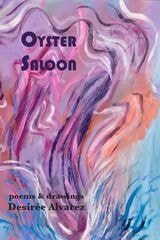
Oyster Saloon
Desirée Alvarez
Omnidawn, 2026
Poetry that considers art, family history, and creativity.
This collection charts the life of an artist and her passion for nature through the making of a painting. Poems revel in the space humans occupy within the natural world, considering ways of living that range from harmonious to extractive. Alvarez reflects on petroleum, plastic, robots, monsters, and a swath of art history and family history—from her Latino father's time working as an artist in Andy Warhol’s Factory to the teachings of Hokusai. Acting asa séance conjuring the voices of the dead as a guide, the book is part elegy to the poet’s mother, who was a painter and gardener. Steeped in the rural New England countryside of the poet’s childhood and the lore of her indigenous ancestral family in Puerto Rico and Mexico, Oyster Saloon straddles contrasting heritage and landscapes and considers what it means to live a creative life.

of blue & bone
PoemsMichal 'MJ' Jones
Northwestern University Press, 2027
Winner of the 2026 Cave Canem Angela Jackson Prize
The second collection from acclaimed poet Michal “MJ” Jones, of blue & bone reckons with the Hart family murder-suicide. On March 26, 2018, white wives Jen and Sarah Hart drove themselves and their six adopted Black children—Markis, Hannah, Devonte, Jeremiah, Abigail, and Ciera Rose—off a cliff in Mendocino County, California. Before this tragedy and while the families of origin battled to keep their children, the Harts evaded culpability for over a decade of child abuse, protected under the guise of innocence and privilege. A collection of documentary poetics, of blue & bone engages persona, ode, and lyrical poetry to reflect on the question How could this have happened? Jones carefully studies the nuances and intersections of race, queerness, and class crucial to this question, employing delicate and powerful language to explore a devastating tragedy and attempt to make sense out of monstrous devastation. Vulnerable and raw, this collection cuts deeply through blue and bone.