74 books match the query 'Foreign countries' and 2 start with o
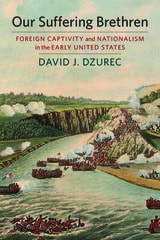
cover of Our Suffering Brethren: Foreign Captivity and Nationalism in the Early United States

Our Suffering Brethren

Foreign Captivity and Nationalism in the Early United States

David J. Dzurec III

University of Massachusetts Press, 2019

In October 1785, American statesman John Jay acknowledged that the more his countrymen “are treated ill abroad, the more we shall unite and consolidate at home.” Behind this simple statement lies a complicated history. From the British impressment of patriots during the Revolution to the capture of American sailors by Algerian corsairs and Barbary pirates at the dawn of the nineteenth century, stories of Americans imprisoned abroad helped jumpstart democratic debate as citizens acted on their newly unified identity to demand that their government strengthen efforts to free their fellow Americans. Deliberations about the country's vulnerabilities in the Atlantic world reveal America's commitment to protecting the legacy of the Revolution as well as growing political divisions.

Drawing on newspaper accounts, prisoner narratives, and government records, David J. Dzurec III explores how stories of American captivity in North America, Europe, and Africa played a critical role in the development of American political culture, adding a new layer to our understanding of foreign relations and domestic politics in the early American republic.
[more]
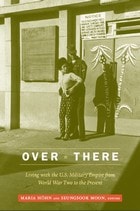
cover of Over There: Living with the U.S. Military Empire from World War Two to the Present

Over There

Living with the U.S. Military Empire from World War Two to the Present

Maria Höhn and Seungsook Moon, eds.

Duke University Press, 2010

Over There explores the social impact of America’s global network of more than 700 military bases. It does so by examining interactions between U.S. soldiers and members of host communities in the three locations—South Korea, Japan and Okinawa, and West Germany—where more than-two thirds of American overseas bases and troops have been concentrated for the past six decades. The essays in this collection highlight the role of cultural and racial assumptions in the maintenance of the American military base system, and the ways that civil-military relations play out locally. Describing how political, spatial, and social arrangements shape relations between American garrisons and surrounding communities, they emphasize such factors as whether military bases are located in democratic nations or in authoritarian countries where cooperation with dictatorial regimes fuels resentment; whether bases are integrated into neighboring communities or isolated and surrounded by “camp towns” wholly dependent on their business; and whether the United States sends single soldiers without families on one-year tours of duty or soldiers who bring their families and serve longer tours. Analyzing the implications of these and other situations, the contributors address U.S. military–regulated relations between GIs and local women; the roles of American women, including military wives, abroad; local resistance to the U.S. military presence; and racism, sexism, and homophobia within the U.S. military. Over There is an essential examination of the American military as a global and transnational phenomenon.

Contributors
Donna Alvah
Chris Ames
Jeff Bennett
Maria Höhn
Seungsook Moon
Christopher Nelson
Robin Riley
Michiko Takeuchi

[more]