Results by title
484 books match the query 'Foreign relations' and 13 start with o
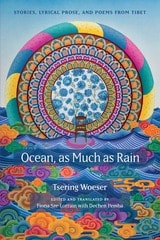
Ocean, as Much as Rain
Stories, Lyrical Prose, and Poems from TibetTsering Woeser. Edited and Translated by Fiona Sze-Lorrain with Dechen Pemba.
Duke University Press, 2026

On Internal War
American and Soviet Approaches to Third World Clients and InsurgentsWilliam E. Odom
Duke University Press, 1992
On Internal War reviews the contrasting theory and practice in Soviet and American approaches to their competition in the Third World and relates them to indigenous causes of internal wars. Odom also integrates the military dimensions of insurgencies with external influences and internal politics. Drawing on political development theory, he underscores the sources of instability in Third World states that make insurgencies more likely and offers ways to assess the prospects for democracy in specific cases.
The centerpiece of the study is a practical application of the author’s analysis to three case studies—El Salvador, Guatemala, and the Philippines—and a regional assessment of the Middle East. Odom provides no panaceas but suggests that more promising strategies can be devised.
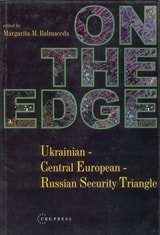
On The Edge
Ukrainian - Central European - Russian Security TriangleMargarita M. Balmaceda
Central European University Press, 2001
A new globally significant relationship arising after the break-up of the Soviet Union is the main topic of this unparalleled volume – the geopolitical link between Russia, Ukraine and the three bordering ‘Central European’ states, Hungary, Poland and Slovakia. On the Edge is a path-breaking analysis of this triangular relationship with an in-depth focus on economic, political and, more importantly, security issues.
The expansion of NATO up to Ukraine’s borders is likely to leave Ukraine in a delicate position vis-à-vis Russia. On the Edge addresses key questions, such as: how are events in Ukraine affecting the security calculations of the Central European states; Central European relations with Russia and NATO; and relations among Central European states themselves? The volume examines what Central European states can do to solidify Ukraine’s independence and help it avoid international isolation.
On the Edge gives a Central European perspective on all these issues and suggests concrete forms of co-operation.

On Western Terrorism - New Edition
From Hiroshima to Drone WarfareNoam Chomsky and Andre Vltchek
Pluto Press, 2017
“Noam Chomsky is a global phenomenon.”—New York Review of Books
In On Western Terrorism, world-renowned intellectual Noam Chomsky discusses Western power and propaganda with filmmaker and investigative journalist Andre Vltchek. Together they touch on colonialism, propaganda, and the media, and cover topics from the Soviet Union to Latin America to the Arab Spring.
Here is the perfect introduction to Chomsky's political thought and provides an accessible approach for anyone who wishes to better understand the West's fraught role in the world. Admired by some, condemned by others, and feared by all—the military might of the West is undeniably colossal.
Beginning with stories of the New York newsstand where Chomsky started his political education as a teenager, the discussion broadens out to encompass colonialism, imperial control, propaganda, and drone warfare.
Chomsky and Vltchek offer a powerful critique of the legacy of colonialism, touching upon many countries including Syria, Nicaragua, Cuba, China, Chile, and Turkey. The Table of Contents:
1. The Murderous Legacy of Colonialism
2. Concealing the Crimes of the West
3. Propaganda and the Media
4. The Soviet Bloc
5. India and China
6. Latin America
7. The Middle East and the Arab Spring
8. Hope in the Most Devastated Places on Earth
9. The Decline of U.S. Power Timeline
With a fresh design and a new foreword by Chomsky, this edition of On Western Terrorism stands as an influential and powerful critique of the West's role in the world, inspiring all who read it to think independently and critically.
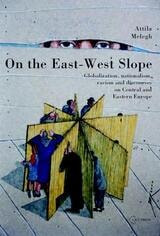
On the East-West Slope
Globalization, Nationalism, Racism and Discourses on Eastern EuropeAttila Melegh
Central European University Press, 2006
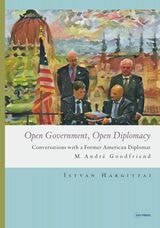
Open Government, Open Diplomacy
Conversations with a Former American Diplomat M. André GoodfriendIstván Hargittai
Central European University Press, 2023
André Goodfriend was Deputy Chief of Mission from 2013 to 2015 at the US Embassy in Budapest. In the absence of an ambassador, most of the time he was Chargé d’Affaires. Goodfriend represented his country, and for that matter, liberal democracy, in the early period of the increasingly autocratic Orbán regime. This tenure was distinguished by an unusually high public visibility and broad-based popularity. This book contains the distilled essence of conversations recorded in the fall of 2015 and in the years after his departure.
Aside from Goodfriend’s reflections on his personal history, the main focus of the deliberations is on open government: its characteristics, preconditions, benefits, and its relation to modern diplomacy. The mindset of a democracy-rooted diplomat with a working experience in an increasingly autocratic regime lends a particular perspective to the topics discussed. These topics include the fight against corruption, the protection of civil society, crisis prevention, education, economy, international relations, applied humanities, and the use of the social and traditional media to achieve policy goals.
This book presents modern, “people-friendly” diplomacy in an era in which public officials are increasingly expected to be transparent and engaged.
Open Secrets
Israeli Foreign and Nuclear PoliciesIsrael Shahak
Pluto Press, 1997
‘As a critic of Zionism and as an opponent of Jewish exclusivity, Israel Shahak is special. He possesses in-depth knowledge of Israeli society, Jewish culture and the history of his people. His humanitarian concerns and commitments are extensive; his work as a human rights campaigner ... is enormous ... Shahak provides insights [in Open Secrets] that are often far more penetrating than what has been written by others ... Little of the information and few of the insights in Open Secrets can be found in other books that focus on Israel and the Middle East ... Open Secrets is an excellent book for required reading in History, political science and/or international affairs courses in which there is consideration of Israel in the Middle East.’ The Washington Report on Middle East Affairs

Open Skies
Eisenhower's Proposal of July 21, 1955By W.W. Rostow
University of Texas Press, 1982
In 1955 the United States and the Soviet Union were matching steps in a race to develop missiles tipped with thermonuclear weapons. American officials were frustrated and alarmed by their inability to learn the scale and progress of the Soviet program, which directly threatened the security of the United States, and they were convinced that serious arms control measures required reliable means for mutual inspection. The result: President Dwight D. Eisenhower's dramatic Open Skies proposal, advanced—and rejected—at the Geneva summit of 1955.
Vetoed by Nikita Khrushchev, Eisenhower's proposal to allow mutual aerial inspection between the United States and the U.S.S.R. was accepted as policy only after satellite photography became feasible. But at the time of the 1955 summit, it was a stunning, if transient, psychological and political victory for the United States and its president.
W. W. Rostow was an active participant in this important episode in American history, and his is the first authoritative account of how Eisenhower's Open Skies proposal came to be. His insider's knowledge, combined with data from hitherto unexploited documentary sources, vividly brings to life the discussions and events that preceded the president's proposal.
Rostow explores the diplomatic forces that led to Eisenhower's reluctant acceptance of a summit with the Soviets. He tracks the origins of the Open Skies concept to an obscure meeting organized at Quantico Marine Corps Base by presidential adviser Nelson Rockefeller. He describes the tensions between Rockefeller and Secretary of State John Foster Dulles that complicated Eisenhower's task in mounting the initiative for Open Skies and explains the differences between Eisenhower himself and Rockefeller over postsummit policy that provoked the latter's resignation. He examines Soviet motives and objectives at Geneva. Finally, Rostow reflects on the meaning of this fascinating episode in American history, in particular its importance to later arms control negotiations.
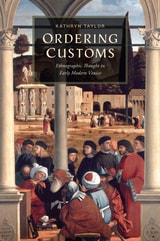
Ordering Customs
Ethnographic Thought in Early Modern VeniceKathryn Taylor
University of Delaware Press, 2023
Organizing for Foreign Policy Crises
Presidents, Advisers, and the Management of Decision MakingPatrick J. Haney
University of Michigan Press, 2002
Orientalists, Propagandists, and Ilustrados
Filipino Scholarship and the End of Spanish ColonialismMegan C. Thomas
University of Minnesota Press, 2012
The writings of a small group of scholars known as the ilustrados are often credited for providing intellectual grounding for the Philippine Revolution of 1896. Megan C. Thomas shows that the ilustrados’ anticolonial project of defining and constructing the “Filipino” involved Orientalist and racialist discourses that are usually ascribed to colonial projects, not anticolonial ones. According to Thomas, the work of the ilustrados uncovers the surprisingly blurry boundary between nationalist and colonialist thought.
By any measure, there was an extraordinary flowering of scholarly writing about the peoples and history of the Philippines in the decade or so preceding the revolution. In reexamining the works of the scholars José Rizal, Pardo de Tavera, Isabelo de los Reyes, Pedro Paterno, Pedro Serrano Laktaw, and Mariano Ponce, Thomas situates their writings in a broader account of intellectual ideas and politics migrating and transmuting across borders. She reveals how the ilustrados both drew from and refashioned the tools and concepts of Orientalist scholarship from Europe.
Interrogating the terms “nationalist” and “nationalism,” whose definitions are usually constructed in the present and then applied to the past, Thomas offers new models for studying nationalist thought in the colonial world.
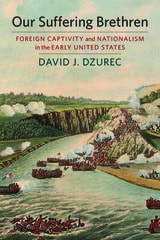
Our Suffering Brethren
Foreign Captivity and Nationalism in the Early United StatesDavid J. Dzurec III
University of Massachusetts Press, 2019
In October 1785, American statesman John Jay acknowledged that the more his countrymen “are treated ill abroad, the more we shall unite and consolidate at home.” Behind this simple statement lies a complicated history. From the British impressment of patriots during the Revolution to the capture of American sailors by Algerian corsairs and Barbary pirates at the dawn of the nineteenth century, stories of Americans imprisoned abroad helped jumpstart democratic debate as citizens acted on their newly unified identity to demand that their government strengthen efforts to free their fellow Americans. Deliberations about the country's vulnerabilities in the Atlantic world reveal America's commitment to protecting the legacy of the Revolution as well as growing political divisions.
Drawing on newspaper accounts, prisoner narratives, and government records, David J. Dzurec III explores how stories of American captivity in North America, Europe, and Africa played a critical role in the development of American political culture, adding a new layer to our understanding of foreign relations and domestic politics in the early American republic.
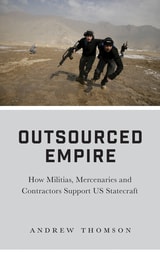
Outsourced Empire
How Militias, Mercenaries and Contractors Support US StatecraftAndrew Thompson
Pluto Press, 2018