Results by title
377 books match the query 'French' and 9 start with o
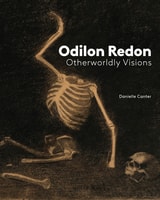
Odilon Redon
Otherworldly VisionsDanielle Canter
J. Paul Getty Trust, The, 2026
Enigmatic and haunting, the work of the French Symbolist Odilon Redon (1840–1916) intrigues and entrances all who encounter it. During the first half of his career, Redon created dramatically monochromatic charcoal drawings and lithographs, dreamily dark images that plumbed the depths of his wild imagination. Eventually, however, he also turned to pastels, adopting a bold colorful palette in fantastical explorations of the natural world.
Featuring more than seventy illustrations, this publication offers an overview of Redon's career. The informative, accessible essays examine his disparate influences from the worlds of religion, mythology, literature, and music, and demonstrate why Redon’s mysterious work is an important precursor to Surrealism.
This volume is published to accompany an exhibition on view at the J. Paul Getty Museum at the Getty Center from July 14 to October 18, 2026.

Off-Screen Cinema
Isidore Isou and the Lettrist Avant-GardeKaira M. Cabañas
University of Chicago Press, 2015
Off-Screen Cinema is the first monograph in English of the Lettrists. Offering a full portrait of the avant-garde scene of 1950s Paris, it focuses on the film works of key Lettrist figures like Gil J Wolman, Maurice Lemaître, François Dufrêne, and especially the movement's founder, Isidore Isou, a Romanian immigrant whose “discrepant editing” deliberately uncoupled image and sound. Through Cabañas's history, we see not only the full scope of the Lettrist project, but also its clear influence on Situationism, the French New Wave, the New Realists, as well as American filmmakers such as Stan Brakhage.

Ogier's Youth (Les Enfances Ogier)
A Thirteenth-Century Epic by Adenet le RoiAnna Moore Morton
Arizona Center for Medieval and Renaissance Studies, 2020

Old Mobile Archaeology
Gregory A. Waselkov
University of Alabama Press, 2005
An archaeological guide to the earliest French settlement on the northern Gulf Coast. Archaeological excavations since 1989 have uncovered exciting evidence of the original townsite of Mobile, first capital of the Louisiana colony, and remnants of the colony's port on Dauphin Island.
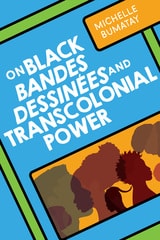
On Black Bandes Dessinées and Transcolonial Power
Michelle Bumatay
The Ohio State University Press, 2025
On Black Bandes Dessinées and Transcolonial Power is the first book-length study in English about Black francophone cartoonists and their work. Michelle Bumatay decenters Eurocentric conceptions of francophone comic art and foregrounds the ubiquity of Western racial stereotypes encoded in mainstream French and Belgian bandes dessinées as well as the imbalance of power between the Global North and the Global South carried over from the colonial era. By examining a diversity of Black cartoonists’ aesthetic and material responses to the colonially inherited medium of bandes dessinées, she argues that their innovations constitute important reparative work that combats racial stereotypes and challenges transcolonial power imbalances.
Bumatay demonstrates how Barly Baruti, Papa Mfumu’Eto, Marguerite Abouet, Japhet Miagotar, and other Black cartoonists throughout the francophone world employ a range of tactics to tell their own stories. Through a balance of historical context and close readings, she shows how these artists represent and comment on their everyday lives in a postcolonial reality, expose and critique racial capitalism and exploitation, and provide new ways of seeing and understanding Black francophone peoples and cultures.

On Both Sides of the Tracks
Social Mobility in Contemporary French LiteratureMorgane Cadieu
University of Chicago Press, 2024
Social climbers have often been the core characters of novels. Their position between traditional tiers in society makes them touchstones for any political and literary moment, including our own. Morgane Cadieu’s study looks at a certain kind of social climber in contemporary French literature whom she calls the parvenant. Taken from the French term parvenu, which refers to one who is newly arrived, a parvenant is a character who shuttles between social groups. A parvenant may become part of a new social class but devises literary ways to come back, constantly undoing any fixed idea of social affiliation.
Focusing on recent French novels and autobiographies, On Both Sides of the Tracks speaks powerfully to issues of emancipation and class. Cadieu offers a fresh critical look at tales of social mobility in the work of Annie Ernaux, Kaoutar Harchi, Michel Houellebecq, Édouard Louis, and Marie NDiaye, among others, shedding fascinating light on upward mobility today as a formal, literary problem.

Order in Disorder
Intratextual Symmetry in Montaigne's “Essais”Randolph Paul Runyon
The Ohio State University Press, 2013
Order in Disorder: Intratextual Symmetry in Montaigne’s “Essais,” by Randolph Paul Runyon, offers a new answer to the question of how ordered the Essays may be. Following up on Montaigne’s likening them to a painter’s “grotesques” surrounding a central image, and seeing in this an allusion to the ancient Roman decorative style, rediscovered in the Renaissance, of symmetrical motifs on either side of a central image, Runyon uncovers an extensive network of symmetrical verbal echoes linking every chapter with another. Often two chapters of greatly different length and apparent importance (one on thumbs, for instance, balanced against one on the limits of human understanding) will in this way be brought together—not without, Runyon finds, an intended irony. The Essays emerge as even more self-reflexive than we thought, an amazingly intratextual work.

Othea’s Letter to Hector
Christine de Pizan
Iter Press, 2017
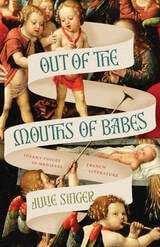
Out of the Mouths of Babes
Infant Voices in Medieval French LiteratureJulie Singer
University of Chicago Press, 2025
Medieval literature is full of strange moments when infants (even fetuses) speak. In Out of the Mouths of Babes, Julie Singer explores the unsettling questions raised by these events, including What is a person? Is speech fundamental to our humanity? And what does it mean, or what does it matter, to speak truth to power?
Singer contends that descriptions of baby talk in medieval French literature are far from trivial. Through treatises, manuals, poetry, and devotional texts, Singer charts how writers imagined infants to speak with an authority untainted by human experience. What their children say, then, offers unique insight into medieval hopes for universal answers to life’s deepest wonderings.