Results by title
167 books match the query 'Gardening' and 5 start with o
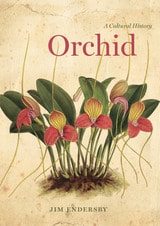
Orchid
A Cultural HistoryJim Endersby
University of Chicago Press, 2016
Following the stories of orchids throughout history, Jim Endersby divides our attraction to them into four key themes: science, empire, sex, and death. When it comes to empire, for instance, orchids are a prime example of the exotic riches sought by Europeans as they shaped their plans for colonization. He also reveals how Charles Darwin’s theory of evolution became intimately entangled with the story of the orchid as he investigated their methods of cross-pollination. As he shows, orchids—perhaps because of their extraordinarily diverse colors, shapes, and sizes—have also bloomed repeatedly in films, novels, plays, and poems, from Shakespeare to science fiction, from thrillers to elaborate modernist novels.
Featuring many gorgeous illustrations from the collection of the Royal Botanic Gardens, Kew, Orchid: A Cultural History tells, for the first time, the extraordinary story of orchids and our prolific interest in them. It is an enchanting tale not only for gardeners and plant collectors, but anyone curious about the flower’s obsessive hold on the imagination in history, cinema, literature, and more.
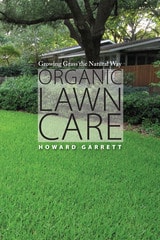
Organic Lawn Care
Growing Grass the Natural WayBy Howard Garrett
University of Texas Press, 2014
Organic gardening expert Howard Garrett offers step-by-step instructions for planting and maintaining lawns, golf courses, and other turf with organic methods that he has proven to be easier, less expensive, and less water-intensive than conventional lawn care.
A lush green lawn is one of the great pleasures of the natural world, whether it’s right outside your front door or on a majestic fairway at a legendary golf course. But anyone who has tried to grow the perfect lawn the conventional way knows it requires an endless cycle of watering and applying synthetic fertilizers and toxic chemical pesticides that costs a lot of money and kills all the life in the soil, on the surface, and on the grass. Fortunately, there’s a better way. Organic lawn care is not only healthier for the environment, it’s actually cheaper and less water-intensive, whether you’re managing a small yard or acres of turf.
In Organic Lawn Care: Growing Grass the Natural Way, Howard Garrett, the renowned “Dirt Doctor,” takes you step-by-step through creating and maintaining turf organically. He begins with the soil, showing you how to establish a healthy habitat for grass. Then he discusses a variety of turfgrasses, including Bermudagrass, bluegrass, buffalograss, fescue, ryegrass, St. Augustine, and zoysia. Garrett explains in detail how to establish and maintain a lawn, including planting, mowing, watering, fertilizing, composting, and managing weeds and pests. And he offers alternatives to lawn grasses and turf, describing the situations in which they might be your best choice.
Follow the program in Organic Lawn Care, and don’t be surprised when your water bill drops dramatically and your lawn or golf course is the best-looking one around.
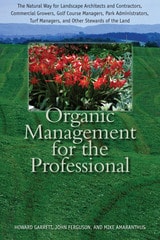
Organic Management for the Professional
The Natural Way for Landscape Architects and Contractors, Commercial Growers, Golf Course Managers, Park Administrators, Turf Managers, and Other Stewards of the LandBy Howard Garrett, John Ferguson, and Mike Amaranthus
University of Texas Press, 2012
Can you manage the landscape of a golf course, city park, or corporate campus without synthetic fertilizers and toxic pesticides? Absolutely! Organic landscaping is not only possible on a large scale, but it also makes sense both economically and environmentally. It promotes healthy soils and plants, which require less water and sequester more carbon—a winning combination for both your bottom line and the planet’s fight against resource depletion and global warming. Organic programs on a commercial scale have enormous potential to make a difference in the quality of our environment, our use of fuels, and our climate. And as those who have already converted to organics have discovered, they also cost a lot less over the long term.
Organic Management for the Professional is the first comprehensive guide to “going green” in large-scale landscaping. Nationally recognized organic gardening expert Howard Garrett, with associates John Ferguson and Mike Amaranthus, not only explains in detail how to manage projects with natural organic techniques, but also presents the material in clear, simple terms so that commercial and institutional property owners can understand what to ask of their landscape architects, contractors, growers, and maintenance people. They give detailed, proven instructions for the key components of organic landscaping—soil building, correct planting techniques, fertilizing, pest control, compost, and mulch. Then they show how to apply these organic methods in large-scale landscaping, commercial growing (orchards, tree farms, nurseries, and greenhouse operations), and recreational properties (golf courses, parks, and sports fields).
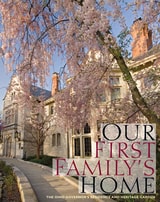
Our First Family’s Home
The Ohio Governor’s Residence and Heritage GardenMary Alice Mairose
Ohio University Press, 2008
This richly illustrated volume tells the story of thehome that has served as Ohio’s executive residence since 1957, and of the nine governors and their families who have lived in the house. Our First Family’s Home offers the first complete history of the residence and garden that represent Ohio to visiting dignitaries and the citizens of the state alike. Once in a state of decline, the house has been lovingly restored and improved by itsresidents. Development of the Ohio Heritage Garden has increased the educational potential of the house and has sparked an interest in the preservation of native plant species. Looking toward the future, the Residence is also taking the lead in promoting environmental issues such as solar powerand green energy.
Photographs by award-winning environmental photographer Ian Adams and botanical art by Dianne McElwain showcase the beauty of the home’s architecture and the myriad of native plants that grace the three acres on which the Residence stands. Dianne McElwain is a member of the American Society of Botanical Artists in New York. Her botanical paintings have won numerous awards and are found in prestigious collections throughout the United States.
Essays highlight the Jacobethan Revival architecture and the history of the home. The remaining pieces cover the garden and include an intimate tour of the Heritage Garden, which was inspired by Ohio’s diverse landscape. Finally, former Governor Ted Strickland and First Lady Frances Strickland discuss the increasing focus on green energy at the Governor’s Residence and First Lady Emerita Hope Taft explains how native plants can help sustain the environment.
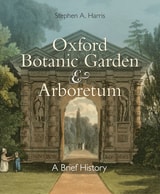
Oxford Botanic Garden & Arboretum
A Brief HistoryStephen A. Harris
Bodleian Library Publishing, 2017
This book tells the story of the garden through accounts of each of its keepers, tracing their work and priorities, from its founding keeper, Jacob Bobart, through to the early nineteenth-century partnership of gardener William Baxter and academic Charles Daubeny, who together gave the garden its greenhouse and ponds and helped ensure its survival to the present. Richly illustrated, this book offers a wonderful introduction to a celebrated Oxford site.