Results by title
60 books match the query 'Ghana' and 2 start with o
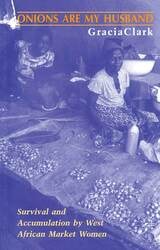
Onions Are My Husband
Survival and Accumulation by West African Market WomenGracia Clark
University of Chicago Press, 1994
In the most comprehensive analysis to date of the world of open air marketplaces of West Africa, Gracia Clark studies the market women of Kumasi, Ghana, in order to understand the key social forces that generate, maintain, and continually reshape the shifting market dynamics.
Probably the largest of its kind in West Africa, the Kumasi Central Market houses women whose positions vary from hawkers of meals and cheap manufactured goods to powerful wholesalers, who control the flow of important staples. Drawing on more than four years of field research, during which she worked alongside several influential market "Queens", Clark explains the economic, political, gender, and ethnic complexities involved in the operation of the marketplace and examines the resourcefulness of the market women in surviving the various hazards they routinely encounter, from coups d'etat to persistent sabotage of their positions from within.
Probably the largest of its kind in West Africa, the Kumasi Central Market houses women whose positions vary from hawkers of meals and cheap manufactured goods to powerful wholesalers, who control the flow of important staples. Drawing on more than four years of field research, during which she worked alongside several influential market "Queens", Clark explains the economic, political, gender, and ethnic complexities involved in the operation of the marketplace and examines the resourcefulness of the market women in surviving the various hazards they routinely encounter, from coups d'etat to persistent sabotage of their positions from within.
[more]
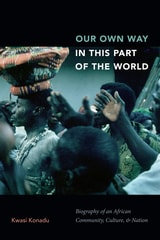
Our Own Way in This Part of the World
Biography of an African Community, Culture, and NationKwasi Konadu
Duke University Press, 2019
Kofi Dᴐnkᴐ was a blacksmith and farmer, as well as an important healer, intellectual, spiritual leader, settler of disputes, and custodian of shared values for his Ghanaian community. In Our Own Way in This Part of the World Kwasi Konadu centers Dᴐnkᴐ's life story and experiences in a communography of Dᴐnkᴐ's community and nation from the late nineteenth century through the end of the twentieth, which were shaped by historical forces from colonial Ghana's cocoa boom to decolonization and political and religious parochialism. Although Dᴐnkᴐ touched the lives of thousands of citizens and patients, neither he nor they appear in national or international archives covering the region. Yet his memory persists in his intellectual and healing legacy, and the story of his community offers a non-national, decolonized example of social organization structured around spiritual forces that serves as a powerful reminder of the importance for scholars to take their cues from the lived experiences and ideas of the people they study.
[more]