383 books match the query 'Globalization' and 6 start with o
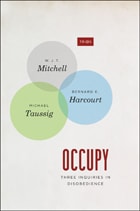
cover of Occupy: Three Inquiries in Disobedience

Occupy

Three Inquiries in Disobedience

W. J. T. Mitchell, Bernard E. Harcourt, and Michael Taussig

University of Chicago Press, 2013
Mic check! Mic check! Lacking amplification in Zuccotti Park, Occupy Wall Street protestors addressed one another by repeating and echoing speeches throughout the crowd. In Occupy, W. J. T. Mitchell, Bernard E. Harcourt, and Michael Taussig take the protestors’ lead and perform their own resonant call-and-response, playing off of each other in three essays that engage the extraordinary Occupy movement that has swept across the world, examining everything from self-immolations in the Middle East to the G8 crackdown in Chicago to the many protest signs still visible worldwide.
 
“You break through the screen like Alice in Wonderland,” Taussig writes in the opening essay, “and now you can’t leave or do without it.” Following Taussig’s artful blend of participatory ethnography and poetic meditation on Zuccotti Park, political and legal scholar Harcourt examines the crucial difference between civil and political disobedience. He shows how by effecting the latter—by rejecting the very discourse and strategy of politics—Occupy Wall Street protestors enacted a radical new form of protest. Finally, media critic and theorist Mitchell surveys the global circulation of Occupy images across mass and social media and looks at contemporary works by artists such as Antony Gormley and how they engage the body politic, ultimately examining the use of empty space itself as a revolutionary monument.
 
Occupy stands not as a primer on or an authoritative account of 2011’s revolutions, but as a snapshot, a second draft of history, beyond journalism and the polemics of the moment—an occupation itself.
[more]
cover of Oceanic Becoming: The Pacific beneath the Pavements

Oceanic Becoming

The Pacific beneath the Pavements

Rob Wilson

Duke University Press, 2025

From disappearing coral reefs and ocean acidification to floating great garbage patches, the Pacific Ocean is an ever-present reminder of the Anthropocene. In Oceanic Becoming, Rob Wilson demonstrates that in the midst of the planetary crises the Pacific now faces, it must be understood as interconnected to the other oceans. Wilson frames this interconnection as “Oceania,” reconceiving the world oceans as tied to sites of urban dwelling and life sustenance—from Boston to Brisbane—that are increasingly threatened by late capitalism. Confronting these threats, Wilson argues, requires a project he theorizes as “worlding”—a process of world-making and world-remaking across Oceania that would create new forms of belonging and connection at local, regional, and transnational levels. Wilson shows how Oceania is not just a site of peril but one charged with emergent literary and social formations that can provide the basis for new solidarities, futures, and ecologies.
[more]
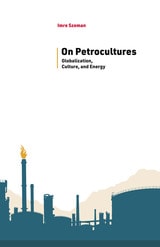
cover of On Petrocultures: Globalization, Culture, and Energy

On Petrocultures

Globalization, Culture, and Energy

Imre Szeman

West Virginia University Press, 2019

On Petrocultures brings together key essays by Imre Szeman, a leading scholar in the field of energy humanities and a critical voice in debates about globalization and neoliberalism. Szeman’s most important and influential essays, in dialogue with exciting new pieces written for the book, investigate ever-evolving circuits of power in the contemporary world, as manifested in struggles over space and belonging, redefinitions of work and individual autonomy, and the deep links between energy use and climate change.

These essays explore life lived in the twenty-first century by examining critically the vocabulary through which capitalism makes sense of itself, focusing on concepts like the nation, globalization, neoliberalism, creativity, and entrepreneurship. At the heart of the volume is the concept of “petrocultures,” which demands that we understand a fundamental fact of modern life: we are shaped by and through fossil fuels. Szeman argues that we cannot take steps to address global warming without fundamentally changing the social, cultural, and political norms and expectations developed in conjunction with the energy riches of the past century. On Petrocultures maps the significant challenge of our dependence on fossil fuels and probes ways we might begin to leave petrocultures behind.
[more]
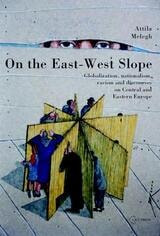
cover of On the East-West Slope: Globalization, Nationalism, Racism and Discourses on Eastern Europe

On the East-West Slope

Globalization, Nationalism, Racism and Discourses on Eastern Europe

Attila Melegh

Central European University Press, 2006
Melegh's work offers a powerful analysis of the sociological and symbolic meanings of East-West in Europe after the end of the Cold War. Melegh exposes the underbelly of liberal characterizations of East-West, highlighting the polarizing effect of extreme nationalism and ethnic racism. The theoretical underpinnings of this work involve the ideas of preeminent theorists such as Karl Mannheim, Michel Foucault and more recently Maria Todorova and Iver Neumann. The importance of this work lies in its ability to cast into fine relief how the "East-West Slope" oriented negatively from West to East has emerged from liberal characterizations of this project. In addition this is one of the first attempts to link post-colonial analysis to developments in Eastern Europe.
[more]
cover of Oriental Networks: Culture, Commerce, and Communication in the Long Eighteenth Century

Oriental Networks

Culture, Commerce, and Communication in the Long Eighteenth Century

Bärbel Czennia

Bucknell University Press, 2021

Oriental Networks explores forms of interconnectedness between Western and Eastern hemispheres during the long eighteenth century, a period of improving transportation technology, expansion of intercultural contacts, and the emergence of a global economy. In eight case studies and a substantial introduction, the volume examines relationships between individuals and institutions, precursors to modern networks that engaged in forms of intercultural exchange. Addressing the exchange of cultural commodities (plants, animals, and artifacts), cultural practices and ideas, the roles of ambassadors and interlopers, and the literary and artistic representation of networks, networkers, and networking, contributors discuss the effects on people previously separated by vast geographical and cultural distance. Rather than idealizing networks as inherently superior to other forms of organization, Oriental Networks also considers Enlightenment expressions of resistance to networking that inform modern skepticism toward the concept of the global network and its politics. In doing so the volume contributes to the increasingly global understanding of culture and communication.

Published by Bucknell University Press. Distributed worldwide by Rutgers University Press.
[more]
cover of Other Cities, Other Worlds: Urban Imaginaries in a Globalizing Age

Other Cities, Other Worlds

Urban Imaginaries in a Globalizing Age

Andreas Huyssen, ed.

Duke University Press, 2008

Other Cities, Other Worlds brings together leading scholars of cultural theory, urban studies, art, anthropology, literature, film, architecture, and history to look at non-Western global cities. The contributors focus on urban imaginaries, the ways that city dwellers perceive or imagine their own cities. Paying particular attention to the historical and cultural dimensions of urban life, they bring to their essays deep knowledge of the cities they are bound to in their lives and their work. Taken together, these essays allow us to compare metropolises from the so-called periphery and gauge processes of cultural globalization, illuminating the complexities at stake as we try to imagine other cities and other worlds under the spell of globalization.

The effects of global processes such as the growth of transnational corporations and investment, the weakening of state sovereignty, increasing poverty, and the privatization of previously public services are described and analyzed in essays by Teresa P. R. Caldeira (São Paulo), Beatriz Sarlo (Buenos Aires), Néstor García Canclini (Mexico City), Farha Ghannam (Cairo), Gyan Prakash (Mumbai), and Yingjin Zhang (Beijing). Considering Johannesburg, the architect Hilton Judin takes on themes addressed by other contributors as well: the relation between the country and the city, and between racial imaginaries and the fear of urban violence. Rahul Mehrotra writes of the transitory, improvisational nature of the Indian bazaar city, while AbdouMaliq Simone sees a new urbanism of fragmentation and risk emerging in Douala, Cameroon. In a broader comparative frame, Okwui Enwezor reflects on the proliferation of biennales of contemporary art in African, Asian, and Latin American cities, and Ackbar Abbas considers the rise of fake commodity production in China. The volume closes with the novelist Orhan Pamuk’s meditation on his native city of Istanbul.

Contributors: Ackbar Abbas, Teresa P. R. Caldeira, Néstor García Canclini, Okwui Enwezor, Farha Ghannam, Andreas Huyssen, Hilton Judin, Rahul Mehrotra, Orhan Pamuk, Gyan Prakash, Beatriz Sarlo, AbdouMaliq Simone, Yingjin Zhang

[more]