Results by title
230 books match the query 'Government relations' and 4 start with o

On the Eve of Conquest
The Chevalier de Raymond's Critique of New France in 1754Joseph L. Peyser
Michigan State University Press, 1997
In 1754, Charles de Raymond, chevalier of the Royal and Military Order of Saint Louis and a captain in the Troupes de la Marine wrote a bold, candid, and revealing expose; on the French colonial posts and settlements of New France. On the Eve of the Conquest, more than an annotated translation, includes a discussion on the historical background of the start of the French and Indian War, as well as a concise biography of Raymond and Michel Le Courtois de Surlaville, the army colonel at the French court to whom the report was sent. The events surrounding Raymond's controversial year as commandant of the post (now Fort Wayne, Indiana) in 1749-50, his disputed recall by Governor General Jacques-Pierre de Taffanel de La Jonquier, and the subsequent friction between La Jonquiere's successor, Ange de Menneville Duqesne, and Raymond are presented in detail and illustrated by translations of their correspondence.
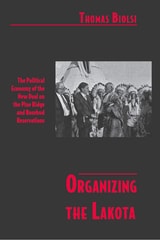
Organizing the Lakota
The Political Economy of the New Deal on the Pine Ridge and Rosebud ReservationsThomas Biolsi
University of Arizona Press, 1992
Biolsi pays particular attention to the administrative means by which the OIA retained the power to design and implement tribal "self-government" as well as the power to control the flow of critical resources—rations, relief employment, credit—to the reservations. He also shows how this imbalance of power between the tribes and the federal bureaucracy influenced politics on the reservations, and argues that the crisis of authority faced by the Lakota tribal governments among their own would-be constituents—most dramatically demonstrated by the 1973 Wounded Knee occupation—is a direct result of their disempowerment by the United States.
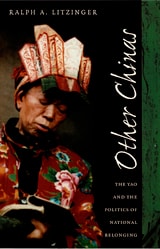
Other Chinas
The Yao and the Politics of National BelongingRalph A. Litzinger
Duke University Press, 2000
Litzinger begins by describing how during the Republican period the Yao were considered a dangerous people who preferred to consort with beasts and goblins rather than join in the making of a modern nation. He then compares this to the communist revolutionaries’ view of the Yao as impressive rebels and positive examples of subaltern agency. Litzinger shows how scholars, government workers, communist party officials, and Taoist ritual specialists have influenced the varied depictions of the Yao and, in doing so, he advances a new understanding of both the Yao and the effects of official discourse, written histories, state policy, and practices of minority empowerment. In addition to analyzing issues of ritual practice, social order, morality, and the governance of ethnic populations, Litzinger considers the Yao’s role in the cultural reforms of the 1980s. By distancing his study from romanticized depictions of minorities Litzinger is able to focus on how minority representation, struggle, and agency have influenced the history of the People’s Republic, cultural debates within contemporary Chinese society, and China’s rapidly changing role in the global order.
This book will be of interest to Asianists in both anthropology and cultural studies and should appeal more generally to scholars invested in issues of ethnic identity, minority politics, and transnationalism.
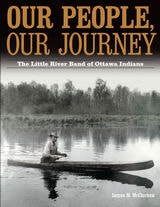
Our People, Our Journey
The Little River Band of Ottawa IndiansJames M. McClurken
Michigan State University Press, 2009
Our People, Our Journey is a landmark history of the Little River Band of Ottawa Indians, a Michigan tribe that has survived to the present day despite the expansionist and assimilationist policies that nearly robbed it of an identity in the late nineteenth century.
In his thoroughly researched chronicle, McClurken documents in words and images every major lineage and family of the Little River Ottawas. He describes the Band's struggles to find land to call its own over several centuries, including the hardships that began with European exploration of what is now the upper Midwest. Although the Little River Ottawas were successful at integrating their economic and cultural practices with those of Europeans, they were forced to cede land in the face of American settlements.
McClurken explains how the Little River Band was forced, in 1858, onto a reservation on the Pere Marquette and Manistee Rivers where they settled with a number of other Ottawa bands. However, the very treaty intended to provide the Grand River Ottawas with a permanent reservation "homeland" eventually allowed non-Indians to acquire title to nearly two-thirds of the land within the reservation by 1880.