Results by title
149 books match the query 'Group identity' and 5 start with o
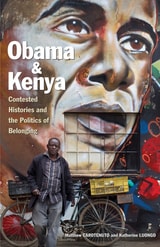
Obama and Kenya
Contested Histories and the Politics of BelongingMatthew Carotenuto
Ohio University Press, 2016
Barack Obama’s political ascendancy has focused considerable global attention on the history of Kenya generally and the history of the Luo community particularly. From politicos populating the blogosphere and bookshelves in the U.S and Kenya, to tourists traipsing through Obama’s ancestral home, a variety of groups have mobilized new readings of Kenya’s past in service of their own ends.
Through narratives placing Obama into a simplified, sweeping narrative of anticolonial barbarism and postcolonial “tribal” violence, the story of the United States president’s nuanced relationship to Kenya has been lost amid stereotypical portrayals of Africa. At the same time, Kenyan state officials have aimed to weave Obama into the contested narrative of Kenyan nationhood.
Matthew Carotenuto and Katherine Luongo argue that efforts to cast Obama as a “son of the soil” of the Lake Victoria basin invite insights into the politicized uses of Kenya’s past. Ideal for classroom use and directed at a general readership interested in global affairs, Obama and Kenya offers an important counterpoint to the many popular but inaccurate texts about Kenya’s history and Obama’s place in it as well as focused, thematic analyses of contemporary debates about ethnic politics, “tribal” identities, postcolonial governance, and U.S. African relations.
Object Lessons
Robyn Wiegman
Duke University Press, 2012
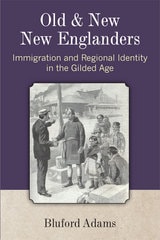
Old and New New Englanders
Immigration and Regional Identity in the Gilded AgeBluford Adams
University of Michigan Press, 2014
In Old and New New Englanders, Bluford Adams provides a reenvisioning of New England’s history and regional identity by exploring the ways the arrival of waves of immigrants from Europe and Canada transformed what it meant to be a New Englander during the Gilded Age. Adams’s intervention challenges a number of long-standing conceptions of New England, offering a detailed and complex portrayal of the relations between New England’s Yankees and immigrants that goes beyond nativism and assimilation. In focusing on immigration in this period, Adams provides a fresh view on New England’s regional identity, moving forward from Pilgrims, Puritans, and their descendants and emphasizing the role immigrants played in shaping the region’s various meanings. Furthermore, many researchers have overlooked the newcomers’ relationship to the regional identities they found here. Adams argues immigrants took their ties to New England seriously. Although they often disagreed about the nature of those ties, many immigrant leaders believed identification with New England would benefit their peoples in their struggles both in the United States and back in their ancestral lands.
Drawing on and contributing to work in immigration history, as well as American, gender, ethnic, and New England studies, this book is broadly concerned with the history of identity construction in the United States while its primary focus is the relationship between regional categories of identity and those based on race and ethnicity. With its interdisciplinary methodology, original research, and diverse chapter topics, the book targets both specialist and nonspecialist readers.
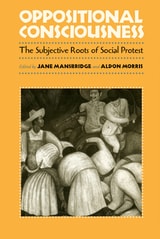
Oppositional Consciousness
The Subjective Roots of Social ProtestEdited by Jane J. Mansbridge and Aldon Morris
University of Chicago Press, 2001
Each essay employs a recent historical case to demonstrate how oppositional consciousness actually worked in the experience of a subordinate group. Based on participant observation and interviews, chapters focus on the successful social movements of groups such as African Americans, people with disabilities, sexually harassed women, Chicano workers, and AIDS activists. Ultimately, Oppositional Consciousness sheds new light on the intricate mechanisms that drive the important social movements of our time.
Contributors: Naomi Braine, Sharon Groch, Fredrick C. Harris, Jane Mansbridge, Anna-Maria Marshall, Aldon Morris, Marc Simon Rodriguez, Brett C. Stockdill, Lori G. Waite
Ordinary Genomes
Science, Citizenship, and Genetic IdentitiesKaren-Sue Taussig
Duke University Press, 2009