Results by title
90 books match the query 'Growth' and 3 start with o
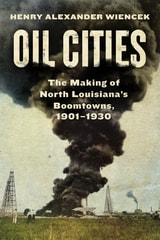
Oil Cities
The Making of North Louisiana’s Boomtowns, 1901-1930Henry Alexander Wiencek
University of Texas Press, 2024
How international oil companies navigated the local, segregated landscape of north Louisiana in the first decades of the twentieth century.
In 1904, prospectors discovered oil in the rural parishes of North Louisiana just outside Shreveport. As rural cotton fields gave way to dense, industrial centers of energy extraction, migrants from across the US—and the world—rushed to take a share of the boom. The resulting boomtowns, most notoriously Oil City, quickly gained a reputation for violence, drinking, and rough living. Meanwhile, North Louisiana’s large Black population endured virulent white supremacy in the oil fields and the courtrooms to earn a piece of the boom, including one Black woman who stood to become the wealthiest oil heiress in America.
In Oil Cities, Henry Wiencek uncovers what life was like amidst the tent cities, saloons, and oil derricks of North Louisiana’s oil boomtowns, tracing the local experiences of migrants, farmers, sex workers, and politicians as they navigated dizzying changes to their communities. This first historical monograph on the region’s dramatic oil boom reveals a contested history, in which the oil industry had to adapt its labor, tools, and investments to meet North Louisiana’s unique economic, social, political, and environmental dynamics.
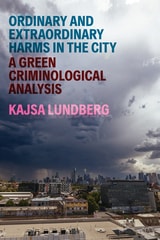
Ordinary and Extraordinary Harms in the City
A Green Criminological AnalysisKajsa Lundberg
Rutgers University Press, 2026
This book, based on original research in Melbourne, Australia, explores the spatial politics of urban expansion both upwards and outwards as the city continues to colonize non-urban areas around its fringes. The everyday decisions and tools bound up in urban growth accelerate a malign colonization of land, resources, air and water, thereby exacerbating a broad variety of social and environmental harms. In addition to the quotidian nature of urban growth, this book also explores the ‘crisis’ in the form of extreme fire events in urban areas. Moving between local planning and national and international climate change mitigation policies and approaches, this book highlights various 'necropolicies’ - policies causing harm and death to more-than-human populations. Such death-bound policies are the result of neoliberal urban development, fueled by state-corporate relations and prosperity concerns. In sum, this book connects green and urban criminology, urban studies and planning to reveal how ordinary and extraordinary challenges are entangled in urban design, harm and, most importantly, imagining alternative futures and cities.

Over the Edge
The Growth of Homelessness in the 1980sMartha M. Burt
Russell Sage Foundation, 1992