Results by title
64 books match the query 'Healing' and 2 start with o
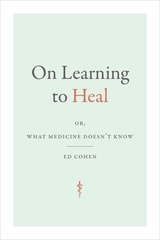
On Learning to Heal
or, What Medicine Doesn't KnowEd Cohen
Duke University Press, 2023
At thirteen, Ed Cohen was diagnosed with Crohn’s disease—a chronic, incurable condition that nearly killed him in his early twenties. At his diagnosis, his doctors told him that the best he could hope for would be periods of remission. Unfortunately, doctors never mentioned healing as a possibility. In On Learning to Heal, Cohen draws on fifty years of living with Crohn’s to consider how Western medicine’s turn from an “art of healing” toward a “science of medicine” deeply affects both medical practitioners and their patients. He demonstrates that although medicine can now offer many seemingly miraculous therapies, medicine is not and has never been the only way to enhance healing. Exploring his own path to healing, he argues that learning to heal requires us to desire and value healing as a vital possibility. With this book, Cohen advocates reviving healing’s role for all those whose lives are touched by illness.
[more]
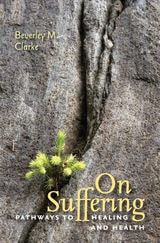
On Suffering
Pathways to Healing and HealthBeverley M. Clarke
Dartmouth College Press, 2011
Currently in medicine, theories of pain regard pain and suffering as one and the same. It is assumed that if pain ceases, suffering stops. These theories are not substantiated in clinical practice, where some patients report little pain and extreme suffering and other individuals have a lot of pain and virtually no suffering. Based on the results of a scientific questionnaire, as well as evidence from and conversations with hundreds of patients, Beverley M. Clarke argues convincingly that suffering is often separate from pain, has universal measurable characteristics, and requires suffering-specific treatments that are sensitive to the patient’s individual psychology and cultural background. According to Clarke, suffering occurs when individuals who have experienced a life change because of medical issues perceive a threat to their idea of self and personhood. This kind of suffering, based on a lost “dream of self,” affects every aspect of an individual’s life. Treating the patient as a whole person—an approach that Clarke strongly advocates—is an issue overlooked in the majority of chronic care and traumatic injury treatments, focused as they are on pain reduction. Clarke believes passionately that the management of suffering in medicine is the responsibility of all health care practitioners. Until they come to identify and understand suffering as distinct from pain, the entire health care system will continue to carry the financial and moral burden of incomplete diagnoses, inappropriate referrals for care, ineffective treatment interventions, and lost human potential.
[more]