Results by title
332 books match the query 'Health & Fitness' and 10 start with o
Obesity Surgery
Stories Of Altered LivesMarta Meana
University of Nevada Press, 2008
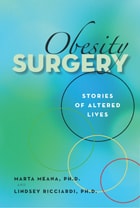
Obesity Surgery
Stories Of Altered LivesMarta Meana
University of Nevada Press, 2008
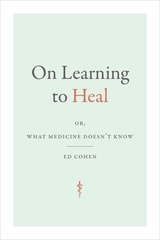
On Learning to Heal
or, What Medicine Doesn't KnowEd Cohen
Duke University Press, 2023
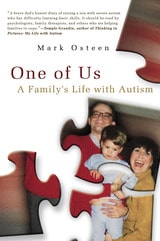
One of Us
A Family's Life with AutismMark Osteen
University of Missouri Press, 2010
In 1991, Mark Osteen and his wife, Leslie, were struggling to understand why their son, Cameron, was so different from other kids. At age one, Cam had little interest in toys and was surprisingly fixated on books. He didn’t make baby sounds; he ignored other children. As he grew older, he failed to grasp language, remaining unresponsive even when his parents called his name. When Cam started having screaming anxiety attacks, Mark and Leslie began to grasp that Cam was developmentally delayed. But when Leslie raised the possibility of an autism diagnosis, Mark balked. Autism is so rare, he thought. Might as well worry about being struck by lightning.
Since that time, awareness of autism has grown monumentally. Autism has received extensive coverage in the news media, and it has become a popular subject for film, television, and literature, but the disorder is frequently portrayed and perceived as a set of eccentricities that can be corrected with proper treatment. In reality, autism permanently wrecks many children’s chances for typical lives. Plenty of recent bestsellers have described the hardships of autism, but those memoirs usually focus on the recovery of people who overcome some or all of the challenges of the disorder. And while that plot is uplifting, it’s rare in real life, as few autistic children fully recover. The territory of severe autism—of the child who is debilitated by the condition, who will never be cured—has been largely neglected. One of Us: A Family’s Life with Autism tells that story.
In this book, Mark Osteen chronicles the experience of raising Cam, whose autism causes him aggression, insomnia, compulsions, and physical sickness. In a powerful, deeply personal narrative, Osteen recounts the struggles he and his wife endured in diagnosing, treating, and understanding Cam’s disability, following the family through the years of medical difficulties and emotional wrangling. One of Us thrusts the reader into the life of a child who exists in his own world and describes the immense hardships faced by those who love and care for him. Leslie and Mark's marriage is sorely tested by their son's condition, and the book follows their progress from denial to acceptance while they fight to save their own relationship.
By embracing the little victories of their life with Cam and by learning to love him as he is, Mark takes the reader down a road just as gratifying, and perhaps more moving, than one to recovery. One of Us is not a book about a child who overcomes autism. Instead, it’s the story of a different but equally rare sort of victory—the triumph of love over tremendous adversity.
Ordinary Medicine
Extraordinary Treatments, Longer Lives, and Where to Draw the LineSharon R. Kaufman
Duke University Press, 2015
Other-Worldly
Making Chinese Medicine through Transnational FramesMei Zhan
Duke University Press, 2009
Whether discussing the presentation of Chinese medicine at a health fair sponsored by a Silicon Valley corporation, or how the inclusion of a traditional Chinese medicine clinic authenticates the “California” appeal of an upscale residential neighborhood in Shanghai, Zhan emphasizes that unexpected encounters and interactions are not anomalies in the structure of Chinese medicine. Instead, they are constitutive of its irreducibly complex and open-ended worlds. Zhan proposes an ethnography of “worlding” as an analytic for engaging and illuminating emergent cultural processes such as those she describes. Rather than taking “cultural difference” as the starting point for anthropological inquiries, this analytic reveals how various terms of difference—for example, “traditional,” “Chinese,” and “medicine”—are invented, negotiated, and deployed translocally. Other-Worldly is a theoretically innovative and ethnographically rich account of the worlding of Chinese medicine.
Others' Milk
The Potential of Exceptional BreastfeedingWilson, Kristin J.
Rutgers University Press, 2018
Exceptional breastfeeders find creative ways to feed and care for their children—such as by inducing lactation, sharing milk, or exclusively pumping. They want to adhere to the societal ideal of giving them “the best” but sometimes have to face off with dogmatic authorities in order to do so. Kristin J. Wilson argues that while breastfeeding is never going to be the feasible choice for everyone, it should be accessible to anyone.
Our Intelligent Bodies
Gary F. Merrill
Rutgers University Press, 2020
In Our Intelligent Bodies, physiology professor Gary F. Merrill takes you on a guided tour through the human body. You’ll learn how our eyes are designed to detect unimaginably small bursts of light and how our ears contain bundles of tiny hairs, each one attuned to different sound frequencies. You’ll also discover how our hearts are smart enough to compensate for skipped beats and irregular rhythms and how our pulmonary system adjusts for low oxygen levels. You’ll even find out why the gut is sometimes called the “second brain,” its reflexes controlled by millions of neurons.
Written in a fun, easy-to-comprehend style and filled with illuminating analogies, Our Intelligent Bodies also brings readers up to date on cutting-edge research into the wonders of human physiology. It will give you a new appreciation for the smart decisions our bodies are making when our brains aren’t paying attention.
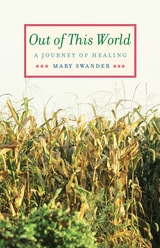
Out of This World
A Journey of HealingMary Swander
University of Iowa Press, 1995
From her perch in rural Kalona, Iowa, Swander discovers new strength and self-reliance along with a community of hardworking and hospitable neighbors. Raising goats and poultry, participating in barn raisings and auctions, protecting her garden from a plague of grasshoppers, creating a living crèche at Christmastime, all the while laughing at her attempts to wrestle with the pioneer challenges of midwestern winters and summers, she explores what it means to be a lone physical and spiritual homesteader at the end of the twentieth century.
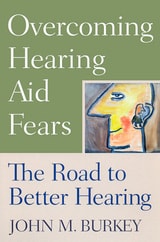
Overcoming Hearing Aid Fears
The Road to Better HearingBurkey, John M.
Rutgers University Press, 2003
There are dozens of misconceptions about hearing aids:
- “They make you look old.”
- “They cause ear infections.”
- “They increase hearing loss.”
- “I can’t afford one.”
In Overcoming Hearing Aid Fears, audiologist John M. Burkey addresses common fears, concerns, and misconceptions about hearing aids to help readers decide whether these devices will prove useful. Using an informal, anecdotal style informed by years of clinical practice, Burkey provides practical information about hearing aid styles, options, and costs. His expertise and experience in caring for more than 50,000 patients will help people with hearing loss address their personal concerns. The book also helps friends and family understand why a loved one might resist getting a hearing aid, and offers tips on counseling. Audiologists will find this text an important educational tool in advising their own patients.
Approximately 10 percent of Americans (and nearly one-third of people age seventy and older) have some degree of hearing loss that, if left untreated, causes frustration, isolation, and depression. A hearing aid is a simple tool to improve careers, relationships, and self-esteem, and to provide independence and security. Overcoming Hearing Aid Fears can help readers take that first step to a better life.