Results by title
184 books match the query 'Hispanic Americans' and 5 start with o
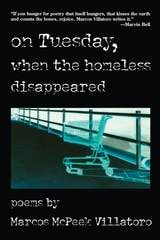
On Tuesday, When the Homeless Disappeared
Marcos McPeek Villatoro
University of Arizona Press, 2004
Villatoro is a writer with a keen political sensibility and a sense of humor besides. After confronting the reader with weighty issues, he pauses to have an encounter with a curandera in a cornfield; to speculate on a visit from extraterrestrials; and to pay tribute to his free-spirited, loose-living Uncle Jack, who "chewed forest mushrooms like a rabbit, / Then howled at a California night / While whispering querida above open thighs." Combining Borgean logic, the grit of Neruda, and a heady dose of Zen, Villatoro offers a primer on how to integrate a history of brutality and injustice with the privilege and comfort of life in America. A final section of poems is presented in Spanish only—a statement of ascendance, a strategy for identity preservation, a gift to the cognoscenti.
Reading On Tuesday, When the Homeless Disappeared may make you shift in your seat—perhaps even toss in your sleep—as you encounter a poignant human voice that is unafraid to speak from the heart.
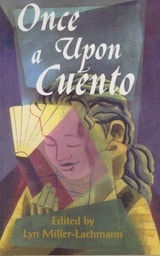
Once Upon a Cuento
Edited by Lyn Miller-Lachmann
Northwestern University Press, 2003
The stories are grouped by theme—heritage, holidays, and contemporary culture; family life; friends and other relationships; and dealing with differences. Individual stories explore additional themes such as the challenge of making do with little money, the process of moving to a new country and learning English, and young people's relationships to animals and to the natural world. Each story contains an introduction that offers historical, cultural, and biographical information. A general introduction and list of works by the thirteen contributors offer further avenues for research and discussion.
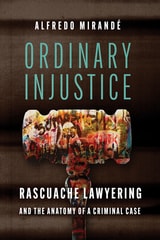
Ordinary Injustice
Rascuache Lawyering and the Anatomy of a Criminal CaseAlfredo Mirandé
University of Arizona Press, 2023
Building from author Alfredo Mirandé’s earlier work Rascuache Lawyer, the account is told by “The Professor,” who led a pro bono rascuache legal defense team comprising the professor, a retired prosecutor, and student interns, working without a budget, office, paralegals, investigators, or support staff. The book is a must-read for anyone interested in race, gender, and criminal injustice and will appeal not only to law scholars and social scientists but to lay readers interested in ethnographic field research, Latinx communities, and racial disparities in the legal system.
The case is presented as a series of letters to the author’s fictional alter-ego, Fermina Gabriel, an accomplished lawyer and singer. This narrative device allows the author to present the case as it happens, relaying the challenges and complexities as they occur and drawing the reader in.
While Ordinary Injustice deals with important, complicated legal issues and questions that arise in criminal defense work and looks at the case from the time of Juan’s arrest to the preliminary hearing, indictment, pretrial motions, and attempts to obtain a negotiated plea, it is written in nontechnical and engaging language that makes law accessible to the lay reader.
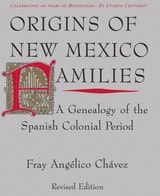
Origins of New Mexico Families
A Genealogy of the Spanish Colonial PeriodFray Angélico Chávez
Museum of New Mexico Press, 1992
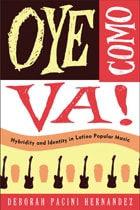
Oye Como Va!
Hybridity and Identity in Latino Popular MusicDeborah Pacini Hernandez
Temple University Press, 2009
Listen Up! When the New York-born Tito Puente composed "Oye Como Va!" in the 1960s, his popular song was called "Latin" even though it was a fusion of Afro-Cuban and New York Latino musical influences. A decade later, Carlos Santana, a Mexican immigrant, blended Puente’s tune with rock and roll, which brought it to the attention of national audiences. Like Puente and Santana, Latino/a musicians have always blended musics from their homelands with other sounds in our multicultural society, challenging ideas of what "Latin" music is or ought to be. Waves of immigrants further complicate the picture as they continue to bring their distinctive musical styles to the U.S.—from merengue and bachata to cumbia and reggaeton.
In Oye Como Va!, Deborah Pacini Hernandez traces the trajectories of various U.S. Latino musical forms in a globalizing world, examining how the blending of Latin music reflects Latino/a American lives connecting across nations. Exploring the simultaneously powerful, vexing, and stimulating relationship between hybridity, music, and identity, Oye Como Va! asserts that this potent combination is a signature of the U.S. Latino/a experience.