Results by title
883 books match the query 'Historical' and 13 start with o
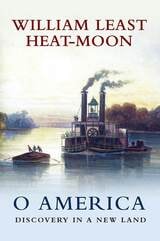
O America
Discovery in a New LandWilliam Least Heat-Moon
University of Missouri Press, 2027
Traveling by foot, horse, stage, canal boat, and steamer, Nathaniel and Nicodemus explore the backcountry and forge a deep friendship as they encounter a host of memorable characters who reveal the nature of the American experiment, one still in its early stages but already under the stress of social injustices and economic inequities.
Olav Audunssøn
II. ProvidenceSigrid Undset
University of Minnesota Press, 2021
The second volume in the Nobel Prize–winning writer’s epic of medieval Norway, finely capturing Undset’s fluid, natural style in a new English translation, the first in nearly a century
As Norway moves into the fourteenth century, the kingdom continues to be racked by political turmoil and bloody family vendettas that serve as the backdrop for Sigrid Undset’s masterful story about Olav Audunssøn and Ingunn Steinfinnsdatter. Betrothed as children and raised as foster siblings, their unbridled love for each other sets in motion a series of dire events—with a legacy of betrayal, murder, and disgrace that will echo for generations. In Providence, the second of Olav Audunssøn’s four volumes, Olav settles in at his ancestral estate of Hestviken and soon brings Ingunn home as his wife. Both hope to put their troubles behind them as they start a new life together, but the crimes and shameful secrets of the past have a long reach and a tenacious hold. The consequences of sin, suspicion, and familial obligations may prove a greater threat to the pair’s happiness than even their long years of separation.
Set in a time when royalty and religion vie for power, and bloodlines and loyalties are effectively law, Providence summons a powerful picture of Northern life in the medieval era, as the Swedish Academy noted in awarding Undset the Nobel Prize. Conveying both the intimate drama of Olav and Ingunn’s marriage and the epic sweep of their story, it is at once a moving and vivid recreation of a vanished world tainted by bloodshed and haunted by sin and retribution.
As with her classic Kristin Lavransdatter, Sigrid Undset immersed herself in legal, religious, and historical writings to create in Olav Audunssøn an astoundingly authentic and compelling portrait of Norwegian life in the Middle Ages. And as in her translation of Kristin Lavransdatter, Tiina Nunnally does full justice to Undset’s fluid prose. Undset’s writing style is by turns straightforward and delicately lyrical, conveying the natural world, the complex culture, and the fraught emotional territory against which Olav’s story inexorably unfolds.
Olav Audunssøn
III. CrossroadsSigrid Undset
University of Minnesota Press, 2022
The third volume in the Nobel Prize–winning writer’s epic story of medieval Norway, finely capturing Undset’s fluid, natural style in the first English translation in nearly a century
In the early fourteenth century, Norway is a kingdom in political turmoil, struggling with opposing forces within its own borders and drawn into strife with neighboring Sweden and Denmark. Bloody family vendettas and conflicting loyalties sparked by the irrepressible passion of a boy and his foster sister (also his betrothed) have now set in motion a series of terrible consequences—with a legacy of betrayal, murder, and disgrace that will echo down through the generations. Crossroads, the third of Olav Audunssøn’s four volumes, finds Olav heartbroken by loss and further estranged from his son. To escape his grief, Olav leaves his home estate of Hestviken and agrees to serve as captain on a small merchant ship headed to London. There, separated from everything familiar to him, Olav begins a visionary journey that will send him far into the forest and deep into his soul. Questioning past decisions and future plans, Olav must grapple with his own perceptions of love and guilt, sin and penitence, vengeance and forgiveness.
Set in a time and place where royalty and religion vie for power, and bloodlines and loyalties are law, Crossroads summons a powerful picture of Northern life in medieval times, as the Swedish Academy noted in awarding Sigrid Undset the Nobel Prize in 1928. Conveying both the intimate drama and epic sweep of Olav’s story as grief and guilt drive him to ever more desperate action, Crossroads is a moving and masterly re-creation of a vanished world tainted by bloodshed and haunted by sin and retribution.
As with Kristin Lavransdatter, her earlier medieval epic, Undset immersed herself in the legal, religious, and historical documents of the time while writing Olav Audunssøn to create astoundingly authentic and compelling portraits of Norwegian life in the Middle Ages. And as in her translation of Kristin Lavransdatter, Tiina Nunnally does full justice to Undset’s natural, fluid prose, in a style that delicately and lyrically conveys the natural world, the complex culture, and the fraught emotional territory against which Olav’s story inexorably unfolds.
Olav Audunssøn
IV. WinterSigrid Undset
University of Minnesota Press, 2023
The fourth and final volume in the Nobel Prize–winning writer’s epic of one man’s fateful life in medieval Norway
Set in thirteenth-century Norway, a land racked by political turmoil, bloody family vendettas, and rising tensions between secular powers and an ascendant church, Sigrid Undset’s spellbinding masterpiece now follows the fortunes of Olav Audunssøn to the final, dramatic chapter of his life as it unfolds in Winter, the last volume of the tetralogy. When the orphaned Olav and his foster sister Ingunn became betrothed in their youth, a chain of events was set in motion that eventually led to violence, banishment, and a family separation lasting years. The consequences fracture their marriage and threaten the lineage for generations. Now, at the end of his life, Olav continues to grapple with the guilt of his sins as he watches his children, especially Eirik, make disastrous choices and struggle to find their rightful place in a family haunted by the past.
With its precise details and sweeping vision, Olav Audunssøn summons a powerful picture of Northern life in medieval times, as noted by the Swedish Academy in awarding Undset the Nobel Prize in 1928. Conveying both the intimate drama and the epic proportions of Olav’s story at its conclusion, Winter is a moving and masterly recreation of a vanished world tainted by bloodshed and haunted by sin and retribution—yet one that might still offer a chance for redemption.
As with Kristin Lavransdatter, her earlier medieval epic, Sigrid Undset wrote Olav Audunssøn after immersive research in the legal, religious, and historical writings of the time to create an astoundingly authentic and compelling portrait of Norwegian life in the Middle Ages. And as in her translation of Kristin Lavransdatter, Tiina Nunnally does full justice to Undset’s natural, fluid prose—in a style by turns plainspoken and delicately lyrical—to convey the natural world, the complex culture, and the fraught emotional territory against which Olav’s story inexorably unfolds.
Old Orchard Farm
The Story of an Iowa BoyhoodHugh Orchard
University of Iowa Press, 2010

Omertà
A Book of SilencesAndrea Tompa
Seagull Books, 2024
A rural area not far from the city of Cluj-Napoca, a former Hungarian province that has been part of Romania since 1920. World War II has ended and the region is under the firm clasp of Stalinist collectivization. In the atmospheric village of Kolozsvár, Omertà unfolds a riveting tale through four poignant perspectives, each peeling back the layers of its central characters’ lives against the backdrop of a tumultuous Eastern Europe in the mid-twentieth century.
Kali, a peasant woman, escapes an abusive marriage to embark on a transformative journey to Kolozsvár, seeking refuge and purpose. She is employed as a maid by Vilmos, a reluctant Communist Party member with an unwavering dedication to his garden. As Vilmos’s botanical brilliance attracts the state’s attention, a clash between personal desires and political obligations ensues. Annush, the third narrator, a lovestruck teenager, becomes entangled in a complex web of emotions, grappling with love, loss, and the evolving landscape of her homeland. The tale deepens with Eleonora, who, seeking solace in a monastery, becomes a casualty of political purges and the suppression of religious faith under Romania’s oppressive regime.
In this epic novel, Romanian-born Hungarian author Andrea Tompa skillfully intertwines these tales, shedding light on the injustices and corruption of a regime that sought to extinguish cultural identities. The lives of Kali, Vilmos, Annush, and Eleonora weave a tapestry of love, resilience, the virtue of roses, and the quiet strength required to endure in the face of political turmoil.
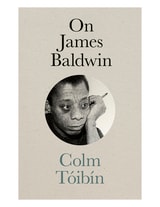
On James Baldwin
Colm Tóibín
Brandeis University Press, 2024
Acclaimed Irish novelist Colm Tóibín first read James Baldwin just after turning eighteen. He had completed his first year at an Irish university and was struggling to free himself from a religious upbringing. He had even considered entering a seminary and was searching for literature that would offer illumination and insight. Inspired by the novel Go Tell It on the Mountain, Tóibín found a writer who would be a lifelong companion and exemplar.
From On James Baldwin
Baldwin was interested in the hidden and dramatic areas in his own being, and was prepared as a writer to explore difficult truths about his own private life. In his fiction, he had to battle for the right of his protagonists to choose or influence their destinies. He knew about guilt and rage and bitter privacies in a way that few of his White novelist contemporaries did. And this was not simply because he was Black and homosexual; the difference arose from the very nature of his talent, from the texture of his sensibility. “All art,” he wrote, “is a kind of confession, more or less oblique. All artists, if they are to survive, are forced, at last, to tell the whole story, to vomit the anguish up.”
On James Baldwin is a magnificent contemporary author’s tribute to one of his most consequential literary progenitors.
On the Back of an Envelope
A Life in WritingPeter Hennessy
Haus Publishing, 2025
As one of Britain’s foremost constitutional experts and contemporary historians, Peter Hennessy has spent his professional life unpicking the arcane world of Whitehall and Westminster. He began his career as a journalist for the Times, the Economist, and the Financial Times, developing a network of insider contacts who helped him shine a light on some of the dustiest corners of the British establishment. As a journalist, prize-winning contemporary historian, and political commentator, he has chronicled the workings of the British state with wit, affection, and a healthy sense of the absurd over a five-decade career. Now a crossbench peer, he has, in his own words, “moved in with his exhibits.” Hennessy is also a stalwart of BBC election night coverage and a regular commentator on BBC Radio 4, bringing a historical and constitutional perspective on current events.
In this new volume, he brings together selected journalism, unpublished lectures, and new writing alongside personal recollections and reflections on his time observing postwar Britain, how it is governed, and those who do the governing. He reflects on the making and unmaking of prime ministers from Attlee to Truss, life in the House of Lords, and the changing constitutional landscape in the wake of Brexit and amid uncertainty about the future of the Union. Interspersed with lectures, journalism, and new pieces, Hennessy also looks back at a fascinating career, reflecting on his own experiences as a young green graduate navigating the hard-nosed world of Fleet Street in the 1970s, bringing to life a cast of characters from a world now largely gone. He revisits his time as a public historian, academic, and crossbench peer with a levity reflected in his belief that history is “gossip with footnotes.”
On the Line
Harvey Swados
University of Illinois Press, 1957
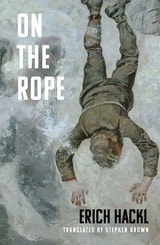
On the Rope
A Hero's StoryErich Hackl
Haus Publishing, 2020
Based on a true story, On the Rope is an account of extreme courage in the face of danger, violence, and hatred. Exploring themes of displacement and survival, friendship and family, it ends with the women’s efforts to bring recognition the selfless heroism of those who faced tremendous personal risk in order to protect them. A novella by one of Europe’s most prominent literary novelists, On the Rope layers deeply personal stories in a grounded historical account of life before, during, and after the Second World War. It paints a vivid picture of the hardships forced upon people by conflict and separation, depicting the forming and unravelling of relationships as a fact of life.
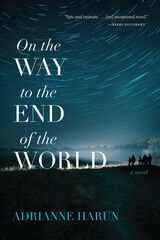
On the Way to the End of the World
A NovelAdrianne Harun
Acre Books, 2023
As the Cuban Missile Crisis eases, President Kennedy is casting around for a demonstration of American prowess when one of his Cabinet unearths an old mandate that US Marines be fit enough to walk fifty miles in twenty hours. Perfect! Kennedy decides to throw down the gauntlet to “today’s Marines,” but before he knows it, he’s sparked a wild fad. The entire country has answered the call, it seems, and for a few crazed winter weeks, masses of Americans will embark on their own arduous Big Walks—the “JFK 50-Milers.”
Yet in tiny Humtown—an isolated mill town in the Pacific Northwest—not everyone who shows up for a hastily organized Big Walk is motivated by patriotism. Not Helen Hubka, an inveterate gossip; not the suicidal Caroline, who months earlier lost her beloved husband during the Storm of the Century. Not ex-soldier/fisherman Jaspar Goode, nor the unknown man in their midst, a collared priest who seems to shift identities at will. Certainly not Avis, a battered teenager running from her terrifying brother . . . with a stolen town treasure. And when the walkers stumble upon the abandoned car of a missing young mother, they rekindle a mystery that soon reverberates among them, exposing hidden truths, talents, and alliances.
Splendidly imagined, with prose that sings on the page, On the Way to the End of the World is an adventure story riven with secrets, a national fairy tale twisted into a whodunit.
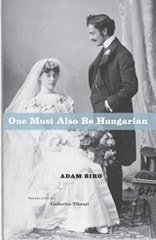
One Must Also Be Hungarian
Adam Biro
University of Chicago Press, 2006
The only country in the world with a line in its national anthem as desperate as “this people has already suffered for its past and its future,” Hungary is a nation defined by poverty, despair, and conflict. Its history, of course, took an even darker and more tragic turn during the Holocaust. But the story of the Jews in Hungary is also one of survival, heroism, and even humor—and that is the one acclaimed author Adam Biro sets out to recover in One Must Also Be Hungarian, an inspiring and altogether poignant look back at the lives of his family members over the past two hundred years.
A Hungarian refugee and celebrated novelist working in Paris, Biro recognizes the enormous sacrifices that his ancestors made to pave the way for his successes and the envious position he occupies as a writer in postwar Europe. Inspired, therefore, to share the story of his family members with his grandson, Biro draws some moving pictures of them here: witty and whimsical vignettes that convey not only their courageous sides, but also their inner fears, angers, jealousies, and weaknesses—traits that lend an indelible humanity to their portraiture. Spanning the turn of the nineteenth century, two destructive world wars, the dramatic rise of communism, and its equally astonishing fall, the stories here convey a particularly Jewish sense of humor and irony throughout—one that made possible their survival amid such enormous adversity possible.
Already published to much acclaim in France, One Must Also Be Hungarian is a wry and compulsively readable book that rescues from oblivion the stories of a long-suffering but likewise remarkable and deservedly proud people.
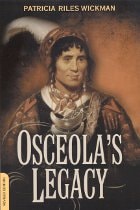
Osceola's Legacy
Patricia Riles Wickman
University of Alabama Press, 2006
A bestselling, re-evaluation of a major Native American resistance leader. Named an Outstanding Book by the Gustavus Myers Center for the Study of Human Rights.
Born in Alabama to a Muscogee/Creek Indian mother and an English father, Osceola, born Billy Powell, came to prominence in the 1830s for resisting the U. S. government's sweep into Florida. He protested the government's Florida Indian removal, killed a pro-emigration Indian leader and then made war on the US government.
Osceola's Legacy draws on a wealth of sources, including letters, diaries, and artifacts to bring this fascinating figure and the central role he played in the Second Seminole War into vivid focus. Of particular interest is a chapter on the forensic report on Osceola's grave as well as descriptions and the illustrations of his personal property at the time of his death.
Osceola's Legacy is significant for its genealogy and archaeological study of this Native American and his interaction with the federal government during the 1800s. The catalog of photographs of Osceola portraits and his personal possessions makes this a worthwhile reference book as well.