Results by title
679 books match the query 'Historiography' and 12 start with o
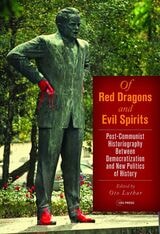
Of Red Dragons and Evil Spirits
Post-Communist Historiography between Democratization and the New Politics of HistoryOto Luthar
Central European University Press, 2017
On History
Fernand Braudel
University of Chicago Press, 1980
A wide-ranging collection of essays on the subject of history from a legendary historian
The first English translation of Ecrits sur l’histoire—a collection of essays written over a twenty-year period following publication of Braudel’s masterwork, The Mediterranean—On History sets forth Fernand Braudel’s reflections on the intellectual framework of his historical studies. Braudel calls on the historian to penetrate beneath the surface of political events to uncover and measure the forces shaping collective existence. Cycles of production, wages and prices, grids of communication and trade, fluctuations of climate, demographic trends, popular beliefs—all of these phenomena are proper subjects, Braudel argues of the historian’s investigations. It is only through study of the longue durée, Braudel argues, that one can discern structure, the supports and obstacles, the limits man and his experience cannot escape.

On the Border of Belonging
Luisa Capetillo, Ofelia Rodríguez Acosta, and Evangelina Rodríguez PerozoStephanie Rivera Berruz
Rutgers University Press, 2027
On the Border of Belonging: Luisa Capetillo, Ofelia Rodríguez Acosta, and Evangelina Rodríguez Perozo is a philosophical-historiographical project that spearheads the construction of an intellectual tradition of women from the Hispanophone Caribbean at the turn of the 20th century. On the Border of Belonging engages Luisa Capetillo (Puerto Rico), Ofelia Rodríguez Acosta (Cuba), Evangelina Rodríguez Perozo (Dominican Republic) as interlocutors with the landfall of Western modernity revealing a tense intersection between a desire to belong to modernity while sitting on the margins of its possibilities. The vexed relationship with belonging creates a counter-archive of contradictions that reveals a vivid philosophical patchwork that spirals and repeats across the archipelago. In this crosscurrent of ideas, Luisa Capetillo defends the possibilities of a spiritual- anarchist political life; Ofelia Rodríguez Acosta challenges the norms of love and kinship; and Evangelina Rodríguez Perozo contests the standards of maternal and infant care.
On the Future of History
The Postmodernist Challenge and Its AftermathErnst Breisach
University of Chicago Press, 2003
Breisach sees postmodernism as neither just a fad nor a universal remedy. In clear and concise language, he presents and critically evaluates the major views on history held by influential postmodernists, such as Derrida, Foucault, Lyotard, and the new narrativists. Along the way, he introduces to the reader major debates among historians over postmodern theories of evidence, objectivity, meaning and order, truth, and the usefulness of history. He also discusses new types of history that have emerged as a consequence of postmodernism, including cultural history, microhistory, and new historicism.
For anyone concerned with the postmodern challenge to history, both advocates and critics alike, On the Future of History will be a welcome guide.
Open Access Musicology
Volume OneLouis Epstein
Lever Press, 2020
In the fall of 2015, a collection of faculty at liberal arts colleges began a conversation about the challenges we faced as instructors: Why were there so few course materials accessible to undergraduates and lay readers that reflected current scholarly debate? How can we convey the relevance of studying music history to current and future generations of students? And how might we represent and reflect the myriad, often conflicting perspectives, positions, and identities that make up both music’s history and the writers of history?
Here we offer one response to those questions. Open Access Musicology is a collection of essays, written in an accessible style and with a focus on modes of inquiry rather than content coverage. Our authors draw from their experience as scholars but also as teachers. They have been asked to describe why they became musicologists in the first place and how their individual paths led to the topics they explore and the questions they pose. Like most scholarly literature, the essays have all been reviewed by experts in the field. Unlike all scholarly literature, the essays have also been reviewed by students at a variety of institutions for clarity and relevance.
These essays are intended for undergraduates, graduate students, and interested readers without any particular expertise. They can be incorporated into courses on a range of topics as standalone readings or used to supplement textbooks. The topics introduce and explore a variety of subjects, practices, and methods but, above all, seek to stimulate classroom discussion on music history’s relevance to performers, listeners, and citizens.

Oral History and Public Memories
Paula Hamilton
Temple University Press, 2008
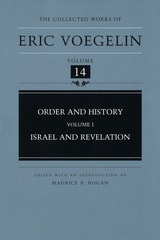
Order and History, Volume 1 (CW14)
Israel and RevelationEric Voegelin, Edited & Intro by Maurice P. Hogan
University of Missouri Press, 2001
Eric Voegelin's Israel and Revelation is the opening volume of his monumental Order and History, which traces the history of order in human society. This volume examines the ancient near eastern civilizations as a backdrop to a discussion of the historical locus of order in Israel. The drama of Israel mirrors the problems associated with the tension of existence as Israel attempted to reconcile the claims of transcendent order with those of pragmatic existence and so becomes paradigmatic.
According to Voegelin, what happened in Israel was a decisive step, not only in the history of Israel, but also in the human attempt to achieve order in society. The uniqueness of Israel is the fact that it was the first to create history as a form of existence, that is, the recognition by human beings of their existence under a world-transcendent God, and the evaluation of their actions as conforming to or defecting from the divine will. In the course of its history, Israel learned that redemption comes from a source beyond itself.
Voegelin develops rich insights into the Old Testament by reading the text as part of the universal drama of being. His philosophy of symbolic forms has immense implications for the treatment of the biblical narrative as a symbolism that articulates the experiences of a people's order. The author initiates us into attunement with all the partners in the community of being: God and humans, world and society. This may well be his most significant contribution to political thought: "the experience of divine being as world transcendent is inseparable from an understanding of man as human."
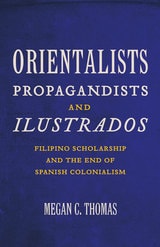
Orientalists, Propagandists, and Ilustrados
Filipino Scholarship and the End of Spanish ColonialismMegan C. Thomas
University of Minnesota Press, 2012
The writings of a small group of scholars known as the ilustrados are often credited for providing intellectual grounding for the Philippine Revolution of 1896. Megan C. Thomas shows that the ilustrados’ anticolonial project of defining and constructing the “Filipino” involved Orientalist and racialist discourses that are usually ascribed to colonial projects, not anticolonial ones. According to Thomas, the work of the ilustrados uncovers the surprisingly blurry boundary between nationalist and colonialist thought.
By any measure, there was an extraordinary flowering of scholarly writing about the peoples and history of the Philippines in the decade or so preceding the revolution. In reexamining the works of the scholars José Rizal, Pardo de Tavera, Isabelo de los Reyes, Pedro Paterno, Pedro Serrano Laktaw, and Mariano Ponce, Thomas situates their writings in a broader account of intellectual ideas and politics migrating and transmuting across borders. She reveals how the ilustrados both drew from and refashioned the tools and concepts of Orientalist scholarship from Europe.
Interrogating the terms “nationalist” and “nationalism,” whose definitions are usually constructed in the present and then applied to the past, Thomas offers new models for studying nationalist thought in the colonial world.
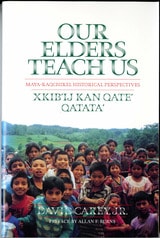
Our Elders Teach Us
Maya-Kaqchikel Historical PerspectivesDavid Anthony Carey, Jr. with a preface by Allan Burns
University of Alabama Press, 2001
Where Maya voices reclaim their history and reshape our understanding of the past.
Combining the methodologies of anthropology and history, Carey uses both oral interviews and meticulous archival research to construct a history of the last 130 years in Guatemala from the perspective of present-day Mayan people. His research took place over five years, including intensive language study, four summers of fieldwork, and a year-long residence in Comalapa, during which he conducted most of the 414 interviews. By casting a wide net for his interviews—from tiny hamlets to bustling Guatemala City—Carey gained insight into more than a single community or a single group of Maya.
The Maya-Kaqchikel record their history through oral tradition; thus, few written accounts exist. Comparing the Kaqchikel point of view to that of the western scholars and Ladinos who have written most of the history texts, Carey reveals the people and events important to the Maya, which have been virtually written out of the national history.
A motto of the Guatemalan organization Maya Decinio para el Pueblo Indigena (Maya Decade for the Indigenous People) is that people who do not know their past cannot build a future. By elucidating what the Kaqchikel think of their own past, Carey also illuminates the value of non-Western theoretical and methodological approaches that can be applied to the history of other peoples. Valuable to historians, anthropologists, archaeologists, or anyone interested in Mayan and Latin American studies, this book will inform as well as enchant.
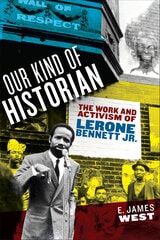
Our Kind of Historian
The Work and Activism of Lerone Bennett Jr.E. James West
University of Massachusetts Press, 2022
Journalist, activist, popular historian, and public intellectual, Lerone Bennett Jr. left an indelible mark on twentieth-century American history and culture. Rooted in his role as senior editor of Ebony magazine, but stretching far beyond the boundaries of the Johnson Publishing headquarters in Chicago, Bennett’s work and activism positioned him as a prominent advocate for Black America and a scholar whose writing reached an unparalleled number of African American readers.
This critical biography—the first in-depth study of Bennett’s life—travels with him from his childhood experiences in Jim Crow Mississippi and his time at Morehouse College in Atlanta to his later participation in a dizzying range of Black intellectual and activist endeavors. Drawing extensively on Bennett’s previously inaccessible archival collections at Emory University and Chicago State, as well as interviews with close relatives, colleagues, and confidantes, Our Kind of Historian celebrates his enormous influence within and unique connection to African American communities across more than half a century of struggle.

Out of One, Many Africas
Reconstructing the Study and Meaning of AfricaEdited by William G. Martin and Michael O. West
University of Illinois Press, 1999
By surveying the present predicament and the current grassroots impulse toward reconsidering the meaning of the continent, Out of One, Many Africas gives shape and momentum to a crucial dialogue aimed at transforming the study of Africa
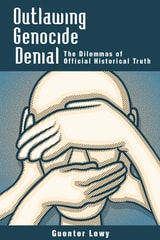
Outlawing Genocide Denial
The Dilemmas of Official Historical TruthGuenter Lewy
University of Utah Press, 2014
Holocaust denial can be viewed as another form of hatred against the Jews and preventing it can be understood as a form of warding off hate speech. Germany has made it a crime punishable by law. Other European countries have similar laws. While the rationale for such laws seems reasonable, Lewy asks readers to look again and to consider carefully the dangers that these laws could present. His discussion neither dismisses the ramifications of genocide denial nor justifies it; he instead looks closely at the possible risks of government-enforced interpretations of history.
Outlawing genocide denial sets a precedent of allowing governments to dictate historical truth and how events should be interpreted. Such government restrictions can be counterproductive in a democratic society which values freedom of speech. Lewy examines these and related ideas through the analysis of historical and current examples. He posits his own conclusion but leaves it up to readers to view the evidence and arguments and form their own opinions.