Results by title
28164 books match the query 'History' and 581 start with o
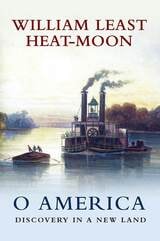
O America
Discovery in a New LandWilliam Least Heat-Moon
University of Missouri Press, 2027
Traveling by foot, horse, stage, canal boat, and steamer, Nathaniel and Nicodemus explore the backcountry and forge a deep friendship as they encounter a host of memorable characters who reveal the nature of the American experiment, one still in its early stages but already under the stress of social injustices and economic inequities.

O Little Town
Remembering Life in a Prairie VillageHarlo L. Jones
University of Manitoba Press, 1995
O Sing unto the Lord
A History of English Church MusicAndrew Gant
University of Chicago Press, 2017
The ornate complexity of pre-Reformation Catholic liturgies revealed the exclusive nature of this form of worship. By contrast, simple English psalms, set to well-known folk songs, summed up the aims of the Reformation with its music for everyone. The Enlightenment brought hymns, the Methodists and Victorians a new delight in the beauty and emotion of worship. Today, church music mirrors our multifaceted worldview, embracing the sounds of pop and jazz along with the more traditional music of choir and organ. And reflecting its truly global reach, the influence of English church music can be found in everything from masses sung in Korean to American Sacred Harp singing.
From medieval chorales to “Amazing Grace,” West Gallery music to Christmas carols, English church music has broken through the boundaries of time, place, and denomination to remain familiar and cherished everywhere. Expansive and sure to appeal to all music lovers, O Sing unto the Lord is the biography of a tradition, a book about people, and a celebration of one of the most important sides to our cultural heritage.
O'Neill's Shakespeare
Normand Berlin
University of Michigan Press, 1993
In O'Neill's Shakespeare , Normand Berlin explores the relationship of William Shakespeare and Eugene O'Neill through detailed, often surprising, intertextual readings of the two great playwrights' work. "Of course, it would have been impossible for O'Neill not to have been influenced by Shakespeare," acknowledges Berlin. But this is an influence of an unusual and extraordinary sort, "a family romance" that transcends their obvious differences—a romance that "takes in all O'Neill's life and art."
In the first book-length study of this crucial literary and dramatic relationship, Berlin probes far beyond the usual listing of allusions and references. This is the exploration of an "essential, basic, even natural" connection, in which Shakespeare is shown to have fundamentally shaped O'Neill's creative imagination. Following O'Neill's career chronologically, Berlin divides his study into two parts. The "first career" (culminating in Mourning Becomes Electra) is explored through recurring themes that evoke Shakespeare: the sea, black and white, and the family. O'Neill's "second career" (from Ah! Wilderness until the last plays) is examined through Shakespearean genre classifications: comedy, history, tragedy, and tragicomedy. Though always grounded in close textual readings, Berlin's analysis spirals outward to encompass O'Neill's artistic and psychological development and touches on the questions of tradition, transcendence, and human nature inevitably raised when such literary connections across history are drawn.
O'Neill's Shakespeare is more than a reminder that Shakespeare continues to haunt Western culture; it is a careful and fascinating analysis of a particular legacy in American drama. The book has insights to offer to specialists in Shakespeare and O'Neill, and to any reader interested in the transmission of ideas through Western culture. Berlin's study of the unconscious and conscious uses of Shakespeare by O'Neill provide a valuable new understanding of O'Neill's artistry. It is also an eloquent, thoughtful account that blends the transcendence of Shakespeare's influence with the particular ways in which every era must refashion Shakespeare so that "the past becomes the present."
OHIO
THE HISTORY OF A PEOPLEAndrew R. L. Cayton
The Ohio State University Press, 2002
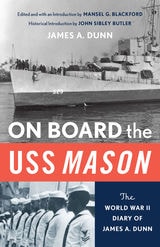
ON BOARD THE USS MASON
THE WORLD WAR II DIARY OF JAMES A. DUNNMANSEL G. BLACKFORD
The Ohio State University Press, 2016
Dunn kept a day-to-day diary during his spare time on board the Mason. Such diaries are a rarity, for the navy (and other armed services) forbade the keeping of diaries, fearful lest secret information fall into enemy hands. The diary chronicles the Mason’s wartime activities, from the first convoy to the final return to the United States. It captures the feeling and meaning of life on board with an immediacy not fully found in retrospective accounts. The diary accurately records the mortal danger Dunn and his shipmates were in while attacking enemy submarines or dealing with extreme weather conditions in the North Atlantic. It conveys the boredom the men encountered while confined on long, tedious convoys and the joy of shore leaves. Here is the daily life aboard ship—the duties and the pastimes that made shipboard life endurable.
Equally interesting, the diary reveals what it meant to be an African American in a white navy within a segregated American society, the shipboard tensions, and the shipboard cooperation and sense of unity. It also portrays the life of an African American onshore in the United States, Great Britain, and North Africa and the love story that unfolded between James and his wife, Jane.
Supplemented by additional sources, including interviews with Dunn, this diary is a personal view into an important part of American history. Like the Tuskegee airmen, the men of the USS Mason paved the way for desegregation in America’s armed forces, contributing to a civil rights movement that changed the face of a nation.
Oases Of Culture
A History Of Public And Academic Libraries In NevadaJames W. Hulse
University of Nevada Press, 2003
The cultural and intellectual history of the Silver State is examined through the creation of its libraries. In Oases of Culture, veteran Nevada historian James W. Hulse recounts the tortuous and often colorful history of Nevada’s libraries and the work of the dedicated librarians, educators, civic leaders, women’s organizations, philanthropists, and politicians who struggled to make the democratic vision of free libraries available to all Nevadans. From the establishment of the State Library in 1865, only one year after statehood, through the creation of tax-supported public libraries after passage of a library law in 1895, to the development of today’s modern university and community college libraries and the public-library information services that serve Nevada’s booming and increasingly diverse population, Hulse recounts the trials and triumphs of Nevada’s libraries. He also examines the role of Nevada librarians in fostering literacy and confronting the First Amendment controversies that have periodically shaken the nation’s cultural foundations.
Oaxaca in Motion
An Ethnography of Internal, Transnational, and Return MigrationIván Sandoval-Cervantes
University of Texas Press, 2022
Migration is typically seen as a transnational phenomenon, but it happens within borders, too. Oaxaca in Motion documents a revealing irony in the latter sort: internal migration often is global in character, motivated by foreign affairs and international economic integration, and it is no less transformative than its cross-border analogue.
Iván Sandoval-Cervantes spent nearly two years observing and interviewing migrants from the rural Oaxacan town of Santa Ana Zegache. Many women from the area travel to Mexico City to work as domestics, and men are encouraged to join the Mexican military to fight the US-instigated “war on drugs” or else leave their fields to labor in industries serving global supply chains. Placing these moves in their historical and cultural context, Sandoval-Cervantes discovers that migrants’ experiences dramatically alter their conceptions of gender, upsetting their traditional notions of masculinity and femininity. And some migrants bring their revised views with them when they return home, influencing their families and community of origin. Comparing Oaxacans moving within Mexico to those living along the US West Coast, Sandoval-Cervantes clearly demonstrates the multiplicity of answers to the question, “Who is a migrant?”
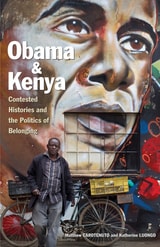
Obama and Kenya
Contested Histories and the Politics of BelongingMatthew Carotenuto
Ohio University Press, 2016
Barack Obama’s political ascendancy has focused considerable global attention on the history of Kenya generally and the history of the Luo community particularly. From politicos populating the blogosphere and bookshelves in the U.S and Kenya, to tourists traipsing through Obama’s ancestral home, a variety of groups have mobilized new readings of Kenya’s past in service of their own ends.
Through narratives placing Obama into a simplified, sweeping narrative of anticolonial barbarism and postcolonial “tribal” violence, the story of the United States president’s nuanced relationship to Kenya has been lost amid stereotypical portrayals of Africa. At the same time, Kenyan state officials have aimed to weave Obama into the contested narrative of Kenyan nationhood.
Matthew Carotenuto and Katherine Luongo argue that efforts to cast Obama as a “son of the soil” of the Lake Victoria basin invite insights into the politicized uses of Kenya’s past. Ideal for classroom use and directed at a general readership interested in global affairs, Obama and Kenya offers an important counterpoint to the many popular but inaccurate texts about Kenya’s history and Obama’s place in it as well as focused, thematic analyses of contemporary debates about ethnic politics, “tribal” identities, postcolonial governance, and U.S. African relations.
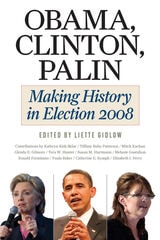
Obama, Clinton, Palin
Making History in Elections 2008Edited by Liette Gidlow
University of Illinois Press, 2011
Election 2008 made American history, but it was also the product of American history. Barack Obama, Hillary Clinton, and Sarah Palin smashed through some of the most enduring barriers to high political office, but their exceptional candidacies did not come out of nowhere. In these timely and accessible essays, a distinguished group of historians explores how the candidates both challenged and reinforced historic stereotypes of race and sex while echoing familiar themes in American politics and exploiting new digital technologies.
Contributors include Kathryn Kish Sklar on Clinton’s gender masquerade; Tiffany Ruby Patterson on the politics of black anger; Mitch Kachun on Michelle Obama and stereotypes about black women’s bodies; Glenda E. Gilmore on black women’s century of effort to expand political opportunities for African Americans; Tera W. Hunter on the lost legacy of Shirley Chisholm; Susan M. Hartmann on why the U.S. has not yet followed western democracies in electing a female head of state; Melanie Gustafson on Palin and the political traditions of the American West; Ronald Formisano on the populist resurgence in 2008; Paula Baker on how digital technologies threaten the secret ballot; Catherine E. Rymph on Palin’s distinctive brand of political feminism; and Elisabeth I. Perry on the new look of American leadership.
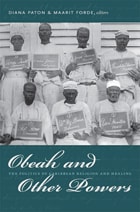
Obeah and Other Powers
The Politics of Caribbean Religion and HealingDiana Paton and Maarit Forde, eds.
Duke University Press, 2012
Contributors. Kenneth Bilby, Erna Brodber, Alejandra Bronfman, Elizabeth Cooper, Maarit Forde, Stephan Palmié, Diana Paton, Alasdair Pettinger, Lara Putnam, Karen Richman, Raquel Romberg, John Savage, Katherine Smith
Obeah, Orisa, and Religious Identity in Trinidad, Volume I, Obeah
Africans in the White Colonial Imagination, Volume 1Tracey E. Hucks
Duke University Press, 2022
Obeah, Orisa, and Religious Identity in Trinidad, Volume II, Orisa
Africana Nations and the Power of Black Sacred Imagination, Volume 2Dianne M. Stewart
Duke University Press, 2022
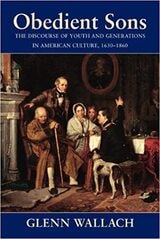
Obedient Sons
The Discourse of Youth and Generations in American Culture, 1630-1860Glenn Wallach
University of Massachusetts Press, 2009
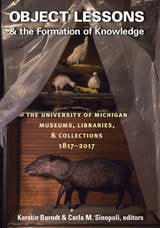
Object Lessons and the Formation of Knowledge
The University of Michigan Museums, Libraries, and Collections 1817–2017Kerstin Barndt and Carla M. Sinopoli, editors
University of Michigan Press, 2017
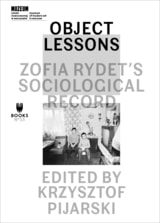
Object Lessons
Zofia Rydet’s Sociological RecordEdited by Krzysztof Pijarski
Museum of Modern Art in Warsaw, 2017
Object Lessons, a new volume of essays inspired by an exhibition at the Museum of Modern Art in Warsaw, helps to dispel the myths that have formed around the project in recent years and introduces the photographer to a new global audience. The essays here contextualize and interpret “Sociological Record” from different perspectives, opening up the work to further inquiry as both an object of interpretation and a subject of theoretical interest. Rydet herself remained unresolved over the question of how to define her work, leaving the viewer to ponder whether her magnum opus is a piece of art or science. What does remain undisputed is that “Sociological Record” is a striking testimony of its time.
A fascinating celebration of Rydet’s work that is sure to spur on fresh debate about art as a social practice and a tool of knowledge, Object Lessons reminds us of photography’s incredible power to provide a visual way of thinking and a provocative method for archiving the world.
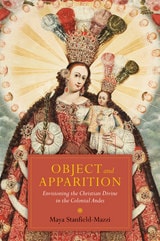
Object and Apparition
Envisioning the Christian Divine in the Colonial AndesMaya Stanfield-Mazzi
University of Arizona Press, 2013
Maya Stanfield-Mazzi demonstrates that among images of the divine there was constant interplay between concrete material objects and ephemeral visions or apparitions. Three-dimensional works of art, specifically large-scale statues of Christ and the Virgin Mary, were key to envisioning the Christian divine, the author contends. She presents in-depth analysis of three surviving statues: the Virgins of Pomata and Copacabana (Lake Titicaca region) and Christ of the Earthquakes from Cusco.
Two-dimensional painted images of those statues emerged later. Such paintings depicted the miracle-working potential of specific statues and thus helped to spread the statues’ fame and attract devotees. “Statue paintings” that depict the statues enshrined on their altars also served the purpose of presenting images of local Andean divinities to believers outside church settings.
Stanfield-Mazzi describes the unique features of Andean Catholicism while illustrating its connections to both Spanish and Andean cultural traditions. Based on thorough archival research combined with stunning visual analysis, Object and Apparition analyzes the range of artworks that gave visual form to Christianity in the Andes and ultimately caused the new religion to flourish.
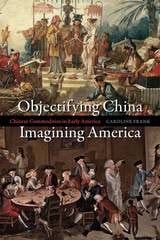
Objectifying China, Imagining America
Chinese Commodities in Early AmericaCaroline Frank
University of Chicago Press, 2011
With the ever-expanding presence of China in the global economy, Americans more and more look east for goods and trade. But as Caroline Frank reveals, this is not a new development. China loomed as large in the minds—and account books—of eighteenth-century Americans as it does today. Long before they had achieved independence from Britain and were able to sail to Asia themselves, American mariners, merchants, and consumers were aware of the East Indies and preparing for voyages there. Focusing on the trade and consumption of porcelain, tea, and chinoiserie, Frank shows that colonial Americans saw themselves as part of a world much larger than just Britain and Europe
Objects and Others
Essays on Museums and Material CultureEdited by George W. Stocking, Jr.
University of Wisconsin Press, 1988
Objects of Liberty
British Women Writers and Revolutionary SouvenirsPamela Buck
University of Delaware Press, 2024
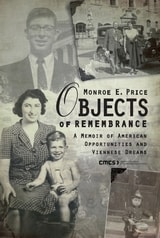
Objects of Remembrance
A Memoir of American Opportunities and Viennese DreamsMonroe E. Price
Central European University Press, 2009
This is a memoir about the power of American assimilation and opportunity in the face of persisting refugee realities. Like Isaac Bashevis Singer, Monroe Price recounts the continuing impact of European identities as families, cast from their homes by the rise of Hitler and the Third Reich, struggle to find their way in a new and challenging environment.
In a series of reflections, Price, who was born to a Jewish family in Vienna in 1938 and left when he was seven months old, seeks to create the Vienna of his infancy, including Jewish life, anti-Semitism, the Anschluss, and Kristallnacht (during which his father was arrested). He shifts to scenes of American socialization in the places he moved with his parents:: Macon, Georgia, Cincinnati, Ohio, and the experience of New York City. Through these reflections, Price illuminates ideas about family, religion, friends and schooling as well as deeply personal issues such as home, food and intimacy.
Price’s memoir weaves complicated strands—his Viennese origins, campaigns to distribute Jewish refugees away from New York City, the special qualities of Midwestern Ohio life in the 1950s—and the contrasting patterns of adjustment by different generations in his family in the American landscape. As he traces the particular path of his own life, Price reveals a more universal story of adjustment, and the relationship between a marginal community and the drama of American citizenship.
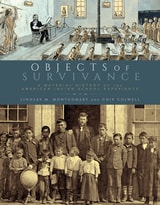
Objects of Survivance
A Material History of the American Indian School ExperienceLindsay M. Montgomery
University Press of Colorado, 2019
This visual and material archive serves as a lens through which to view a key moment in US history—when Native Americans were sequestered onto reservation lands, forced into unfamiliar labor economies, and attacked for their religious practices. Education, the government hoped, would be the final tool to permanently transform Indigenous bodies through moral instruction in Western dress, foodways, and living habits. Yet Lindsay Montgomery and Chip Colwell posit that Bratley’s collection constitutes “objects of survivance”—things and images that testify not to destruction and loss but to resistance and survival. Interwoven with documents and interviews, Objects of Survivance illuminates how the US government sought to control Native Americans and how Indigenous peoples endured in the face of such oppression.
Rejecting the narrative that such objects preserve dying Native cultures, Objects of Survivance reframes the Bratley Collection, showing how tribal members have reconnected to these items, embracing them as part of their past and reclaiming them as part of their contemporary identities. This unique visual and material record of the early American Indian school experience and story of tribal perseverance will be of value to anyone interested in US history, Native American studies, and social justice.
Co-published with the Denver Museum of Nature & Science
Object—Event— Performance
Art, Materiality, and Continuity Since the 1960sEdited by Hanna B. Hölling
Bard Graduate Center, 2021
Much of the artwork that rose to prominence in the second half of the twentieth century took on novel forms—such as installation, performance, event, video, film, earthwork, and intermedia works with interactive and networked components—that pose a new set of questions about what art actually is, both physically and conceptually. For conservators, this raises an existential challenge when considering what elements of these artworks can and should be preserved.
This provocative volume revisits the traditional notions of conservation and museum collecting that developed over the centuries to suit a conception of art as static, fixed, and permanent objects. Conservators and museums increasingly struggle with issues of conservation for works created from the mid-twentieth to the twenty-first century that are unstable over time. The contributors ask what it means to conserve artworks that fundamentally address and embody the notion of change and, through this questioning, guide us to reevaluate the meaning of art, of objects, and of materiality itself. Object—Event—Performance considers a selection of post-1960s artworks that have all been chosen for their instability, changeability, performance elements, and processes that pose questions about their relationship to conservation practices. This volume will be a welcome resource on contemporary conservation for art historians, scholars of dance and theater studies, curators, and conservators.
Obligations in Roman Law
Past, Present, and FutureEdited by Thomas A. J. McGinn
University of Michigan Press, 2013
Long a major element of classical studies, the examination of the laws of the ancient Romans has gained momentum in recent years as interdisciplinary work in legal studies has spread. Two resulting issues have arisen, on one hand concerning Roman laws as intellectual achievements and historical artifacts, and on the other about how we should consequently conceptualize Roman law.
Drawn from a conference convened by the volume's editor at the American Academy in Rome addressing these concerns and others, this volume investigates in detail the Roman law of obligations—a subset of private law—together with its subordinate fields, contracts and delicts (torts). A centuries-old and highly influential discipline, Roman law has traditionally been studied in the context of law schools, rather than humanities faculties. This book opens a window on that world.
Roman law, despite intense interest in the United States and elsewhere in the English-speaking world, remains largely a continental European enterprise in terms of scholarly publications and access to such publications. This volume offers a collection of specialist essays by leading scholars Nikolaus Benke, Cosimo Cascione, Maria Floriana Cursi, Paul du Plessis, Roberto Fiori, Dennis Kehoe, Carla Masi Doria, Ernest Metzger, Federico Procchi, J. Michael Rainer, Salvo Randazzo, and Bernard Stolte, many of whom have not published before in English, as well as opening and concluding chapters by editor Thomas A. J. McGinn.
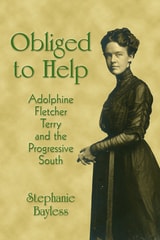
Obliged to Help
Adolphine Fletcher Terry and the Progressive SouthStephanie Bayless
Butler Center for Arkansas Studies, 2011
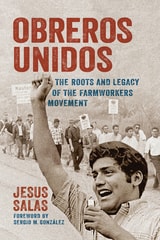
Obreros Unidos
The Roots and Legacy of the Farmworkers MovementJesus Salas
Wisconsin Historical Society Press, 2023
Taking inspiration from César Chávez, as a young man Salas and others led a historic march from Wautoma to Madison to demand that lawmakers address rampant violations of Wisconsin’s minimum wage laws and housing codes. These young labor leaders founded Obreros Unidos—Workers United—to continue the fight for fairness and respect, as well as to provide much-needed services to migrant families. This memoir of a movement details how their work went beyond the fields to have lasting impacts on representation in community organizations and access to education, empowering later generations to demand better.
Winner of the 2024 Benjamin Franklin Award for Multicultural Books
Winner of the 2024 Hamlin Garland Prize in Popular History from the Midwest History Association
“In recounting the story of Tejano settlement and struggle in Wisconsin, Salas unsettles this story line and, in the process, demonstrates the power of personal narrative and the lasting political implications of retrieving and restoring Latino history.”
—Sergio M. González, author of Mexicans in Wisconsin
“Salas’s story is an essential chapter in the history of Wisconsin and Milwaukee and mirrors the growth, progress and dreams of the Latinx community. His reflections speak to not only the importance of the Latinx community, but the need to build alliances across lines of race and gender and fulfill the promise of a multiracial democracy.”
—Barbara Miner, Milwaukee Magazine
Obscenity and the Limits of Liberalism
Edited by Loren Glass and Charles Francis Williams
The Ohio State University Press, 2011
Over the course of the nineteenth century in both Europe and the United States, the state usurped the traditional authority of the church in regulating sexual expression and behavior. In the same century philosophers of classical liberalism identified that state function as a threat to individual liberty. Since then, liberalism has provided the framework for debates over obscenity around the globe.
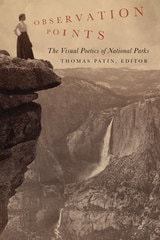
Observation Points
The Visual Poetics of National ParksThomas Patin
University of Minnesota Press, 2012
National parks are the places that present ideas of nature to Americans: Zion, Yosemite, Grand Canyon, Yellowstone bring to mind quintessential and awe-inspiring wilderness. By examining how rhetoric—particularly visual rhetoric—has worked to shape our views of nature and the “natural” place of humans, Observation Points offers insights into questions of representation, including the formation of national identity.
As Thomas Patin reveals, the term “nature” is artificial and unstable, in need of constant maintenance and reconstruction. The process of stabilizing its representation, he notes, is unavoidably political. America’s national parks and monuments show how visual rhetoric operates to naturalize and stabilize representations of the environment. As contributors demonstrate, visual rhetoric is often transparent, structuring experience while remaining hidden in plain sight. Scenic overlooks and turnouts frame views for tourists. Visitor centers, with their display cases and photographs and orientation films, provide their own points of view—literally and figuratively. Guidebooks, brochures, and other publications present still other ways of seeing. At the same time, images of America’s “natural” world have long been employed for nationalist and capitalist ends, linking expansionism with American greatness and the “natural” triumph of European Americans over Native Americans.
The essays collected here cover a wide array of subjects, including park architecture, landscape painting, public ceremonies, and techniques of display. Contributors are from an equally broad range of disciplines—art history, geography, museum studies, political science, American studies, and many other fields. Together they advance a provocative new visual genealogy of representation.
Contributors: Robert M. Bednar, Southwestern U, Georgetown, Texas; Teresa Bergman, U of the Pacific; Albert Boime, UCLA; William Chaloupka, Colorado State U; Gregory Clark, Brigham Young U; Stephen Germic, Rocky Mountain College; Gareth John, St. Cloud State U, Minnesota; Mark Neumann, Northern Arizona U; Peter Peters, Maastricht U; Cindy Spurlock, Appalachian State U; David A. Tschida, U of Wisconsin, Eau Claire; Sabine Wilke, U of Washington.
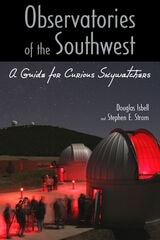
Observatories of the Southwest
A Guide for Curious SkywatchersDouglas Isbell and Stephen E. Strom
University of Arizona Press, 2009
Douglas Isbell and Stephen Strom, both intimately involved in southwestern astronomy, have written a practical guide to the major observatories of the region for those eager to learn what modern telescopes are doing, to understand the role each of these often quirky places has played in advancing our understanding of the cosmos, and hopefully to visit and see the tools of the astronomer up close. For each observatory, the authors describe its history, highlights of its contributions to astronomy—with an emphasis on recent results—and information for visitors. Also included are wide-ranging interviews with astronomers closely associated with each site.
Observatories covered range from McDonald in Texas to Palomar in California, with significant outposts in between: Arizona’s Kitt Peak National Observatory southwest of Tucson, the Lowell Observatory in Flagstaff, and the Whipple Observatory outside Amado; and New Mexico’s Very Large Array near Socorro and Sacramento Peak close to Sunspot. In addition to describing these established institutions, they also take a look ahead to the most powerful ground-based telescope in the world just beginning to operate at full power on Mount Graham in Safford, Arizona.
With more than three dozen illustrations, Observatories of the Southwest is accessible to amateur astronomers, tourists, students, and teachers—anyone fascinated with the contributions that astronomy has made to deepening our understanding of humanity’s place in the universe, whether exploring the solar system from Lowell Observatory or studying the birth of stars using the army of giant radio telescopes at the Very Large Array. This book aims to inspire visits to these sites by illuminating the major scientific questions being pursued every clear night beneath the dark skies of the Southwest and the amazing machinery that makes these pursuits possible.
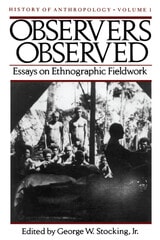
Observers Observed
Essays on Ethnographic FieldworkEdited by George W. Stocking, Jr.
University of Wisconsin Press, 1985
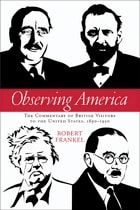
Observing America
The Commentary of British Visitors to the United States, 1890–1950Robert Frankel
University of Wisconsin Press, 2006
Robert Frankel examines the New World experiences of these commentators and the books they wrote about America. He also probes similar writings by other prominent observers from the British Isles, including Beatrice Webb, Rudyard Kipling, and George Bernard Shaw. The result is a book that offers keen insights into America’s national identity in a time of vast political and cultural change.
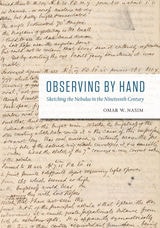
Observing by Hand
Sketching the Nebulae in the Nineteenth CenturyOmar W. Nasim
University of Chicago Press, 2013
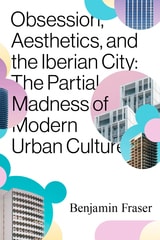
Obsession, Aesthetics, and the Iberian City
The Partial Madness of Modern Urban CultureBenjamin Fraser
Vanderbilt University Press, 2021
This book investigates the social relationships implied in our urban modernity by concentrating on four cities that are in broad strokes representative of the cultural and linguistic heterogeneity of the Iberian peninsula. Each chapter introduces but moves well beyond an identifiable urban area in a given city, noting the cultural obsession implicit in its reconstruction as well as the role of obsession in its artistic representation of the urban environment. These areas are Barcelona’s Eixample district, Madrid’s Linear City, Lisbon’s central Baixa area, and Bilbao’s Seven Streets, or Zazpikaleak. The theme of obsession—which as explored is synonymous with the concept of partial madness—provides a point of departure for understanding the interconnection of both urbanistic and artistic discourses.
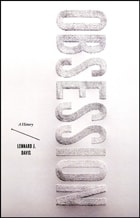
Obsession
A HistoryLennard J. Davis
University of Chicago Press, 2008
We live in an age of obsession. Not only are we hopelessly devoted to our work, strangely addicted to our favorite television shows, and desperately impassioned about our cars, we admire obsession in others: we demand that lovers be infatuated with one another in films, we respond to the passion of single-minded musicians, we cheer on driven athletes. To be obsessive is to be American; to be obsessive is to be modern.
But obsession is not only a phenomenon of modern existence: it is a medical category—both a pathology and a goal. Behind this paradox lies a fascinating history, which Lennard J. Davis tells in Obsession. Beginning with the roots of the disease in demonic possession and its secular successors, Davis traces the evolution of obsessive behavior from a social and religious fact of life into a medical and psychiatric problem. From obsessive aspects of professional specialization to obsessive compulsive disorder and nymphomania, no variety of obsession eludes Davis’s graceful analysis.

Obsidian
Geology and Archaeology in the North American SouthwestM. Steven Shackley
University of Arizona Press, 2005
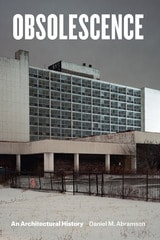
Obsolescence
An Architectural HistoryDaniel M. Abramson
University of Chicago Press, 2016
In the innovative and wide-ranging Obsolescence, Daniel M. Abramson investigates this notion of architectural expendability and the logic by which buildings lose their value and utility. The idea that the new necessarily outperforms and makes superfluous the old, Abramson argues, helps people come to terms with modernity and capitalism’s fast-paced change. Obsolescence, then, gives an unsettling experience purpose and meaning.
Belief in obsolescence, as Abramson shows, also profoundly affects architectural design. In the 1960s, many architects worldwide accepted the inevitability of obsolescence, experimenting with flexible, modular designs, from open-plan schools, offices, labs, and museums to vast megastructural frames and indeterminate building complexes. Some architects went so far as to embrace obsolescence’s liberating promise to cast aside convention and habit, envisioning expendable short-life buildings that embodied human choice and freedom. Others, we learn, were horrified by the implications of this ephemerality and waste, and their resistance eventually set the stage for our turn to sustainability—the conservation rather than disposal of resources. Abramson’s fascinating tour of our idea of obsolescence culminates in an assessment of recent manifestations of sustainability, from adaptive reuse and historic preservation to postmodernism and green design, which all struggle to comprehend and manage the changes that challenge us on all sides.
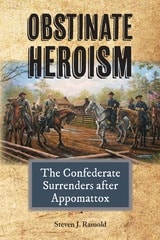
Obstinate Heroism
The Confederate Surrenders after AppomattoxSteven Ramold
University of North Texas Press, 2020
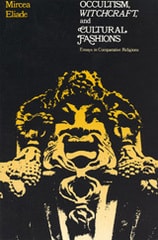
Occultism, Witchcraft, and Cultural Fashions
Essays in Comparative ReligionMircea Eliade
University of Chicago Press, 1978
Since all of the essays except the last were originally delivered as lectures, their introductory character and lively oral style make them particularly accessible to the intelligent nonspecialist. Rather than a popularization, Occultism, Witchcraft, and Cultural Fashions is the fulfillment of Eliade's conviction that the history of religions should be read by the widest possible audience.
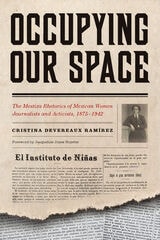
Occupying Our Space
The Mestiza Rhetorics of Mexican Women Journalists and Activists, 1875–1942Cristina Devereaux Ramírez; Foreword by Jacqueline Jones Royster
University of Arizona Press, 2015
Occupying Our Space sheds new light on the contributions of Mexican women journalists and writers during the late nineteenth and early twentieth centuries, marked as the zenith of Mexican journalism. Journalists played a significant role in transforming Mexican social and political life before and after the Revolution (1910–1920), and women were a part of this movement as publishers, writers, public speakers, and political activists. However, their contributions to the broad historical changes associated with the Revolution, as well as the pre- and post-revolutionary eras, are often excluded or overlooked.
This book fills a gap in feminine rhetorical history by providing an in-depth look at several important journalists who claimed rhetorical puestos, or public speaking spaces. The book closely examines the writings of Laureana Wright de Kleinhans (1842–1896), Juana Belén Gutiérrez de Mendoza (1875–1942), the political group Las mujeres de Zitácuaro (1900), Hermila Galindo (1896–1954), and others. Grounded in the overarching theoretical lens of mestiza rhetoric, Occupying Our Space considers the ways in which Mexican women journalists negotiated shifting feminine identities and the emerging national politics of the late nineteenth and early twentieth centuries. With full-length Spanish primary documents along with their translations, this scholarship reframes the conversation about the rhetorical and intellectual role women played in the ever-changing political and identity culture in Mexico.
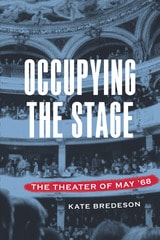
Occupying the Stage
The Theater of May '68Kate Bredeson
Northwestern University Press, 2018
The book shows how French theater artists during this period used a strategy of occupation-occupying buildings, streets, language, words, traditions, and artistic processes-as their central tactic of protest and transformation. It further proposes that the Theater of May '68 has left imprints on contemporary artists and activists, and that this theater offers a scaffolding on which to build a meaningful analysis of contemporary protest and performance in France, North America, and beyond.
At the book's heart is an inquiry into how artists of the period used theater as a way to engage in political work and, concurrently, questioned and overhauled traditional theater practices so their art would better reflect the way they wanted the world to be. Occupying the Stage embraces the utopic vision of May '68 while probing the period's many contradictions. It thus affirms the vital role theater can play in the ongoing work of social change.
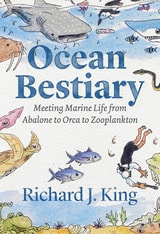
Ocean Bestiary
Meeting Marine Life from Abalone to Orca to ZooplanktonWritten and illustrated by Richard J. King
University of Chicago Press, 2023
For millennia, we have taken to the waves. And yet, for humans, the ocean remains our planet’s most inaccessible region, the place about which we know the least. From A to Z, abalone to zooplankton, and through both text and original illustrations, Ocean Bestiary is a celebration of our ongoing quest to know the sea and its creatures.
Focusing on individual species or groups of animals, Richard J. King embarks upon a global tour of ocean wildlife, including beluga whales, flying fish, green turtles, mako sharks, noddies, right whales, sea cows (as well as sea lions, sea otters, and sea pickles), skipjack tuna, swordfish, tropicbirds, walrus, and yellow-bellied sea snakes. But more than this, King connects the natural history of ocean animals to the experiences of people out at sea and along the world’s coastlines. From firsthand accounts passed down by the earliest Polynesian navigators to observations from Wampanoag clamshell artists, African-American whalemen, Korean female divers (or haenyeo), and today’s pilots of deep-sea submersibles—and even to imaginary sea expeditions launched through poems, novels, and paintings—Ocean Bestiary weaves together a diverse array of human voices underrepresented in environmental history to tell the larger story of our relationship with the sea. Sometimes funny, sometimes alarming, but always compelling, King’s vignettes reveal both how our perceptions of the sea have changed for the better and how far we still have to go on our voyage.
Oceans at Home
Maritime and Domestic Fictions in Nineteenth-Century American Women's WritingMelissa Gniadek
University of Massachusetts Press, 2021
Melissa Gniadek explores the role of the ocean, with particular attention to the Pacific, in a diverse range of literary texts spanning the late 1820s through the mid-1860s from Lydia Maria Child, Caroline Kirkland, Harriet Beecher Stowe, Elizabeth Stoddard, and Harriet Prescott Spofford. Oceans at Home shows that authors employed maritime plots and stories from distant locations to probe contemporary concerns facing the continental United States, ranging from issues of gender restrictions in the domestic sphere to the racial prejudices against indigenous peoples that lay at the heart of settler colonialism.

Octavia Hill, social activism and the remaking of British society
Edited by Elizabeth Baigent and Ben Cowell
University of London Press, 2016
Octavio Paz
A MeditationIlan Stavans
University of Arizona Press, 2001

October!
The Soviet CentenaryMichael Hardt and Sandro Mezzadra, special issue editors
Duke University Press, 2017
Contributors. Giso Amendola, Martín Bergel, Kathy Ferguson, Michael Hardt, Wang Hui, Artemy Magun, John MacKay, Sandro Mezzadra, Antonio Negri, Enzo Traverso
Octopus Crowd
Maritime History and the Business of Australian Pearling in Its Schooner AgeSteve Mullins
University of Alabama Press, 2019
For most of its history, Australian pearling was a shore-based activity. But from the mid-1880s until the World War I era, the industry was dominated by highly mobile, heavily capitalized, schooner-based fleets of pearling luggers, known as floating stations, that exploited Australia’s northern continental shelf and the nearby waters of the Netherlands Indies. Octopus Crowd: Maritime History and the Business of Australian Pearling in Its Schooner Age is the first book-length study of schooner-based pearling and explores the floating station system and the men who developed and employed it.
Steve Mullins focuses on the Clark Combination, a syndicate led by James Clark, Australia’s most influential pearler. The combination honed the floating station system to the point where it was accused of exhausting pearling grounds, elbowing out small-time operators, strangling the economies of pearling ports, and bringing the industry to the brink of disaster. Combination partners were vilified as monopolists—they were referred to as an “octopus crowd”—and their schooners were stigmatized as hell ships and floating sweatshops.
Schooner-based floating stations crossed maritime frontiers with impunity, testing colonial and national territorial jurisdictions. The Clark Combination passed through four fisheries management regimes, triggering significant change and causing governments to alter laws and extend maritime boundaries. It drew labor from ports across the Asia-Pacific, and its product competed in a volatile world market. Octopus Crowd takes all of these factors into account to explain Australian pearling during its schooner age. It argues that the demise of the floating station system was not caused by resource depletion, as was often predicted, but by ideology and Australia’s shifting sociopolitical landscape
Odd Man Out
Readings of the Work and Reputation of Edgar DegasCarol M. Armstrong
University of Chicago Press, 1991
By reading several groups of the artist's images through the lens of a sequence of critical texts, Armstrong shows how our critical and popular expectations of Degas are overturned and subverted. Each of these groups of images is matched to different interpretive moves, each highlighting distinct themes: economics and vocation; narrative and semiotics; gender and corporeality; and the author and self. Armstrong's provocative analysis celebrates the tantalizing qualities of the artist's elusive career: the pluralism of his work, its conflation of positivistic and negational tactics, the modern and the traditional, the abstract and the representational.
"A lucid and searching study. . . . Armstrong has produced one of the most elegant and persuasive examples of the historian's use of 19th-century art criticism. In the process, she has achieved a reading of the artist which makes a difference to the way we understand the difference of Degas himself."—Neil McWilliam, Times Higher Education Supplement
"This is a brilliant, original, and beautifully articulated study. Carol Armstrong's scholarship is impressive in its richness, ambition, and sophistication: Degas's works have rarely been given such detailed, penetrating, and suggestive readings as those offered in this book."—Linda Nochlin, Yale University
"With brilliant insight and incisive analytical intelligence, Carol Armstrong introduces new ways to conceptualize the structural ambiguities of Degas's work. Her subtle and probing readings clarify the fundamental contrariness of Degas's images—their disturbing negativity, their anti-modern modernism. Odd Man Out catapults the criticism of Degas from the hinterlands of traditional art history to the foreground of contemporary critical theory in both literature and the visual arts."—Charles Bernheimer, University of Pennsylvania
Odd Wisconsin
Amusing, Perplexing, and Unlikely Stories from Wisconsin's PastErika Janik
Wisconsin Historical Society Press, 2007
While Bob La Follette's exploits as leader of progressive politics are legendary, his early morning exertions to save valuable government documents and executive department paintings during the disastrous 1904 capitol fire are largely unknown - until now. Odd Wisconsin captures the Wisconsin people, places, and events that didn't make it into conventional state histories, lowering a bucket into the depths of Wisconsin history and bringing to light curious fragments of forgotten lives.
This unique book unearths the stories that got lost to history even though they may have made local headlines at the time. No mythical hodags or eight-legged horses here! Odd Wisconsin features strange but true stories from Wisconsin's past, every one of which was documented (albeit by the standards of the day). These brief glimpses into Wisconsin's past will surprise, perplex, astonish, and otherwise connect readers with the state's fascinating history. From "the voyageur with a hole in his side" to "pigs beneath the legislature," Odd Wisconsin gathers 300 years of curiosities, all under the radar of traditional stories.
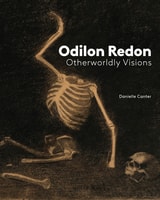
Odilon Redon
Otherworldly VisionsDanielle Canter
J. Paul Getty Trust, The, 2026
Enigmatic and haunting, the work of the French Symbolist Odilon Redon (1840–1916) intrigues and entrances all who encounter it. During the first half of his career, Redon created dramatically monochromatic charcoal drawings and lithographs, dreamily dark images that plumbed the depths of his wild imagination. Eventually, however, he also turned to pastels, adopting a bold colorful palette in fantastical explorations of the natural world.
Featuring more than seventy illustrations, this publication offers an overview of Redon's career. The informative, accessible essays examine his disparate influences from the worlds of religion, mythology, literature, and music, and demonstrate why Redon’s mysterious work is an important precursor to Surrealism.
This volume is published to accompany an exhibition on view at the J. Paul Getty Museum at the Getty Center from July 14 to October 18, 2026.
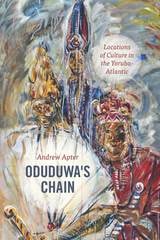
Oduduwa's Chain
Locations of Culture in the Yoruba-AtlanticAndrew Apter
University of Chicago Press, 2017
Focusing on Yoruba history and culture in Nigeria, Apter applies a generative model of cultural revision that allows him to identify formative Yoruba influences without resorting to the idea that culture and tradition are fixed. For example, Apter shows how the association of African gods with Catholic saints can be seen as a strategy of empowerment, explores historical locations of Yoruba gender ideologies and their variations in the Atlantic world, and much more. He concludes with a rousing call for a return to Africa in studies of the Black Atlantic, resurrecting a critical notion of culture that allows us to transcend Western inventions of African while taking them into account.