Results by title
783 books match the query 'History & Theory' and 12 start with o
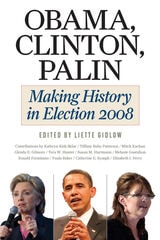
Obama, Clinton, Palin
Making History in Elections 2008Edited by Liette Gidlow
University of Illinois Press, 2011
Election 2008 made American history, but it was also the product of American history. Barack Obama, Hillary Clinton, and Sarah Palin smashed through some of the most enduring barriers to high political office, but their exceptional candidacies did not come out of nowhere. In these timely and accessible essays, a distinguished group of historians explores how the candidates both challenged and reinforced historic stereotypes of race and sex while echoing familiar themes in American politics and exploiting new digital technologies.
Contributors include Kathryn Kish Sklar on Clinton’s gender masquerade; Tiffany Ruby Patterson on the politics of black anger; Mitch Kachun on Michelle Obama and stereotypes about black women’s bodies; Glenda E. Gilmore on black women’s century of effort to expand political opportunities for African Americans; Tera W. Hunter on the lost legacy of Shirley Chisholm; Susan M. Hartmann on why the U.S. has not yet followed western democracies in electing a female head of state; Melanie Gustafson on Palin and the political traditions of the American West; Ronald Formisano on the populist resurgence in 2008; Paula Baker on how digital technologies threaten the secret ballot; Catherine E. Rymph on Palin’s distinctive brand of political feminism; and Elisabeth I. Perry on the new look of American leadership.
On Impotence
Life in an Age of Frenetic ParalysisPaolo Virno
Seagull Books, 2026
Contemporary life is marked by a paradoxical form of impotence. Whether in love, labor, or political struggle, we often find ourselves locked in a state of frenetic paralysis—unable to act as we wish or to endure what confronts us. This impotence is not born of lack, but of excess: an abundance of skills, capacities, and opportunities that, instead of taking form as coherent actions or speech, stagnate and turn in on themselves. In this thought-provoking meditation, philosopher Paolo Virno examines this strange impotence through the lens of classical thought, drawing especially on Aristotle and Marx.
To overcome this troubling state, Virno calls for a collective search for a shared spiritual and practical exercise aimed at reclaiming agency. He argues that only by learning to renounce renunciation can we cultivate deliberate words and timely decisions.
On Tyranny
Corrected and Expanded Edition, Including the Strauss-Kojève CorrespondenceLeo Strauss
University of Chicago Press, 2013

On Violence
A ReaderBruce B. Lawrence and Aisha Karim, eds.
Duke University Press, 2007
On Violence is divided into five sections. Underscoring the connection between violence and economic world orders, the first section explores the dialectical relationship between domination and subordination. The second section brings together pieces by political actors who spoke about the tension between violence and nonviolence—Gandhi, Hitler, and Malcolm X—and by critics who have commented on that tension. The third grouping examines institutional faces of violence—familial, legal, and religious—while the fourth reflects on state violence. With a focus on issues of representation, the final section includes pieces on the relationship between violence and art, stories, and the media. The editors’ introduction to each section highlights the significant theoretical points raised and the interconnections between the essays. Brief introductions to individual selections provide information about the authors and their particular contributions to theories of violence.
With selections by: Hannah Arendt, Walter Benjamin, Osama bin Laden, Pierre Bourdieu, André Breton, James Cone, Robert M. Cover, Gilles Deleuze, Friedrich Engels, Frantz Fanon, Michel Foucault, Sigmund Freud, Mohandas Gandhi, René Girard, Linda Gordon, Antonio Gramsci, Félix Guattari, G. W. F. Hegel, Adolf Hitler, Thomas Hobbes, Bruce B. Lawrence, Elliott Leyton, Catharine MacKinnon, Malcolm X, Dorothy Martin, Karl Marx, Chandra Muzaffar, James C. Scott, Kristine Stiles, Michael Taussig, Leon Trotsky, Simone Weil, Sharon Welch, Raymond Williams
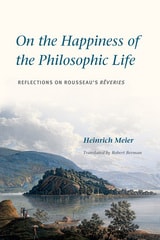
On the Happiness of the Philosophic Life
Reflections on Rousseau's "Rêveries" in Two BooksHeinrich Meier
University of Chicago Press, 2016
On the Happiness of the Philosophic Life presents Heinrich Meier’s confrontation with Rousseau’s Rêveries, the philosopher’s most beautiful and daring work, as well as his last and least understood. Bringing to bear more than thirty years of study of Rousseau, Meier unfolds his stunningly original interpretation in two parts.
The first part of On the Happiness of the Philosophic Life approaches the Rêveries not as another autobiographical text in the tradition of the Confessions and the Dialogues, but as a reflection on the philosophic life and the distinctive happiness it provides. The second turns to a detailed analysis of a work referred to in the Rêveries, the “Profession of Faith of the Savoyard Vicar,” which triggered Rousseau’s political persecution when it was originally published as part of Émile. In his examination of this most controversial of Rousseau’s writings, which aims to lay the foundations for a successful nonphilosophic life, Meier brings to light the differences between natural religion as expressed by the Vicar and Rousseau’s natural theology. Together, the two reciprocally illuminating parts of this study provide an indispensable guide to Rousseau and to the understanding of the nature of the philosophic life.
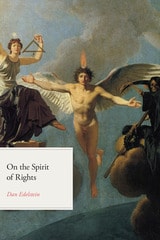
On the Spirit of Rights
Dan Edelstein
University of Chicago Press, 2018
In On the Spirit of Rights, Dan Edelstein answers this question by examining the complex genealogy of the rights that regimes enshrined in the American and French Revolutions. With a lively attention to detail, he surveys a sprawling series of debates among rulers, jurists, philosophers, political reformers, writers, and others who were all engaged in laying the groundwork for our contemporary systems of constitutional governance. Every seemingly new claim about rights turns out to be a variation on a theme, as late medieval notions were subtly repeated and refined to yield the talk of “rights” we recognize today. From the Wars of Religion to the French Declaration of the Rights of Man and of the Citizen to the 1948 Universal Declaration of Human Rights, On the Spirit of Rights is a sweeping tour through centuries of European intellectual history and an essential guide to our ways of thinking about human rights today.
Ontology of Production
Three EssaysNishida KitarM
Duke University Press, 2012
Agreeing with Marx that ontology is production and production is ontology, Nishida in these three essays—"Expressive Activity" (1925), "The Standpoint of Active Intuition" (1935), and "Human Being" (1938)—addresses sense and reason, language and thought, intuition and appropriation, ultimately arguing that in this concept of production, ideality and materiality are neither mutually exclusive nor oppositional but, rather, coimmanent. Nishida's forceful articulation of the radical nature of Marx's theory of production is, Haver contends, particularly timely in today's speculation-driven global economy. Nishida's reading of Marx, which points to the inseparability of immaterial intellectual labor and material manual labor, provokes a reconsideration of Marxism's utility for making sense of—and resisting—the logic of contemporary capitalism.
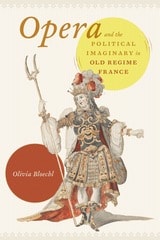
Opera and the Political Imaginary in Old Regime France
Olivia Bloechl
University of Chicago Press, 2018
In Opera and the Political Imaginary in Old Regime France, however, Olivia Bloechl reveals another layer of French opera’s political theater. The make-believe worlds on stage, she shows, involved not just fantasies of sovereign rule but also aspects of government. Plot conflicts over public conduct, morality, security, and law thus appear side-by-side with tableaus hailing glorious majesty. What’s more, opera’s creators dispersed sovereign-like dignity and powers well beyond the genre’s larger-than-life rulers and gods, to its lovers, magicians, and artists. This speaks to the genre’s distinctive combination of a theological political vocabulary with a concern for mundane human capacities, which is explored here for the first time.
By looking at the political relations among opera characters and choruses in recurring scenes of mourning, confession, punishment, and pardoning, we can glimpse a collective political experience underlying, and sometimes working against, ancienrégime absolutism. Through this lens, French opera of the period emerges as a deeply conservative, yet also more politically nuanced, genre than previously thought.
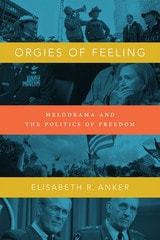
Orgies of Feeling
Melodrama and the Politics of FreedomElisabeth R. Anker
Duke University Press, 2014

Osiris, Volume 15
Nature and Empire: Science and the Colonial EnterpriseEdited by Roy MacLeod
University of Chicago Press, 2001

Our Long Heritage
Pages From the Books our Founding Fathers ReadWilson O. Clough
University of Minnesota Press, 1955
Our Long Heritage was first published in 1955. Minnesota Archive Editions uses digital technology to make long-unavailable books once again accessible, and are published unaltered from the original University of Minnesota Press editions.
This collection of readings, selected from the books and documents that were the major sources of American ideas and beliefs during the period of the founding of the democracy from 1750 to 1780, demonstrates that America has a long heritage behind its social and political philosophy. The excerpts are from the works that represent four different cultural or historical heritage, and they are presented in this order: the classical heritage, the English tradition to 1700, the continental stream, and the eighteenth century, both British and American. Mr. Clough, a former professor of English at the University of Wyoming, provides introductory and explanatory comment throughout the volume. The first book of its kind, it should be particularly useful in American studies programs.
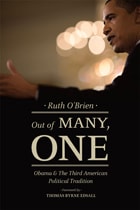
Out of Many, One
Obama and the Third American Political TraditionRuth O'Brien
University of Chicago Press, 2013
Bearing traces of Baruch Spinoza, John Dewey, and Saul Alinsky, Obama’s progressivism embraces the ideas of mutual reliance and collective responsibility, and adopts an interconnected view of the individual and the state. So, while Obama might emphasize difference, he rejects identity politics, which can create permanent minorities and diminish individual agency. Analyzing Obama’s major legislative victories—financial regulation, health care, and the stimulus package—O’Brien shows how they reflect a stakeholder society that neither regulates in the manner of the New Deal nor deregulates. Instead, Obama focuses on negotiated rule making and allows executive branch agencies to fill in the details when dealing with a deadlocked Congress. Similarly, his commitment to difference and his resistance to universal mandates underlies his reluctance to advocate for human rights as much as many on the Democratic left had hoped.