Results by title
763 books match the query 'Immigration & Emigration' and 11 start with o
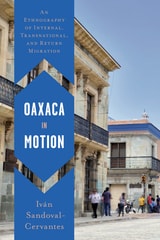
Oaxaca in Motion
An Ethnography of Internal, Transnational, and Return MigrationIván Sandoval-Cervantes
University of Texas Press, 2022
Migration is typically seen as a transnational phenomenon, but it happens within borders, too. Oaxaca in Motion documents a revealing irony in the latter sort: internal migration often is global in character, motivated by foreign affairs and international economic integration, and it is no less transformative than its cross-border analogue.
Iván Sandoval-Cervantes spent nearly two years observing and interviewing migrants from the rural Oaxacan town of Santa Ana Zegache. Many women from the area travel to Mexico City to work as domestics, and men are encouraged to join the Mexican military to fight the US-instigated “war on drugs” or else leave their fields to labor in industries serving global supply chains. Placing these moves in their historical and cultural context, Sandoval-Cervantes discovers that migrants’ experiences dramatically alter their conceptions of gender, upsetting their traditional notions of masculinity and femininity. And some migrants bring their revised views with them when they return home, influencing their families and community of origin. Comparing Oaxacans moving within Mexico to those living along the US West Coast, Sandoval-Cervantes clearly demonstrates the multiplicity of answers to the question, “Who is a migrant?”
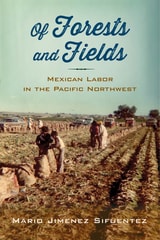
Of Forests and Fields
Mexican Labor in the Pacific NorthwestMario Jimenez Sifuentez
Rutgers University Press, 2016
Just looking at the Pacific Northwest’s many verdant forests and fields, it may be hard to imagine the intense work it took to transform the region into the agricultural powerhouse it is today. Much of this labor was provided by Mexican guest workers, Tejano migrants, and undocumented immigrants, who converged on the region beginning in the mid-1940s. Of Forests and Fields tells the story of these workers, who toiled in the fields, canneries, packing sheds, and forests, turning the Pacific Northwest into one of the most productive agricultural regions in the country.
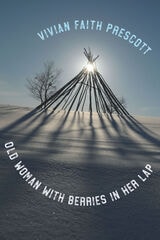
Old Woman with Berries in Her Lap
Vivian Faith Prescott
University of Alaska Press, 2022
Vivian Faith Prescott’s use of language is both a celebration of the richness of the Sámi languages and a mourning of the loss of language that occurs when a population is displaced and forced to exist in a totally foreign language space. According to Sámilinguist, professor, and politician Ole Henrik Magga, the Sámi languages have “very easily . . . one thousand lexemes with connections to snow, ice, freezing, and melting.” These lexemes frame many of Prescott’s poems, introducing ideas and feelings around the loss of language and culture.
A compelling insight into the Sámi culture from a contemporary poet’s eye, Old Woman with Berries in Her Lap juxtaposes past and present in an act of reclamation.

Old and New New Englanders
Immigration and Regional Identity in the Gilded AgeBluford Adams
University of Michigan Press, 2014
In Old and New New Englanders, Bluford Adams provides a reenvisioning of New England’s history and regional identity by exploring the ways the arrival of waves of immigrants from Europe and Canada transformed what it meant to be a New Englander during the Gilded Age. Adams’s intervention challenges a number of long-standing conceptions of New England, offering a detailed and complex portrayal of the relations between New England’s Yankees and immigrants that goes beyond nativism and assimilation. In focusing on immigration in this period, Adams provides a fresh view on New England’s regional identity, moving forward from Pilgrims, Puritans, and their descendants and emphasizing the role immigrants played in shaping the region’s various meanings. Furthermore, many researchers have overlooked the newcomers’ relationship to the regional identities they found here. Adams argues immigrants took their ties to New England seriously. Although they often disagreed about the nature of those ties, many immigrant leaders believed identification with New England would benefit their peoples in their struggles both in the United States and back in their ancestral lands.
Drawing on and contributing to work in immigration history, as well as American, gender, ethnic, and New England studies, this book is broadly concerned with the history of identity construction in the United States while its primary focus is the relationship between regional categories of identity and those based on race and ethnicity. With its interdisciplinary methodology, original research, and diverse chapter topics, the book targets both specialist and nonspecialist readers.

On Border Time
Temporal Violence in Migrant PolicingCristina Jo Pérez
University of Texas Press, 0
An examination of how time is used as a policing tactic in border and migrant policy.
Time is seldom on the migrant’s side. Migrants crossing the US southern border are “immediate threats,” according to the government agencies and politicians hell-bent on their capture and deportation, and those caught in the US are forced to endure grueling months in detention centers and in queues for judicial hearings.
On Border Time examines temporal dimensions of violence and associated ideological conditioning in an increasingly privatized and militarized immigration system. Visiting the National Border Patrol Museum in El Paso, Texas, Cristina Jo Pérez shows how state-supported histories of national “progress” and migrant “backwardness” manufacture political subjects. Meanwhile, the media and political narratives of imminent threat criminalize Brown men and boys, justifying Border Patrol shootings as preemptive national defense. Dramatically widening her lens, Pérez further considers how the anti-immigrant agenda bleeds into the future, through aggressive state intervention into migrants’ reproductive lives. From a heat-of-the-moment police encounter to a Houston gynecologist’s waiting room, On Border Time is a profound meditation on policies and discourses that put migrants out of sync and, by extension, out of the nation.
On Transits and Transitions
Trans Migrants and U.S. Immigration LawTristan Josephson
Rutgers University Press, 2023
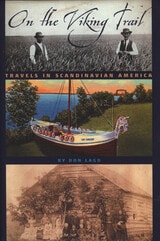
On the Viking Trail
Travels in Scandinavian AmericaDon Lago
University of Iowa Press, 2004
When his father developed Alzheimer’s disease, Don Lago realized that the stories and traditions of his Swedish ancestors would be lost along with the rest of his father’s memories. Haunted by this inevitable tragedy, Lago set out to fight back against forgetting by researching and reclaiming his long-lost Scandinavian roots.
Beginning his quest with a visit to his ancestral home of Gränna, Sweden, Lago explores all facets of Scandinavian America—Swedish, Danish, Finnish, Norwegian, and Icelandic—along the way. He encounters Icelanders living in the Utah desert, a Titanic victim buried beneath a gigantic Swedish coffee pot in Iowa, an Arkansas town named after the famous Swedish opera singer Jenny Lind, a real-life Legoland in southern California, and other unique remnants of America’s Scandinavian past. Visits to Sigurd Olson’s legendary cabin on the banks of Burntside Lake in the Boundary Waters of Minnesota and Carl Sandburg’s birthplace in Galesburg, Illinois, further provide Lago with an acute sense of the Scandinavian values that so greatly influenced, and continue to influence, American society.
More than just a travel memoir, On the Viking Trail places Scandinavian immigrants and their history within the wider sweep of American culture. Lago’s perceptive eye and amusing tales remind readers of all ethnic backgrounds that to truly appreciate America one must never forget its immigrant past.

One Nation Divisible
What America Was and What It Is BecomingMichael B. Katz
Russell Sage Foundation, 2006

Organised Crime and Migration
Criminal Groups, Corruption and the Displacement Crisis in Central America and MexicoVictorie Knox
University of London Press, 2026
Organized criminal groups have been involved in the abuse of migrants and people-smuggling in Mexico for many years. A displacement crisis has emerged as people with different potential protection needs flee a complex mix of factors in Central America, from violence and threats from criminal gangs, persecution by state actors, gender violence, and hate crime to the impact of climate change, natural disasters, and entrenched inequality and poverty.
Drawing on original interview material with key informants speaking in their professional capacity and with migrants and refugees during their journey, the book analyzes organized crime’s role in provoking human displacement and the abuse of migrants, reflecting on state responsibility, the role of policy, corruption, and impunity in perpetuating abuse, and the implications for human rights. In doing so, it provides a new understanding of the likely consequences of implementing or externalizing migration policy in regions affected by endemic criminal violence and corruption globally.
Origins and Destinations
The Making of the Second GenerationRenee Luthra
Russell Sage Foundation, 2018
Using surveys of second generation immigrant adults in New York and Los Angeles, Origins and Destinations explains why second generation experiences differ across national origin groups and why immigrant offspring with the same national background often follow different trajectories. Inter-group disparities stem from contexts of both emigration and immigration. Origin countries differ in value orientations: immigrant parents transmit lessons learned in varying contexts of emigration to children raised in the U.S. A system of migration control sifts immigrants by legal status, generating a context of immigration that favors some groups over others. Both contexts matter: schooling is higher among immigrant children from more secular societies (South Korea) than among those from more religious countries (the Philippines). When immigrant groups enter the U.S. migration system through a welcoming door, as opposed to one that makes authorized status difficult to achieve, education propels immigrant children to better jobs.
Diversity is also evident among immigrant offspring whose parents stem from the same place. Immigrant children grow up with homeland connections, which can both hurt and harm: immigrant offspring get less schooling when a parent lives abroad, but more schooling if parents in the U.S. send money to relatives living abroad. Though all immigrants enter the U.S. as non-citizens, some instantly enjoy legal status, while others spend years in the shadows. Children born abroad, but raised in the U.S. are all everyday Americans, but only some have become de jure Americans, a difference yielding across-the-board positive effects, even among those who started out in the same country.
Disentangling the sources of diversity among today’s population of immigrant offspring, Origins and Destinations provides a compelling new framework for understanding the second generation that is transforming America.
Our Blood
The Social Experience of HeritasMichael M. Bell, Loka Ashwood and Jay Orne
University of Chicago Press, 2026
From whom do I come? Our Blood describes the central importance of our sense not just of our heritage, but our embodied heritage: that our past is in our bodies and runs in our blood, and that our embodied past is central to our futures. Deeply felt heritas, as Michael M. Bell, Loka Ashwood, and Jay Orne call it, can be a source of great love and kindness for one another. But it can also be a beautiful horror, the source of some of our greatest hate and meanness towards one another. We think of our embodied heritage as natural and historical facts, beyond our choice, and therefore free of manipulation for social gain. We think of it as spirited presences in our bodies that we did not choose. We think of its origins as external to us, whether we are talking about family, class, caste, places, things, ethnoraciality, or our professions. We think of it as legitimate and rightful, therefore. But we do choose. We do select. Bell, Ashwood, and Orne argue that greater awareness of heritas’s social origins and social selectivity can help us cultivate a wider sense of mutual care and ease the divisiveness of our time. Ultimately, Our Blood asks us all to consider heritas, and in doing so, to perhaps even reconsider our very selves.