Results by title
129 books match the query 'Individual Philosophers' and 6 start with o
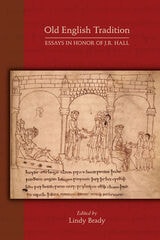
Old English Tradition
Essays in Honor of J. R. HallEdited by Lindy Brady
Arizona Center for Medieval and Renaissance Studies, 2021
Old English Tradition contains eighteen new essays by leading scholars in the field of Old English literary studies. The collection is centered around five key areas of research—Old English poetics, Anglo-Saxon Christianity, Beowulf, codicology, and early Anglo-Saxon studies—on which the work of scholar J. R. Hall, the volume’s honorand, has been influential over the course of his career.
The volume’s contents range from fresh insights on individual Old English poems such as The Wife’s Lament and Beowulf; new studies in Old English metrics and linguistics; codicological examinations of individual manuscripts; fresh editions of understudied texts; and innovative examinations of the role of early antiquarians in shaping the field of Old English literary studies as we know it today.

On Obliteration
An Interview with Françoise Armengaud Concerning the Work of Sacha SosnoEmmanuel Levinas
Diaphanes, 2019
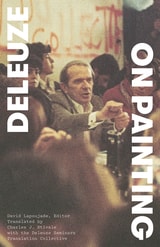
On Painting
Courses, March-June 1981Gilles Deleuze
University of Minnesota Press, 2025
Available for the first time in English: the complete and annotated transcripts of Deleuze’s 1981 seminars on painting
From 1970 until 1987, Gilles Deleuze held a weekly seminar at the Experimental University of Vincennes and, starting in 1980, at Saint-Denis. In the spring of 1981, he began a series of eight seminars on painting and its intersections with philosophy. The recorded sessions, newly transcribed and translated into English, are now available in their entirety for the first time. Extensively annotated by philosopher David Lapoujade, On Painting illuminates Deleuze’s thinking on artistic creation, significantly extending the lines of thought in his book Francis Bacon.
Through paintings and writing by Rembrandt, Delacroix, Turner, Cézanne, Van Gogh, Klee, Pollock, and Bacon, Deleuze explores the creative process, from chaos to the pictorial fact. The introduction and use of color feature prominently as Deleuze elaborates on artistic and philosophical concepts such as the diagram, modulation, code, and the digital and the analogical. Through this scrutiny, he raises a series of profound and stimulating questions for his students: How does a painter ward off grayness and attain color? What is a line without contour? Why paint at all?
Written and thought in a rhizomatic manner that is thoroughly Deleuzian—strange, powerful, and novel—On Painting traverses both the conception of art history and the possibility of color as a philosophical concept.
Retail e-book files for this title are screen-reader friendly with images accompanied by short alt text and/or extended descriptions.

On Spinoza
Courses, November 1980–March 1981Gilles Deleuze
University of Minnesota Press, 2026
Through newly transcribed and translated lectures, Deleuze explores Spinoza’s philosophy concerning questions of good and evil and humanity’s potential for realizing a full life
Available for the first time in English, On Spinoza presents the annotated transcripts of Gilles Deleuze’s fifteen seminars on the seventeenth-century philosopher’s Ethics, delivered at Experimental University Center at Vincennes. Spinoza’s ambitious treatise was central to Deleuze’s thought, and his course provides an accessible framework for understanding the vitality of Spinoza’s philosophy.
In an informal classroom setting, Deleuze addresses fundamental aspects of Spinoza’s thought: How does one undo the negativity of harmful passions such as hate, resentment, and envy? How can a system of moral judgment based on good and evil be replaced by a more sophisticated ethics of the good and the bad? And since such questions commit Spinoza to a new theory of signs, Deleuze also delves into his thinking on how these signs should guide human existence and the differences between concepts of eternity, experienced in the here and now, and the immortality promised by philosophy and religion.
Building gradually from session to session, Deleuze shows how Spinoza rejects a hierarchical reality dominated by an authoritarian and impenetrable God, instead proposing a world ruled by light and reason in which all beings are equal. Annotated by David Lapoujade and including recorded exchanges with Deleuze’s students, On Spinoza offers a rare window into Deleuze’s teaching, offering readers a guide for linking Spinoza to other philosophers—including Deleuze himself.
Retail e-book files for this title are screen-reader friendly with image accompanied by short alt text and/or extended description.
On the Heights of Despair
E. M. Cioran
University of Chicago Press, 1992
On the Heights of Despair shows Cioran's first grappling with themes he would return to in his later, mature works: despair and decay, absurdity and alienation, futility and the irrationality of existence. It also presents Cioran as a connoisseur of apocalypse, a theoretician of despair, for whom writing and philosophy both share the "lyrical virtues" that alone lead to a metaphysical revelation.
Oppression and Liberty
Simone Weil
University of Massachusetts Press, 1973
Simone Weil was an extraordinary woman whose brief life was intensely devoted to searching for answers to some of the gravest questions inherent in the human condition: the nature of justice, the reasons for human exploitation, the problem of faith. Although debate still lingers about the interpretation of her life and her writings, many contemporary scholars consider her one of the most brilliant, original minds of the twentieth century. This collection of essays by Simone Weil deals with the controversial sociopolitical issues which have confronted us since the time of the French Revolution. The first essay was written in 1932 or 1933 when she was still in her twenties. The last remained unfinished when she died in England at the age of 34, a French-Jewish refugee from Nazi-occupied France.
The essays take a long, close look at Marx and Marxism, and at socialism versus capitalism vis-à-vis labor and the working class. Weil evaluates individuals, ideologies, and institutions with reference to two kinds and uses of power: oppression, which leads ultimately to enslavement or death; and liberty, which leads to humaneness, justice, and charity.