Results by title
403 books match the query 'Journalism' and 8 start with o
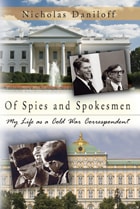
Of Spies and Spokesmen
My Life as a Cold War CorrespondentNicholas Daniloff
University of Missouri Press, 2008
An American reporter of Russian heritage assigned to Soviet-era Moscow might seem to have an edge on his colleagues, but when he’s falsely accused of spying, any advantage quickly evaporates. . . . .
As a young UPI correspondent in Moscow during the early 1960s, Nicholas Daniloff hoped to jump-start his career in his father’s homeland, but he soon learned that the Cold War had its own rules of engagement. In this riveting memoir, he describes the reality of journalism behind the Iron Curtain: how Western reporters banded together to thwart Soviet propagandists, how their “official sources” were almost always controlled by the KGB—and how those sources would sometimes try to turn newsmen into collaborators.
Leaving Moscow for Washington in 1965, Daniloff honed his skills at the State Department, then returned to Moscow in 1981 to find a more open society. But when the FBI nabbed a Soviet agent in 1986, Daniloff was arrested in retaliation and thrown into prison as a spy—an incident that threatened to undo the Reykjavik summit until top aides to Reagan and Gorbachev worked out a solution.
In addition to recounting a career in the thick of international intrigue, Of Spies and Spokesmen is brimming with inside information about historic events. Daniloff tells how the news media played a crucial role in resolving the Cuban Missile Crisis, recalls the emotional impact of the JFK assassination on Soviet leadership, and describes the behind-the-scenes struggles that catapulted Mikhail Gorbachev to power. He even shares facts not told to the public: how the SAC would warn Moscow that its submarines were too close to American shores, why the Soviets shot down the KAL airliner without visual identification, and how American reporters in Moscow sometimes did dangerous favors for our government that could easily have been mistaken for espionage.
Daniloff sheds light not only on prominent figures such as Nikita Khrushchev and Henry Kissinger but also on suspected spies Frederick Barghoorn, John Downey, and ABC correspondent Sam Jaffe—unfairly branded a Soviet agent by the FBI. In addition, he assesses the performance of Henry Shapiro, dean of American journalists in Moscow, whose forty years in the adversary’s capital often provoke questions about his role and reputation.
In describing how the Western press functioned in the old Soviet Union—and how it still functions in Washington today—Daniloff shows that the Soviet Russia he came to know was far more complex than the “evil empire” painted by Ronald Reagan: a web of propaganda and manipulation, to be sure, but also a place of hospitality and friendship. And with Russia still finding its way toward a new social and political order, he reminds us that seventy years of Communist rule left a deep impression on its national psyche. As readable as it is eye-opening, Of Spies and Spokesmenprovides a new look at that country’s heritage—and at the practice of journalism in times of crisis.

On Television and Journalism
Pierre Bourdieu
Pluto Press, 1998
On The Condition of Anonymity
Unnamed Sources and the Battle for JournalismMatt Carlson
University of Illinois Press, 2012
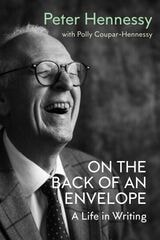
On the Back of an Envelope
A Life in WritingPeter Hennessy
Haus Publishing, 2025
As one of Britain’s foremost constitutional experts and contemporary historians, Peter Hennessy has spent his professional life unpicking the arcane world of Whitehall and Westminster. He began his career as a journalist for the Times, the Economist, and the Financial Times, developing a network of insider contacts who helped him shine a light on some of the dustiest corners of the British establishment. As a journalist, prize-winning contemporary historian, and political commentator, he has chronicled the workings of the British state with wit, affection, and a healthy sense of the absurd over a five-decade career. Now a crossbench peer, he has, in his own words, “moved in with his exhibits.” Hennessy is also a stalwart of BBC election night coverage and a regular commentator on BBC Radio 4, bringing a historical and constitutional perspective on current events.
In this new volume, he brings together selected journalism, unpublished lectures, and new writing alongside personal recollections and reflections on his time observing postwar Britain, how it is governed, and those who do the governing. He reflects on the making and unmaking of prime ministers from Attlee to Truss, life in the House of Lords, and the changing constitutional landscape in the wake of Brexit and amid uncertainty about the future of the Union. Interspersed with lectures, journalism, and new pieces, Hennessy also looks back at a fascinating career, reflecting on his own experiences as a young green graduate navigating the hard-nosed world of Fleet Street in the 1970s, bringing to life a cast of characters from a world now largely gone. He revisits his time as a public historian, academic, and crossbench peer with a levity reflected in his belief that history is “gossip with footnotes.”
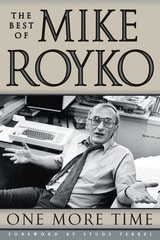
One More Time
The Best of Mike RoykoMike Royko
University of Chicago Press, 1999
"A treasure trove lies between these covers. Royko was in a class by himself. He was a true original."—Ann Landers
"The joy of One More Time is Royko in his own words."—Mary Eileen O'Connell, New York Times Book Review
"Reading a collection of Royko's columns is even more of a pleasure than encountering them one by one, and that is a large remark for he rarely wrote a piece that failed to wake you up with his hard-earned moral wit. Three cheers for Royko!"—Norman Mailer
"Powerful, punchy, amazingly contemporary."—Neil A. Grauer, Cleveland Plain Dealer
"This crackling collection of his own favorite columns as well as those beloved by his fans reminds us just how much we miss the gruff, compassionate voice of Mike Royko."—Jane Sumner, Dallas Morning News
"A marvelous road map through four decades of America."—Elizabeth Taylor, Chicago Tribune Books
"Royko was an expert at finding universal truths in parochial situations, as well as in the larger issues—war and peace, justice and injustice, wealth and poverty—he examined. Think of One More Time as one man's pungent commentary on life in these United States over the last few decades."—Booklist
"Royko was one of the most respected and admired people in the business, by readers and colleagues alike. . . . Savor [his sketches] while you can."—Jonathan Yardley, Washington Post Book World
"Book collections of columns aren't presumed to be worth reading. This one is, whether or not you care about newspapering or Chicago."—Neil Morgan, San Diego Union-Tribune
"A treasure house for journalism students, for would-be writers, for students of writing styles, for people who just like to laugh at the absurdity of the human condition or, as Studs Terkel said, for those who will later seek to learn what it was really like in the 20th century."—Georgie Anne Geyer, Washington Times
"Full of astonishments, and the greatest of these is Royko's technical mastery as a writer."—Hendrik Hertzberg, New Yorker
"A great tribute to an American original, a contrarian blessed with a sense of irony and a way with words."—Bob Minzesheimer, USA Today
"In this posthumous collection of his columns, journalist Royko displays the breezy wit that made him so beloved in the Windy City."—People
Only Efficient Instrument
American Women Writers And Periodical, 1837-1916Aleta Feinsod Cane
University of Iowa Press, 2001
Many farsighted women writers in nineteenth-century America made thoughtful and sustained use of newspapers and magazines to effect social and political change. “The Only Efficient Instrument”: American Women Writers and the Periodical, 1837-1916 examines these pioneering efforts and demonstrates that American women had a vital presence in the political and intellectual communities of their day.
Women writers and editors of diverse social backgrounds and ethnicities realized very early that the periodical was a powerful tool for education and social reform—it was the only efficient instrument to make themselves and their ideas better known. This collection of critical essays explores American women's engagement with the periodical press and shows their threefold use of the periodical: for social and political advocacy; for the critique of gender roles and social expectations; and for refashioning the periodical as a more inclusive genre that both articulated and obscured such distinctions as class, race, and gender.
Including essays on familiar figures such as Margaret Fuller, Harriet Beecher Stowe, Kate Chopin, and Charlotte Perkins Gilman, “The Only Efficient Instrument” also focuses on writings from lesser-known authors, including Native American Zitkala-Sä, Mexican American María Cristina Mena, African American Frances Ellen Watkins Harper, and the Lowell factory workers. Covering nearly eighty years of publishing history, from the press censure of the outspoken Angelina Grimké in 1837 to the last issue of Gilman's Forerunner in 1916, this fascinating collection breaks new ground in the study of the women's rights movement in America.
Oriana Fallaci
The Woman and the MythSanto L. Aricò
Southern Illinois University Press, 1998
Internationally acclaimed as a journalist, war correspondent, interviewer, and novelist, Oriana Fallaci’s public persona reached almost mythic proportions. It is a myth Fallaci herself created, according to Santo L. Aricò, who probes the psychological forces that motivated one of the twentieth century’s most famous and successful women writers.
Using his own extensive interviews with the writer, Aricò maps out Fallaci’s journey through life, paying particular attention to her ongoing and painstaking attempts to establish her own mythical status. He first examines her career as a literary journalist, emphasizing the high quality of her writing. From there, he concentrates on how Fallaci’s personal image began to emerge in her writings, as well as the way in which, through her powerful narratives, she catapulted herself into the public eye as her own main character.
Out of Left Field
A Sportswriter’s Last WordStan Isaacs. Edited and with an Introduction by Aram Goudsouzian
University of Illinois Press, 2024
“Stan Isaacs is directly responsible for my television career--and much of how I approached what I’ve said and whom I’ve said it about.” --Keith Olbermann
Iconoclastic and irreverent, Stan Isaacs was part of a generation that bucked the sports establishment with a skepticism for authority, an appreciation for absurdity, and a gift for placing athletes and events within the context of their tumultuous times. Isaacs draws on his trademark wink-and-a-grin approach to tell the story of the long-ago Brooklyn that formed him and a career that placed him amidst the major sporting events of his era. Mixing reminiscences with column excerpts, Isaacs recalls antics like stealing a Brooklyn Dodgers pennant after the team moved to Los Angeles and his many writings on Paul Revere’s horse. But Isaacs also reveals the crusading and humanist instincts that gave Black athletes like Muhammad Ali a rare forum to express their views and celebrated the oddball, unsung Mets over the straitlaced Yankees.
Insightful and hilarious, Out of Left Field is the long-awaited memoir of the influential sportswriter and his adventures in the era of Jim Brown, Arthur Ashe, and the Amazin’ Mets.