Results by title
151 books match the query 'Liberalism' and 4 start with o
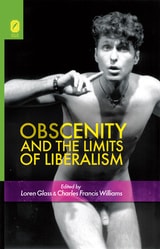
Obscenity and the Limits of Liberalism
Edited by Loren Glass and Charles Francis Williams
The Ohio State University Press, 2011
Over the course of the nineteenth century in both Europe and the United States, the state usurped the traditional authority of the church in regulating sexual expression and behavior. In the same century philosophers of classical liberalism identified that state function as a threat to individual liberty. Since then, liberalism has provided the framework for debates over obscenity around the globe.
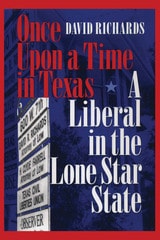
Once Upon a Time in Texas
A Liberal in the Lone Star StateBy David Richards
University of Texas Press, 2002
Once upon a time in Texas...there were liberal activists of various stripes who sought to make the state more tolerant and more tolerable. David Richards was one of them. In this fast-paced, often humorous memoir, he remembers the players, the strategy sessions, the legal and political battles, and the wins and losses that brought significant gains in civil rights, voter rights, labor law, and civil liberties to the people of Texas from the 1950s to the 1990s.
In his work as a lawyer, Richards was involved in cases covering voters' rights, school finance reform, and a myriad of civil liberties and free speech cases. In telling these stories, he vividly evokes the "glory days" of Austin liberalism, when a who's who of Texas activists plotted strategy at watering holes such as Scholz Garden and the Armadillo World Headquarters. Likewise, he offers vivid portraits of liberal politicians from Ralph Yarborough to Ann Richards (his former wife), progressive journalists such as Molly Ivins and the Texas Observer staff, and the hippies, hellraisers, and musicians who all challenged Texas's conservative status quo.
Open Society Unresolved
The Contemporary Relevance of a Contested IdeaChristof Royer
Central European University Press, 2023
Is the concept of open society still relevant in the 21st century? Do the current social, moral, and political realities call for a drastic revision of this concept? Here fifteen essays address real-world contemporary challenges to open society from a variety of perspectives. What unites the individual authors and chapters is an interest in open society’s continuing usefulness and relevance to address current problems. And what distinguishes them is a rich variety of geographical and cultural backgrounds, and a wide range of academic disciplines and traditions.
While focusing on probing the contemporary relevance of the concept, several chapters approach it historically. The book features a comprehensive introduction to the history and current ‘uses’ of the theory of open society. The authors link the concept to contemporary themes including education, Artificial Intelligence, cognitive science, African cosmology, colonialism, and feminism. The diversity of viewpoints in the analysis reflects a commitment to plurality that is at the heart of this book and of the idea of open society itself.
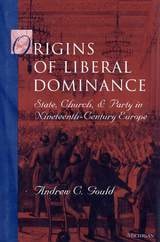
Origins of Liberal Dominance
State, Church, and Party in Nineteenth-Century EuropeAndrew C. Gould
University of Michigan Press, 1999