Results by title
1488 books match the query 'Media Studies' and 25 start with o
Observing Film Art
Themes from the Work of David BordwellCharlie Keil
Rutgers University Press, 2027
When David Bordwell died in 2024, he left behind a legacy of film scholarship and criticism whose influence is unmatched. Coauthor of a pair of textbooks adopted across the globe and the main force behind a blog read by thousands, Bordwell has influenced generations of film students, filmmakers, and film critics. Observing Film Art examines the breadth of Bordwell’s work through the perspectives of those who knew him best, collaborators, former students, and critics among them. This is the first collection devoted to the work of Bordwell, and it gives equal attention to each facet of his prodigious scholarship, structured to highlight his interest in theory, history, and analysis and criticism. The cornerstones of his approach to film study, including formalism, cognitivism, and historical poetics, are all examined in detail, as are key works, including The Classical Hollywood Cinema (coauthored with Kristin Thompson and Janet Staiger) and Narration in the Fiction Film.
On Following
Straight Lines and Infrastructural SensibilitiesIna Blom
University of Chicago Press, 2027
A cross-disciplinary examination of the relation between straight lines and sensory capacities in modern art, architecture, and music.
The human hand cannot draw a straight line, claimed nineteenth-century polymath John Ruskin. Straight lines are typically seen as incompatible with human bodies, and this is one of the reasons why their proliferation in modern art and architecture has been associated with the rational, universalist perspectives of a new industrial culture. With On Following, art historian Ina Blom traces a different genealogy of straight lines through modern and contemporary art, offering a perspective on straight-line works that addresses the close connections between the sensory capacities and experiences of human bodies and new media infrastructures. She considers what happens to aesthetic expression when bodies are surrounded by technologies that are themselves sensing systems.
Taking an expansive look at visual art, architecture, film, and music from the late nineteenth century to the present day, Blom considers practitioners including Walter De Maria, Marcel Duchamp, August Endell, Liam Gillick, Raoul Hausmann, Florian Hecker, Jenny Holzer, Ryoji Ikeda, Piero Manzoni, László Moholy-Nagy, Krzysztof Penderecki, Superstudio, Mies van der Rohe, and La Monte Young.
On Racial Icons
Blackness and the Public ImaginationFleetwood, Nicole R
Rutgers University Press, 2015
Nicole R. Fleetwood’s answers to these questions will change the way you think about the next photograph that you see depicting a racial event, black celebrity, or public figure. In On Racial Icons, Fleetwood focuses a sustained look on photography in documenting black public life, exploring the ways in which iconic images function as celebrations of national and racial progress at times or as a gauge of collective racial wounds in moments of crisis.
Offering an overview of photography’s ability to capture shifting race relations, Fleetwood spotlights in each chapter a different set of iconic images in key sectors of public life. She considers flash points of racialized violence in photographs of Trayvon Martin and Emmett Till; the political, aesthetic, and cultural shifts marked by the rise of pop stars such as Diana Ross; and the power and precarity of such black sports icons as Serena Williams and LeBron James; and she does not miss Barack Obama and his family along the way. On Racial Icons is an eye-opener in every sense of the phrase.
On The Wire
Linda Williams
Duke University Press, 2014
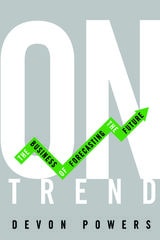
On Trend
The Business of Forecasting the FutureDevon Powers
University of Illinois Press, 2019
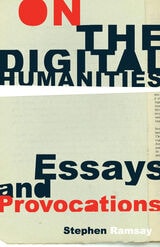
On the Digital Humanities
Essays and ProvocationsStephen Ramsay
University of Minnesota Press, 2023
A witty and incisive exploration of the philosophical conundrums that animate the digital humanities
Since its inception, the digital humanities has been repeatedly attacked as a threat to the humanities: warnings from literary and cultural theorists of technology overtaking English departments and the mechanization of teaching have peppered popular media. Stephen Ramsay’s On the Digital Humanities, a collection of essays spanning the personal to the polemic, is a spirited defense of the field of digital humanities.
A founding figure in what was once known as “humanities computing,” Ramsay has a well-known and contentious relationship with what is now called the digital humanities (DH). Here Ramsay collects and updates his most influential and notorious essays and speeches from the past fifteen years, considering DH from an array of practical and theoretical perspectives. The essays pursue a broad variety of themes, including the nature of data and its place in more conventional notions of text and interpretation, the relationship between the constraints of computation and the more open-ended nature of the humanities, the positioning of practical skills and infrastructures in both research and pedagogical contexts, the status of DH as a program for political and social action, and personal reflections on the author’s journey into the field as both a theorist and a technologist.
These wide-ranging essays all center around one idea: that DH not forsake its connection to the humanities. While “digital humanities” may sound like an entirely new form of engagement with the artifacts of human culture, Ramsay argues that the field well reveals what is most essential to humanistic inquiry.
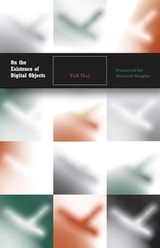
On the Existence of Digital Objects
Yuk Hui
University of Minnesota Press, 2016
Digital objects, in their simplest form, are data. They are also a new kind of industrial object that pervades every aspect of our life today—as online videos, images, text files, e-mails, blog posts, Facebook events.Yet, despite their ubiquity, the nature of digital objects remains unclear.
On the Existence of Digital Objects conducts a philosophical examination of digital objects and their organizing schema by creating a dialogue between Martin Heidegger and Gilbert Simondon, which Yuk Hui contextualizes within the history of computing. How can digital objects be understood according to individualization and individuation? Hui pursues this question through the history of ontology and the study of markup languages and Web ontologies; he investigates the existential structure of digital objects within their systems and milieux. With this relational approach toward digital objects and technical systems, the book addresses alienation, described by Simondon as the consequence of mistakenly viewing technics in opposition to culture.
Interdisciplinary in philosophical and technical insights, with close readings of Husserl, Heidegger, and Simondon as well as the history of computing and the Web, Hui’s work develops an original, productive way of thinking about the data and metadata that increasingly define our world.
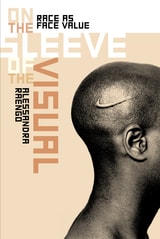
On the Sleeve of the Visual
Race as Face ValueAlessandra Raengo
Dartmouth College Press, 2013
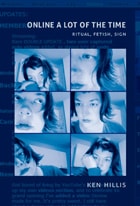
Online a Lot of the Time
Ritual, Fetish, SignKen Hillis
Duke University Press, 2009
Hillis analyzes forms of ritual and fetishism made possible through second-generation virtual environments such as Second Life and the popular practice of using webcams to “lifecast” one’s life online twenty-four hours a day, seven days a week. Discussing how people create and identify with their electronic avatars, he shows how the customs of virtual-world chat reinforce modern consumer-based subjectivities, allowing individuals to both identify with and distance themselves from their characters. His consideration of web-cam cultures links the ritual of exposing one’s life online to a politics of visibility. Hillis argues that these new “rituals of transmission” are compelling because they provide a seemingly material trace of the actual person on the other side of the interface.
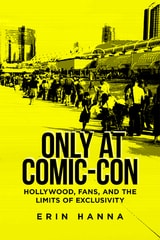
Only at Comic-Con
Hollywood, Fans, and the Limits of ExclusivityErin Hanna
Rutgers University Press, 2020
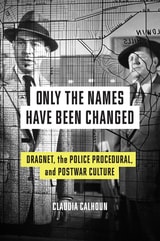
Only the Names Have Been Changed
Dragnet, the Police Procedural, and Postwar CultureClaudia Calhoun
University of Texas Press, 2022
Winner of the 2022 Peter C. Rollins Book Prize, Northeast Popular Culture Association (NEPCA)
In the postwar era, the police procedural series Dragnet informed Americans on the workings of the criminal justice system and instructed them in their responsibilities as citizens.
Among shifting politics, tastes, and technology in television history, one genre has been remarkably persistent: the cop show. Claudia Calhoun returns to Dragnet, the pioneering police procedural and an early transmedia franchise, appearing on radio in 1949, on TV and in film in the 1950s, and in later revivals. More than a popular entertainment, Dragnet was a signifier of America’s postwar confidence in government institutions—and a publicity vehicle for the Los Angeles Police Department.
Only the Names Have Been Changed shows how Dragnet’s “realistic” storytelling resonated across postwar culture. Calhoun traces Dragnet’s “semi-documentary” predecessors, and shows how Jack Webb, Dragnet’s creator, worked directly with the LAPD as he produced a series that would likewise inspire public trust by presenting day-to-day procedural justice, rather than shootouts and wild capers. Yet this realism also set aside the seething racial tensions of Los Angeles as it was. Dragnet emerges as a foundational text, one that taught audiences to see police as everyday heroes not only on TV but also in daily life, a lesson that has come under scrutiny as Americans increasingly seek to redefine the relationship between policing and public safety.
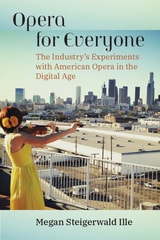
Opera for Everyone
The Industry's Experiments with American Opera in the Digital AgeMegan Steigerwald Ille
University of Michigan Press, 2024
Operation Valhalla
Writings on War, Weapons, and MediaFriedrich Kittler. Edited and translated by Ilinca Iurascu, Geoffrey Winthrop-Young, and Michael Wutz
Duke University Press, 2021
Organize
Timon Beyes
University of Minnesota Press, 2019
A pioneering systematic inquiry into—and mapping of—the field of media and organization
Media organize things into patterns and relations. As intermediaries among people and between people and worlds, media shape sociotechnical orders. At the same time, media are organized: while they condition different organizational forms and processes, they, too, are formed and can be re-formed. This intimate relation of media and organizing is timeless. Yet arguably, digital media technologies repose the question of organization—and thus of power and domination, control and surveillance, disruption and emancipation. Bringing together leading media thinkers and organization theorists, this book interrogates organization as an effect and condition of media. How can we understand the recursive relation between media and organization? How can we think, explore, critique, and perhaps alter the organizational bodies and scripts that shape contemporary life?
Organize will be of interest to scholars and students of new and old media, social organization, and technology. Moreover, the dialogical form of these essays provides a concise and path-breaking view on the recursive relation between technological media and social organization. The book therefore establishes and maps “media and organization” as a highly relevant field of inquiry, appealing to those with a critical interest in the technological conditioning of the social.
Otaku and the Struggle for Imagination in Japan
Patrick Galbraith
Duke University Press, 2019

Otaku
Japan's Database AnimalsHiroki Azuma
University of Minnesota Press, 2009
Hiroki Azuma’s Otaku offers a critical, philosophical, and historical inquiry into the characteristics and consequences of this consumer subculture. For Azuma, one of Japan’s leading public intellectuals, otaku culture mirrors the transformations of postwar Japanese society and the nature of human behavior in the postmodern era. He traces otaku’s ascendancy to the distorted conditions created in Japan by the country’s phenomenal postwar modernization, its inability to come to terms with its defeat in the Second World War, and America’s subsequent cultural invasion. More broadly, Azuma argues that the consumption behavior of otaku is representative of the postmodern consumption of culture in general, which sacrifices the search for greater significance to almost animalistic instant gratification. In this context, culture becomes simply a database of plots and characters and its consumers mere “database animals.”
A vital non-Western intervention in postmodern culture and theory, Otaku is also an appealing and perceptive account of Japanese popular culture.

Our Gang
A Racial History of The Little RascalsJulia Lee
University of Minnesota Press, 2015
It was the age of Jim Crow, riddled with racial violence and unrest. But in the world of Our Gang, black and white children happily played and made mischief together. They even had their own black and white version of the KKK, the Cluck Cluck Klams—and the public loved it.
The story of race and Our Gang, or The Little Rascals, is rife with the contradictions and aspirations of the sharply conflicted, changing American society that was its theater. Exposing these connections for the first time, Julia Lee shows us how much this series, from the first silent shorts in 1922 to its television revival in the 1950s, reveals about black and white American culture—on either side of the silver screen. Behind the scenes, we find unconventional men like Hal Roach and his gag writers, whose Rascals tapped into powerful American myths about race and childhood. We meet the four black stars of the series—Ernie “Sunshine Sammy” Morrison, Allen “Farina” Hoskins, Matthew “Stymie” Beard, and Billie “Buckwheat” Thomas—the gang within the Gang, whose personal histories Lee pursues through the passing years and shifting political landscape.
In their checkered lives, and in the tumultuous life of the series, we discover an unexplored story of America, the messy, multiracial nation that found in Our Gang a comic avatar, a slapstick version of democracy itself.

Our Man in Warszawa
How the West Misread PolandJo Harper
Central European University Press, 2021
Written by a Brit who has lived in Poland for more than twenty years, this book challenges some accepted thinking in the West about Poland and about the rise of Law and Justice (PiS) as the ruling party in 2015. It is a remarkable account of the Polish post-1989 transition and contemporary politics, combining personal views and experience with careful fact and material collections. The result is a vivid description of the events and scrupulous explanations of the political processes, and all this with an interesting twist – a perspective of a foreigner and insider at the same time. Settled in the position of participant observer, Jo Harper combines the methods of macro and micro analysis with CDA, critical discourse analysis. He presents and interprets the constituent elements and issues of contemporary Poland: the main political forces, the Church, the media, issues of gender, the Russian connection, the much-disputed judicial reform and many others.
A special feature of the book is the detailed examination of the coverage of the Poland’s latest two elections, one in 2019 (parliamentary) and the other in 2020 (presidential) in the British media, an insightful and witty specimen of comparative cultural and political analysis.
OurSpace
Resisting the Corporate Control of CultureChristine Harold
University of Minnesota Press, 2009
Culture jamming is so twentieth century! What’s next?
When reporters asked about the Bush administration’s timing in making their case for the Iraq war, then Chief of Staff Andrew Card responded that “from a marketing point of view, you don’t introduce new products in August.” While surprising only in its candor, this statement signified the extent to which consumer culture has pervaded every aspect of life. For those troubled by the long reach of the marketplace, resistance can seem futile. However, a new generation of progressive activists has begun to combat the media supremacy of multinational corporations by using the very tools and techniques employed by their adversaries.
In OurSpace, Christine Harold examines the deployment and limitations of “culture jamming” by activists. These techniques defy repressive corporate culture through parodies, hoaxes, and pranks. Among the examples of sabotage she analyzes are the magazine Adbusters’s spoofs of familiar ads and the Yes Men’s impersonations of company spokespersons.While these strategies are appealing, Harold argues that they are severely limited in their ability to challenge capitalism. Indeed, many of these tactics have already been appropriated by corporate marketers to create an aura of authenticity and to sell even more products. For Harold, it is a different type of opposition that offers a genuine alternative to corporate consumerism. Exploring the revolutionary Creative Commons movement, copyleft, and open source technology, she advocates a more inclusive approach to intellectual property that invites innovation and wider participation in the creative process.From switching the digital voice boxes of Barbie dolls and G.I. Joe action figures to inserting the silhouetted image of Abu Ghraib’s iconic hooded and wired victim into Apple’s iPod ads, high-profile instances of anticorporate activism over the past decade have challenged, but not toppled, corporate media domination. OurSpace makes the case for a provocative new approach by co-opting the logic of capitalism itself.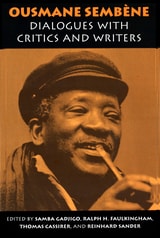
Ousmane Sembene
Dialogues with Critics and WritersThomas Cassirer
University of Massachusetts Press, 1993
This volume celebrates the work of Ousmane Sembène, the brilliant African filmmaker and writer. Since the 1950s, working in his native Senegal, Sembène has produced a series of films and novels that incisively depict the realities of contemporary African experience, particularly that of urban and industrial Africa. The book begins with critical essays on Sembène’s oeuvre by Frederick Ivor Case, Françoise Pfaff, Mbye Cham, and Claire Andrade-Warkins. There follows a series of presentations by distinguished black writers who discuss their craft and the ways in which language can function as a political act of cultural legitimation. These writers include Toni Cade Bambara, Earl Lovelace, Ngũgĩ wa Thiong’o, John Edgar Wideman, and Sembène.
The next section reproduces Sembène’s remarks on his film Camp de Thiaroye and an extended interview he recorded in Toronto in 1992. His comments are presented in both French and English. The volume concludes with annotated bibliographies of Sembène’s novels and of the films he has written and directed.
Out for Glamour in Africa
A History of Black Urban Femininities in Drum MagazineWanjiru G. Mbure
University of Michigan Press, 2026
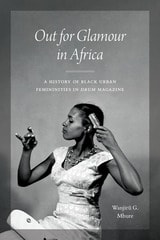
Out for Glamour in Africa critically reflects on how Black women utilized Drum magazine, a leading publication in Africa during the era of independence, for political empowerment and constructing notions of Black femininity. Wanjirũ G. Mbure terms the concept of femme urbAfricana, a model of Black femininity depicted as urban, political, fashionable, paradoxically Afrocentric, heteronormative, and transnational. Foregrounding stories of the women who embodied these traits and the social, political, and economic forces that shaped their presence in Drum, Mbure argues that these representations of Black women from Africa, the Caribbean, Europe, and the United States produced a novel form of Black urban femininity. Utilizing a breadth of archival materials from cover girl photographs, advertisements, and columns, to readers’ comments, Mbure reveals the complex relationship between the Black urban woman and the era’s contested ideals within a transnational matrix.
Out of Sync & Out of Work
History and the Obsolescence of Labor in Contemporary CultureBurges, Joel
Rutgers University Press, 2018
Over and Over
Performance, Time, and Resonance in Serial Television DramaElliott Logan
Rutgers University Press, 2026
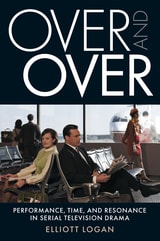
How does serial drama earn, keep, and reward our attention for so long—over episodes, seasons, months, and years? While we know that characters are the focus of story and viewer interest in television fiction, scholars have for decades overlooked the way those characters are performed on-screen and the lure of performance as a key formal and thematic aspect of long-form television storytelling. In Over and Over, Elliott Logan offers close readings of performance in some of the most celebrated television dramas of the century, casting new light on the attractions and significance of the medium’s seriality. The book shows how the patterning and expressive resonance of performers on-screen binds together otherwise unconnected episodes of shows like The Sopranos and Mad Men. In doing so, it highlights the provisionality of identity and meaning as crucial to their interest in the sustenance of human relationships over long periods of time. In accounting for the resonance of performance over time in serial drama, this book shows, we find the terms of our own attachment to its compelling depictions of human life
Owning the Olympics
Narratives of the New ChinaMonroe E. Price and Daniel Dayan, Editors
University of Michigan Press, 2008
"A major contribution to the study of global events in times of global media. Owning the Olympics tests the possibilities and limits of the concept of 'media events' by analyzing the mega-event of the information age: the Beijing Olympics. . . . A good read from cover to cover."
—Guobin Yang, Associate Professor, Asian/Middle Eastern Cultures & Sociology, Barnard College, Columbia University
From the moment they were announced, the Beijing Games were a major media event and the focus of intense scrutiny and speculation. In contrast to earlier such events, however, the Beijing Games are also unfolding in a newly volatile global media environment that is no longer monopolized by broadcast media. The dramatic expansion of media outlets and the growth of mobile communications technology have changed the nature of media events, making it significantly more difficult to regulate them or control their meaning. This volatility is reflected in the multiple, well-publicized controversies characterizing the run-up to Beijing 2008. According to many Western commentators, the People's Republic of China seized the Olympics as an opportunity to reinvent itself as the "New China"---a global leader in economics, technology, and environmental issues, with an improving human-rights record. But China's maneuverings have also been hotly contested by diverse global voices, including prominent human-rights advocates, all seeking to displace the official story of the Games.
Bringing together a distinguished group of scholars from Chinese studies, human rights, media studies, law, and other fields, Owning the Olympics reveals how multiple entities---including the Chinese Communist Party itself---seek to influence and control the narratives through which the Beijing Games will be understood.
digitalculturebooks is an imprint of the University of Michigan Press and the Scholarly Publishing Office of the University of Michigan Library dedicated to publishing innovative and accessible work exploring new media and their impact on society, culture, and scholarly communication. Visit the website at www.digitalculture.org.
Ozu and the Ethics of Indeterminacy
Daisuke Miyao
Duke University Press, 2026