Results by title
321 books match the query 'Mexican Americans' and 4 start with o
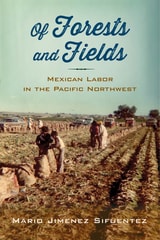
Of Forests and Fields
Mexican Labor in the Pacific NorthwestMario Jimenez Sifuentez
Rutgers University Press, 2016
2016 Choice Oustanding Academic Title
Just looking at the Pacific Northwest’s many verdant forests and fields, it may be hard to imagine the intense work it took to transform the region into the agricultural powerhouse it is today. Much of this labor was provided by Mexican guest workers, Tejano migrants, and undocumented immigrants, who converged on the region beginning in the mid-1940s. Of Forests and Fields tells the story of these workers, who toiled in the fields, canneries, packing sheds, and forests, turning the Pacific Northwest into one of the most productive agricultural regions in the country.
Just looking at the Pacific Northwest’s many verdant forests and fields, it may be hard to imagine the intense work it took to transform the region into the agricultural powerhouse it is today. Much of this labor was provided by Mexican guest workers, Tejano migrants, and undocumented immigrants, who converged on the region beginning in the mid-1940s. Of Forests and Fields tells the story of these workers, who toiled in the fields, canneries, packing sheds, and forests, turning the Pacific Northwest into one of the most productive agricultural regions in the country.
Employing an innovative approach that traces the intersections between Chicana/o labor and environmental history, Mario Sifuentez shows how ethnic Mexican workers responded to white communities that only welcomed them when they were economically useful, then quickly shunned them. He vividly renders the feelings of isolation and desperation that led to the formation of ethnic Mexican labor organizations like the Pineros y Campesinos Unidos Noroeste (PCUN) farm workers union, which fought back against discrimination and exploitation. Of Forests and Fields not only extends the scope of Mexican labor history beyond the Southwest, it offers valuable historical precedents for understanding the struggles of immigrant and migrant laborers in our own era.
Sifuentez supplements his extensive archival research with a unique set of first-hand interviews, offering new perspectives on events covered in the printed historical record. A descendent of ethnic Mexican immigrant laborers in Oregon, Sifuentez also poignantly demonstrates the links between the personal and political, as his research leads him to amazing discoveries about his own family history...
[more]
Origins of New Mexico Families
A Genealogy of the Spanish Colonial PeriodFray Angélico Chávez
Museum of New Mexico Press, 1992
This classic genealogy reference book is considered to be the starting place for anyone having family history ties to New Mexico, and for those interested in the history of New Mexico. Well before Jamestown and the Pilgrims, New Mexico was settled continuously beginning in 1598 by Spaniards whose descendants still make up a major portion of the population of New Mexico.
[more]
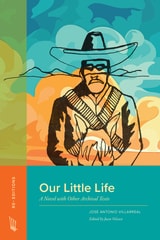
Our Little Life
A Novel with Other Archival TextsBy José Antonio Villarreal, edited by Juan Velasco
Lever Press, 2025
Our Little Life is the original title of José Antonio Villarreal’s groundbreaking 1959 novel Pocho, which shaped Mexican-American literature for decades. Pocho narrated the experiences of and challenges to the Mexican-American community in 1930s Silicon Valley through the story of Richard Rubio and his family, ending with the U.S.’s entry into World War II. With this new edition, author and editor Juan Velasco restores Villarreal’s original vision for his novel. Published in cooperation with the Villarreal estate, this edition of Our Little Life is based on archival materials from the Villarreal Special Collection at Santa Clara University.
Our Little Life offers a much longer version of the Pocho story that extends a further 100 pages into the postwar period and follows Richard Rubio’s return from war and the changing shape of Mexican-American life in the 1940s. This newly discovered manuscript reveals Villarreal’s attention to Rubio’s struggles with PTSD and his efforts to depict a community and a family’s struggles with identity, belonging, and survival in postwar California. Our Little Life is an important work of archival recovery that sheds new light on Villarreal’s authorship and his place not only in Mexican-American literature but in the twentieth-century American literary canon.
This first publication of Our Little Life includes a scholarly introduction that places this unpublished novel in the landscape of contemporary Mexican-American literary studies and offers a brilliant examination of how novels grow and change. The volume also includes materials from the Villarreal Special Collection that recontextualize the writer’s vision, editing, and marketing of this and later novels. Our Little Life will be of interest not only to everyone in Mexican-American literary studies, but also to scholars of postwar America, women and gender studies, LGBTQ studies, ethnic studies, and migration and border studies.
[more]
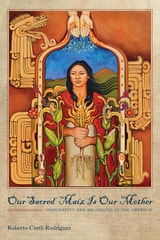
Our Sacred Maíz Is Our Mother
Indigeneity and Belonging in the AmericasRoberto Cintli Rodríguez
University of Arizona Press, 2014
“If you want to know who you are and where you come from, follow the maíz.” That was the advice given to author Roberto Cintli Rodriguez when he was investigating the origins and migrations of Mexican peoples in the Four Corners region of the United States.
Follow it he did, and his book Our Sacred Maíz Is Our Mother changes the way we look at Mexican Americans. Not so much peoples created as a result of war or invasion, they are people of the corn, connected through a seven-thousand-year old maíz culture to other Indigenous inhabitants of the continent. Using corn as the framework for discussing broader issues of knowledge production and history of belonging, the author looks at how corn was included in codices and Mayan texts, how it was discussed by elders, and how it is represented in theater and stories as a way of illustrating that Mexicans and Mexican Americans share a common culture.
Rodriguez brings together scholarly and traditional (elder) knowledge about the long history of maíz/corn cultivation and culture, its roots in Mesoamerica, and its living relationship to Indigenous peoples throughout the continent, including Mexicans and Central Americans now living in the United States. The author argues that, given the restrictive immigration policies and popular resentment toward migrants, a continued connection to maíz culture challenges the social exclusion and discrimination that frames migrants as outsiders and gives them a sense of belonging not encapsulated in the idea of citizenship. The “hidden transcripts” of corn in everyday culture—art, song, stories, dance, and cuisine (maíz-based foods like the tortilla)—have nurtured, even across centuries of colonialism, the living maíz culture of ancient knowledge.
[more]