Results by title
71 books match the query 'Mexicans' and 3 start with o
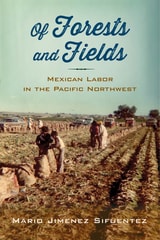
Of Forests and Fields
Mexican Labor in the Pacific NorthwestMario Jimenez Sifuentez
Rutgers University Press, 2016
Just looking at the Pacific Northwest’s many verdant forests and fields, it may be hard to imagine the intense work it took to transform the region into the agricultural powerhouse it is today. Much of this labor was provided by Mexican guest workers, Tejano migrants, and undocumented immigrants, who converged on the region beginning in the mid-1940s. Of Forests and Fields tells the story of these workers, who toiled in the fields, canneries, packing sheds, and forests, turning the Pacific Northwest into one of the most productive agricultural regions in the country.
On the Edge of the Law
Culture, Labor, and Deviance on the South Texas BorderBy Chad Richardson and Rosalva Resendiz
University of Texas Press, 2006
The Valley of South Texas is a region of puzzling contradictions. Despite a booming economy fueled by free trade and rapid population growth, the Valley typically experiences high unemployment and low per capita income. The region has the highest rate of drug seizures in the United States, yet its violent crime rate is well below national and state averages. The Valley's colonias are home to the poorest residents in the nation, but their rates of home ownership and intact two-parent families are among the highest in the country for low-income residential areas. What explains these apparently irreconcilable facts?
Since 1982, faculty and students associated with the Borderlife Research Project at the University of Texas-Pan American have interviewed thousands of Valley residents to investigate and describe the cultural and social life along the South Texas-Northern Mexico border. In this book, Borderlife researchers clarify why Valley culture presents so many apparent contradictions as they delve into issues that are "on the edge of the law"—traditional health care and other cultural beliefs and practices, displaced and undocumented workers, immigration enforcement, drug smuggling, property crime, criminal justice, and school dropout rates. The researchers' findings make it plain that while these issues present major challenges for the governments of the United States and Mexico, their effects and contradictions are especially acute on the border, where residents must daily negotiate between two very different economies; health care, school, and criminal justice systems; and worldviews.
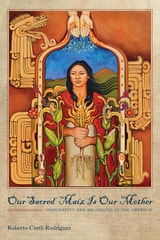
Our Sacred Maíz Is Our Mother
Indigeneity and Belonging in the AmericasRoberto Cintli Rodríguez
University of Arizona Press, 2014
Follow it he did, and his book Our Sacred Maíz Is Our Mother changes the way we look at Mexican Americans. Not so much peoples created as a result of war or invasion, they are people of the corn, connected through a seven-thousand-year old maíz culture to other Indigenous inhabitants of the continent. Using corn as the framework for discussing broader issues of knowledge production and history of belonging, the author looks at how corn was included in codices and Mayan texts, how it was discussed by elders, and how it is represented in theater and stories as a way of illustrating that Mexicans and Mexican Americans share a common culture.
Rodriguez brings together scholarly and traditional (elder) knowledge about the long history of maíz/corn cultivation and culture, its roots in Mesoamerica, and its living relationship to Indigenous peoples throughout the continent, including Mexicans and Central Americans now living in the United States. The author argues that, given the restrictive immigration policies and popular resentment toward migrants, a continued connection to maíz culture challenges the social exclusion and discrimination that frames migrants as outsiders and gives them a sense of belonging not encapsulated in the idea of citizenship. The “hidden transcripts” of corn in everyday culture—art, song, stories, dance, and cuisine (maíz-based foods like the tortilla)—have nurtured, even across centuries of colonialism, the living maíz culture of ancient knowledge.