618 books match the query 'Motion pictures' and 5 start with o
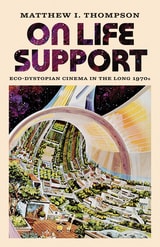
cover of On Life Support: Eco-Dystopian Cinema in the Long 1970s

On Life Support

Eco-Dystopian Cinema in the Long 1970s

Matthew I Thompson

University of Minnesota Press, 2026

Finding strategies for today’s environmental movement in classic science fiction films

What can science fiction film tell us about the course of the modern ecological movement? On Life Support traces how the environmental concerns of the 1970s were embedded in the eco-dystopian cinema of the era—and considers its implications for ecological thought and activism today.

Illuminating the patterns that shape our thinking about nonhuman nature, Matthew I. Thompson pairs iconic films such as Soylent Green and Silent Running with the transformational environmentalist texts that inspired them and kick-started the modern environmental movement, including Rachel Carson’s Silent Spring and Buckminster Fuller’s Operating Manual for Spaceship Earth. Thompson examines this confluence of literature and cinema to show how, as they translated environmentalism for Hollywood’s audiences, these movies distilled the movement’s concepts into a form that revealed their inherent contradictions.

A sensitive analysis of the tensions that complicate environmentalist praxis—especially between desire and fear in the activist impulse—On Life Support offers a timely critique of the politics of environmental containment and control, calling instead for a politics of interconnection and contamination. It is, after all, by inviting complexity and chaos that we begin to undermine the myth of human mastery, letting nature flourish on its own terms.

Retail e-book files for this title are screen-reader friendly with images accompanied by short alt text and/or extended descriptions.
[more]
cover of On-Demand Culture: Digital Delivery and the Future of Movies

On-Demand Culture

Digital Delivery and the Future of Movies

Tryon, Chuck

Rutgers University Press, 2013

The movie industry is changing rapidly, due in part to the adoption of digital technologies. Distributors now send films to theaters electronically. Consumers can purchase or rent movies instantly online and then watch them on their high-definition televisions, their laptops, or even their cell phones. Meanwhile, social media technologies allow independent filmmakers to raise money and sell their movies directly to the public. All of these changes contribute to an “on-demand culture,” a shift that is radically altering film culture and contributing to a much more personalized viewing experience.

Chuck Tryon offers a compelling introduction to a world in which movies have become digital files. He navigates the complexities of digital delivery to show how new modes of access—online streaming services like YouTube or Netflix, digital downloads at iTunes, the popular Redbox DVD kiosks in grocery stores, and movie theaters offering digital projection of such 3-D movies as Avatar—are redefining how audiences obtain and consume motion picture entertainment. Tryon also tracks the reinvention of independent movies and film festivals by enterprising artists who have built their own fundraising and distribution models online.

Unique in its focus on the effects of digital technologies on movie distribution, On-Demand Culture offers a corrective to address the rapid changes in the film industry now that movies are available at the click of a button.
[more]
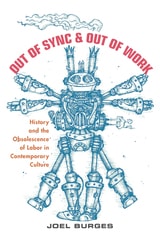
cover of Out of Sync & Out of Work: History and the Obsolescence of Labor in Contemporary Culture

Out of Sync & Out of Work

History and the Obsolescence of Labor in Contemporary Culture

Burges, Joel

Rutgers University Press, 2018
Out of Sync & Out of Work explores the representation of obsolescence, particularly of labor, in film and literature during a historical moment in which automation has intensified in capitalist economies. Joel Burges analyzes texts such as The Invention of Hugo Cabret, Wreck-It Ralph, Fantastic Mr. Fox, and Iron Council, and examines their “means” of production. Those means include a range of subjects and narrative techniques, including the “residual means” of including classic film stills in a text, the “obstinate means” of depicting machine breaking, the “dated means” of employing the largely defunct technique of stop-motion animation, and the “obsolete” means of celebrating a labor strike. In every case, the novels and films that Burges scrutinizes call on these means to activate the reader’s/viewer’s awareness of historical time. Out of Sync & Out of Work advances its readers’ grasp of the complexities of historical time in contemporary culture, moving the study of temporality forward in film and media studies, literary studies, critical theory, and cultural critique.
[more]
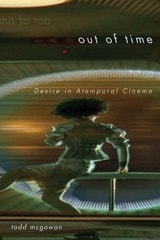
cover of Out of Time: Desire in Atemporal Cinema

Out of Time

Desire in Atemporal Cinema

Todd McGowan

University of Minnesota Press, 2010
In Out of Time, Todd McGowan takes as his starting point the emergence of a temporal aesthetic in cinema that arose in response to the digital era. Linking developments in cinema to current debates within philosophy, McGowan claims that films that change the viewer’s relation to time constitute a new cinematic mode: atemporal cinema.
 
In atemporal cinema, formal distortions of time introduce spectators to an alternative way of experiencing existence in time—or, more exactly, a way of experiencing existence out of time. McGowan draws on contemporary psychoanalysis, particularly Jacques Lacan, to argue that atemporal cinema unfolds according to the logic of the psychoanalytic notion of the drive rather than that of desire, which has conventionally been the guiding concept of psychoanalytic film studies.
 
Despite their thematic diversity, these films distort chronological time with a shared motivation: to reveal the logic of repetition. Like psychoanalysis, McGowan contends, the atemporal mode locates enjoyment in the embrace of repetition rather than in the search for the new and different.
[more]
cover of Ozu and the Ethics of Indeterminacy

Ozu and the Ethics of Indeterminacy

Daisuke Miyao

Duke University Press, 2026

Ozu and the Ethics of Indeterminacy re-examines cinema studies through the work of Japanese filmmaker Yasujirō Ozu, employing the multiple methodologies and indeterminacy of Ozu’s films as a model for discussions of cinema’s relationship to the world and the formation of film studies as a discipline. Centering a selection of Ozu films in each chapter, Daisuke Miyao builds a method based on the way films directed by Ozu avoid unitary perspective and allow multiple possibilities of standpoint and spectatorial position, which Miyao calls the ethics of indeterminacy. Analyzing Ozu’s use of cinematography, narrative, and color, Miyao theorizes the indeterminate in film—the seen and unseen, human and nonhuman, domestic and international—to initiate a multi-directional dialogue on the study of cinema that reaches beyond auteurism and culturalism to establish a new basis for disciplinary conversations.
[more]