Results by title
405 books match the query 'Natural history' and 9 start with o
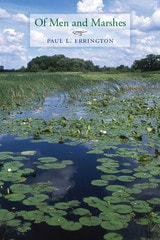
Of Men and Marshes
Paul Errington
University of Iowa Press, 1957
This classic of twentieth-century nature writing, a landmark work that is still a joy to read, offers a stirring portrait of the Midwest’s endangered glacial marshland ecosystems by one of the most influential biologists of his day. A cautionary book whose advice has not been heeded, a must-read of American environmental literature, Of Men and Marshes should inspire a new generation of conservationists.
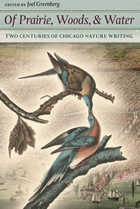
Of Prairie, Woods, and Water
Two Centuries of Chicago Nature WritingEdited by Joel Greenberg
University of Chicago Press, 2008
These writings tell the tale of a land in transition—one with abundant, unique, and incredibly lush flora and fauna, a natural history quite elusive today. Drawing on archives he uncovered while writing his acclaimed A Natural History of the Chicago Region, Greenberg hand-selected these first-person narratives, all written between 1721 and 1959. Not every author is familiar, but every contribution is distinctive. From a pioneer’s hilarious notes on life in the Kankakee marsh to Theodore Drieser’s poignant plea for conservation of the Tippecanoe River to infamous murderer Nathan Leopold’s charming description of a pet robin he kept in prison, the sources included are as diverse as the nature they describe.
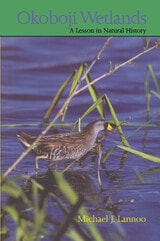
Okoboji Wetlands
A Lesson in Natural HistoryMichael J. Lannoo
University of Iowa Press, 1996
Lake Okoboji in northwest Iowa is the jewel of the Iowa Great Lakes. A region of wetlands formed by prairie potholes, the area is rich with lakes, sloughs, fens, creeks, prairies, and kettleholes. In this readable and beautifully illustrated volume, Michael Lannoo presents an extensive natural history of Okoboji and its cherished wetlands that examines that world of our grandparents, compares it to today's world, and extrapolates to the world of our grandchildren.
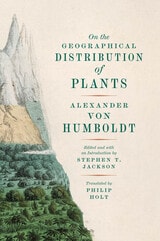
On the Geographical Distribution of Plants
Alexander von Humboldt
University of Chicago Press, 2027
The first English translation of an essay that is among Alexander von Humboldt’s least known but most important scientific works.
In the nineteenth century, Alexander von Humboldt was arguably the world’s most famous celebrity after Napoleon. What started in 1799 as a serendipitous trip to the New World tropics with his friend Aimé Bonpland to collect plants and minerals expanded into a five-year exploration of Venezuela, Colombia, Ecuador, Perú, México, and Cuba. The discoveries the two amassed were nothing short of staggering, and much of our knowledge of tropical botany, zoology, geography, and geology can be traced back to these journeys. The voyage, and the publication of Humboldt’s travel narratives and scientific studies from these expeditions, which totaled dozens of books, elevated Humboldt to cult status.
In the past two decades, Humboldt’s writings have been rediscovered in multiple fields, including biogeography; Earth and environmental sciences; American and Latin American studies; nineteenth-century art, poetry, and literature; and transatlantic cultural history. His ideas are profoundly relevant to twenty-first-century thinking on the relationship between humans and nature, and the ecological framework in which he viewed the world remains essential two centuries after his travels.
Among his many interests, Humboldt invested considerable effort in explaining the underlying causes of the uneven distribution of plant species across the globe. His extended essay On the Geographical Distribution of Plants is among his least known but most important works, laying foundations for the development of ecology, climatology, and evolutionary biology in the following decades. It was first published in 1815 as an introduction to a seven-volume Latin botanical monograph, Nova genera et species plantarum (New Genera and Species of Plants). The essay, republished in 1817 as a standalone volume, held great influence over nineteenth-century naturalists. It is Humboldt’s most comprehensive and detailed treatment of plant geography. In the essay, he applies what he calls “botanical arithmetic” to reveal ecological and biogeographic patterns of plants, applications that still ground modern macroecology; and he provides frameworks to link vegetation patterns and climate, which are essential in modern Earth system science. Introduced and organized by ecologist Stephen T. Jackson and translated from Latin to English by Philip Holt, this book is essential for the libraries of scientists, historians, and all Humboldt admirers.
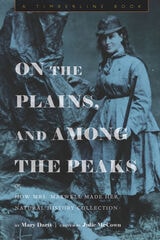
On the Plains, and Among the Peaks
or, How Mrs. Maxwell Made Her Natural History Collection: by Mary DarttJulie McCown
University Press of Colorado, 2021
Dartt’s book tells the story of Maxwell’s lifelong passion and dedication to work and education that made her a pioneer in more ways than one. It catalogs her important scientific contributions and development of museum habitat groupings and lifelike taxidermy mounts, showcases engaging accounts of wilderness excursions on the frontier of the Western United States in the 1860s and 1870s, and testifies to her resolve to show that women were capable of succeeding in traditionally male-dominated fields.
This scholarly edition of On the Plains, and Among the Peaks will spark renewed interest in Maxwell and Dartt as neglected figures in nineteenth-century US history and literature, opening a conversation that other literary scholars and historians will join to further situate their work within the numerous disciplines to which it speaks, including nineteenth-century American literature; women’s, western, environmental, and natural history; and gender, museum, and animal studies.
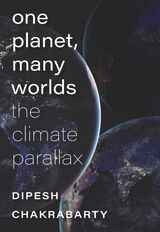
One Planet, Many Worlds
The Climate ParallaxDipesh Chakrabarty
Brandeis University Press, 2023
Climate change represents a deep conundrum for humans. It is difficult for humans to give up the unequal and yet accelerating pursuit of a good life based on an insatiable appetite for energy sourced mainly from fossil fuel. But the same pursuit, scientists insist, damages the geobiological system that supports the existence of interrelated forms of life, including ours, on this planet. The planet, seen thus, is one. The global sway of financial and extractive capital connects humans technologically, but they remain divided along multiple axes of inequality. Their worlds are many and their politics still global rather than planetary. In the narrative presented here, Chakrabarty continues to explore the temporal and intellectual fault lines that mark the collapse of the global and the planetary in human history.

Organ Pipe
Life on the EdgeText by Carol Ann Bassett; Photographs by Michael Hyatt
University of Arizona Press, 2004
A terrain where one learns to pay attention to the details: the tracks of a sidewinder in the sand, the tiny eggs of a cactus wren, the flash of a vermilion flycatcher against the azure sky.
Organ Pipe Cactus National Monument lies in southwestern Arizona on the Mexican border. It is an isolated park that for Carol Ann Bassett has long been a place of solitude—a silent refuge where she often camped out alone to capture the natural rhythms of the desert. Photographer Michael Hyatt hiked through Organ Pipe to visually document its subtle beauty in the Ajo Mountains and the valley of the Ajo, and at Quitobaquito, a rare desert oasis.
Few visitors may brave Organ Pipe during summer, when the temperature can reach 120 degrees, but for Bassett and Hyatt the searing heat is but a harbinger of rain, when normally dry arroyos surge with rust-colored water and desert tarantulas come out to mate. Bassett introduces readers to Organ Pipe’s cultural heritage as well: Spanish missionaries, Anglo settlers, and the Tohono O’odham and the Hia Ced O’odham people who still travel there to gather cactus fruit during Hasan Bakmasad, "saguaro moon." She also considers the changes taking place throughout the park, including the onrush of immigrants passing through in search of better lives in the United States.
This small, lyrical book is a sensitive reflection on the heart of the Sonoran Desert. It reminds us of the beauty to be found in unexpected places—and of our intimate connection with the wild.
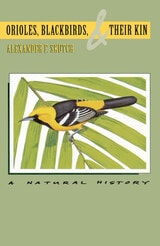
Orioles, Blackbirds, and Their Kin
A Natural HistoryAlexander F. Skutch
University of Arizona Press, 1996
The least known of these species are perhaps best known to Alexander Skutch, who has studied birds in a Costa Rican tropical valley for more than half a century. In this fascinating book the first devoted exclusively to the icterids—he combines his own observations with those of other naturalists to provide a comparative natural history and biology of this remarkable family of birds. Devoting a separate chapter to each major group or genus, he delineates the outstanding characteristics of each and includes observations of little-studied tropical species such as caciques and oropendolas.
Orioles, Blackbirds, and Their Kin is an eminently readable natural history in the classic style. Enhanced by 31 scratchboard illustrations, this book will delight nature enthusiasts everywhere with its fascinating exposition of avian diversity. Because so much of the published information on the icterids is widely scattered, Skutch's painstaking compilation has created a valuable reference work that will provide students and researchers with a wealth of new insights into the tropical members of this New World family.
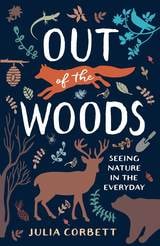
Out of the Woods
Seeing Nature in the EverydayJulia Corbett
University of Nevada Press, 2018
Have you ever wondered about society’s desire to cultivate the perfect lawn, why we view some animals as “good” and some as “bad,” or even thought about the bits of nature inside everyday items–toothbrushes, cell phones, and coffee mugs? In this fresh and introspective collection of essays, Julia Corbett examines nature in our lives with all of its ironies and contradictions by seamlessly integrating personal narratives with morsels of highly digestible science and research. Each story delves into an overlooked aspect of our relationship with nature—insects, garbage, backyards, noise, open doors, animals, and language—and how we cover our tracks.
With a keen sense of irony and humor and an awareness of the miraculous in the mundane, Julia recognizes the contradictions of contemporary life. She confronts the owner of a high-end market who insists on keeping his doors open in all temperatures. Takes us on a trip to a new mall with a replica of a trout stream that once flowed nearby. The phrase “out of the woods” guides us through layers of meaning to a contemplation of grief, remembrance, and resilience.
Out of the Woods leads to surprising insights into the products, practices, and phrases we take for granted in our everyday encounters with nature and encourages us all to consider how we might re-value or reimagine our relationships with nature in our everyday lives.